How is the Union Minister advocating for the translation of lab discoveries into clinical practice?
Click to start listening
Synopsis
Union Minister Gajendra Singh Shekhawat is driving a call for an accelerated conversion of laboratory discoveries into clinical applications. His remarks emphasize the importance of integrating doctors' experiences into scientific research, a pivotal factor for enhancing modern healthcare solutions.
Key Takeaways
- Accelerated Translation: Urgent need for lab discoveries to reach clinical practice.
- Doctor's Role: Practical experiences of doctors should guide scientific research.
- Radiation Biology: Central to modern cancer treatment and patient quality of life.
- Interdisciplinary Approaches: Encouragement for collaboration across scientific fields.
- Future Focus: Young scientists and researchers are vital for innovation.
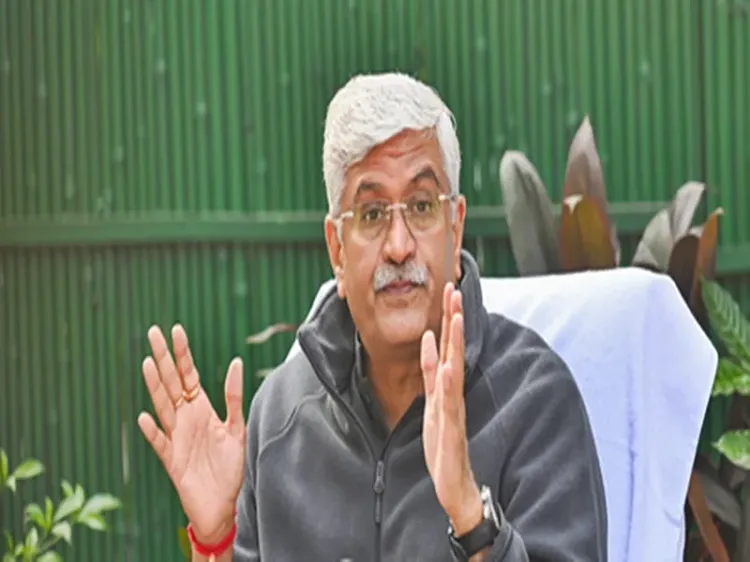
Bikaner, Jan 19 (NationPress) Gajendra Singh Shekhawat, the Union Minister of Culture and Tourism, urged for the swift transition of laboratory findings into clinical applications on Monday. He emphasized that the practical experiences and insights of doctors should also inform fundamental scientific research.
While addressing the two-day international conference on 'Frontiers of Radiation Biology and Cancer Research' at Dungar College via an online platform, he highlighted that an ongoing dialogue between laboratory research and clinical practice enhances the effectiveness, safety, and humanity of modern medicine.
Shekhawat acknowledged the significant advancements in India's scientific ecosystem and health infrastructure, particularly in the realm of cancer research.
He noted that the nation has made notable progress in enhancing diagnostic precision, crafting affordable treatment methods, and broadening access to quality cancer care.
Furthermore, he stated that institutions like Regional Cancer Centres, medical colleges, and community hospitals are now equipped to provide cutting-edge and intricate treatments with compassion, sensitivity, and high professional standards.
Emphasizing the significance of radiation biology, the Union Minister asserted that research in this area is fundamental to contemporary cancer therapy. A more profound understanding of the body's reactions to radiation, minimizing side effects, and scientifically optimizing radiation doses are essential to enhancing the quality of life for patients undergoing cancer treatment.
He added that inquiries in both basic and clinical radiation sciences directly bolster the nation’s healthcare objectives.
Shekhawat referred to radiation as one of the most potent instruments for both diagnosis and therapy.
Nevertheless, he pointed out that its full potential can only be unlocked through a thorough understanding of its cellular and systemic impacts, ensuring safe, balanced, and effective utilization.
In his address to young scientists, researchers, and students, the Union Minister expressed that their curiosity, commitment, and collaborative mindset will shape the future of this field and enhance India’s standing in global scientific circles.
He remarked that modern science increasingly favors those who cross disciplinary lines—physicists diving into biology, doctors embracing data and informatics, and biologists closely aligning with clinical realities.
He concluded with optimism that such interdisciplinary methodologies will fuel innovation and produce more patient-focused, impactful healthcare solutions in the future.
Point of View
I believe that Union Minister Gajendra Singh Shekhawat's emphasis on integrating clinical experiences with laboratory research is crucial for advancing healthcare in India. His insights during the international conference highlight the need for collaborative approaches that can significantly enhance patient outcomes.
NationPress
20/01/2026
Frequently Asked Questions
What did Gajendra Singh Shekhawat advocate for?
He called for a faster translation of laboratory discoveries into clinical practice, emphasizing the importance of doctors' experiences.
Why is the dialogue between laboratory research and clinical practice important?
It enhances the effectiveness, safety, and humanity of modern medicine.
What advancements has India made in cancer care?
India has improved diagnostic accuracy, developed affordable treatment options, and expanded access to quality cancer care.