How is Union Minister CR Patil Engaging with Villagers Across 8 States Regarding Water Governance?
Click to start listening
Synopsis
Explore the recent engagement of Union Minister CR Patil with villagers across eight states on water governance. This initiative emphasizes participatory governance and showcases community involvement in the Jal Jeevan Mission, aiming for sustainable water supply management.
Key Takeaways
- Over 8,000 participants engaged in community discussions.
- Focus on local languages enhances communication and understanding.
- Emphasis on community-driven innovations for sustainable water management.
- Importance of accountability through Panchayat Dashboards.
- Education on water quality for children to become informed stakeholders.
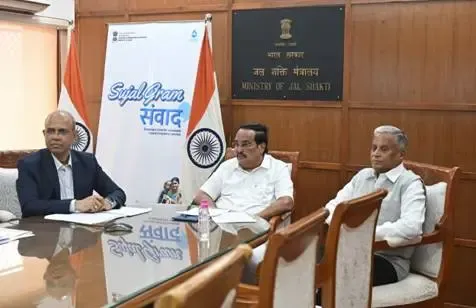
New Delhi, Dec 19 (NationPress) The Department of Drinking Water and Sanitation (DDWS) reaffirmed the government’s dedication to participatory water governance and community-driven execution of the Jal Jeevan Mission (JJM) on Friday, as reported by an official.
The second edition of the Ministry of Jal Shakti’s ‘Sujal Gram Samvad’ convened representatives from Gram Panchayats, members of the Village Water and Sanitation Committees, community participants, women’s self-help groups (SHGs), and key officials, including District Collectors, Deputy Commissioners, and CEOs of Zila Panchayats.
This edition saw participation from over 8,000 individuals, showcasing robust engagement from both the community and officials.
Villagers gathered in large numbers at the Gram Panchayat level, including women, youth, children, and elderly residents, whose involvement far exceeded the registered attendees.
Interactions occurred in eight villages, all serving as Gram Panchayat headquarters.
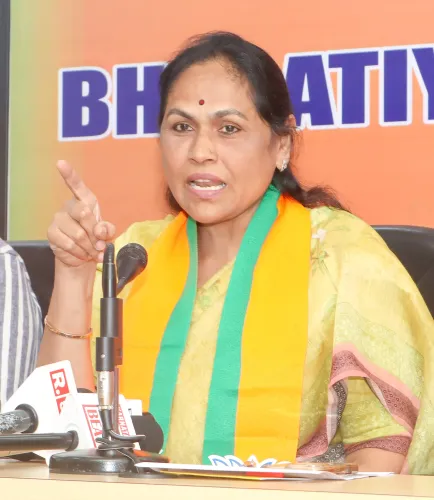
Union Minister C. R. Patil communicated in Gujarati with villagers in Zahirpura, located in Mehsana district, Gujarat, while Minister of State V. Somanna engaged in Kannada with the community of Kodi village, in Udupi district, Karnataka.
Ashok K. K. Meena, Secretary of DDWS, emphasized that the Sujal Gram Samvad platform was intended to facilitate discussions in the villagers' native languages, fostering a better understanding of how communities are handling the operation and maintenance of water supply systems and related challenges.
This dialogue aims to document how the provision of tap water connections has revolutionized daily life, especially for women, and to highlight narratives of positive transformation, community-led innovations, and local initiatives focused on sustainability and enhanced service delivery.
Kamal Kishore Soan, Additional Secretary and Mission Director of the National Jal Jeevan Mission, stressed the importance of regular District Water and Sanitation Mission (DWSM) meetings to evaluate functionality, water quality, and the sustainability of various schemes.
He underlined that all Gram Panchayats should be proactively integrated into Panchayat Dashboards, with Panchayat Secretaries trained to utilize the e-Gram Swaraj portal and JJM dashboards for real-time updates and two-way communication on local challenges.
Moreover, he called for strict adherence to the new commissioning guidelines, including the essential 15-day trial run prior to handover, to guarantee system readiness and accountability.
In emphasizing water quality education, he urged schools to educate students on drinking water quality, testing methods, and safe water practices, empowering children to become informed advocates for sustaining safe water systems.
Point of View
The ongoing engagement by Union Minister CR Patil reflects a significant step towards enhancing community involvement in water governance. The emphasis on participatory approaches aligns with national priorities for sustainable resource management, highlighting the need for local voices in shaping effective governance.
NationPress
19/12/2025
Frequently Asked Questions
What is the Jal Jeevan Mission?
The Jal Jeevan Mission aims to provide functional tap water connections to all rural households, ensuring sustainable water supply and improving quality of life.
How many participants were involved in the Sujal Gram Samvad?
The second edition of Sujal Gram Samvad recorded participation from over 8,000 individuals.
What languages were used during the interactions?
Interactions were conducted in local languages such as Gujarati and Kannada to facilitate better communication with the villagers.
Why is community participation important in water governance?
Community participation ensures that local needs are addressed, fostering ownership and accountability in water management.
What are the key objectives of the Sujal Gram Samvad?
The objectives include listening to community concerns, sharing successes, and enhancing understanding of water supply management.