Why is a UP cleric urging Muslims to abstain from New Year celebrations?
Synopsis
In a bold move, Maulana Mufti Shahabuddin Razvi Barelvi, President of the AIMJ, has issued a fatwa urging Muslims to refrain from celebrating New Year. This statement has reignited discussions on cultural practices and religious beliefs. What does this mean for the Muslim community in India? Read on to discover the implications of this fatwa.
Key Takeaways
Fatwa issued against New Year celebrations by AIMJ President.
Sharia law prohibits activities like dancing and singing.
New Year celebrations seen as Christian festival.
Muslims encouraged to celebrate Muharram instead.
Previous fatwas on similar topics indicate ongoing debate.
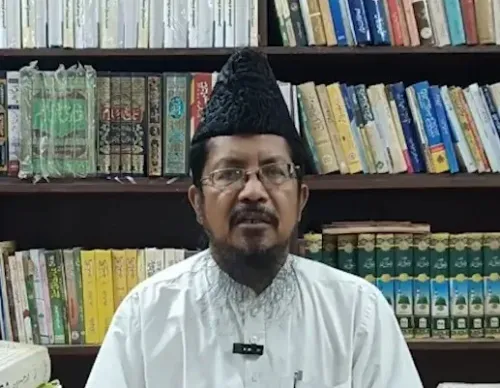
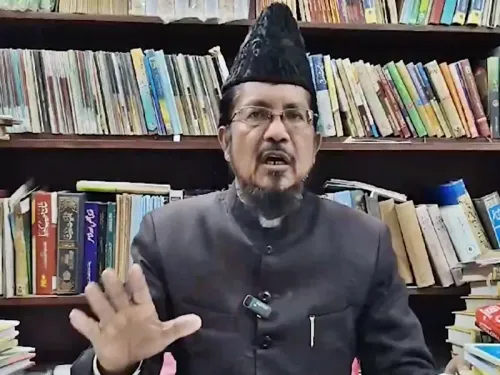
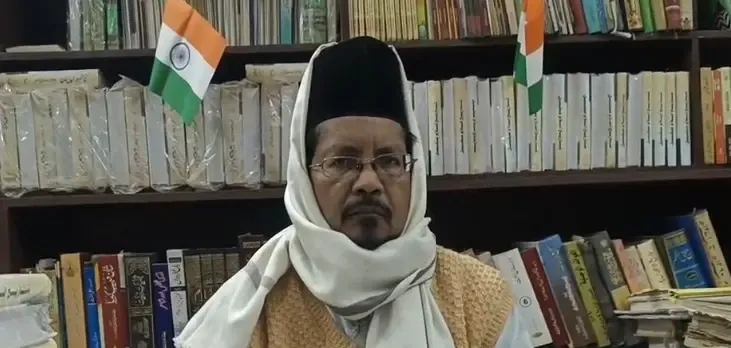
Bareilly, Dec 29 (NationPress) The President of the All India Muslim Jamaat (AIMJ), Maulana Mufti Shahabuddin Razvi Barelvi, has once again issued a fatwa calling on Muslims in India to refrain from celebrating the New Year, as it contradicts the principles of Sharia.
Sharia is the Islamic legal framework derived from the Quran's teachings and the Prophet's traditions, governing various religious obligations and daily life aspects.
In the issued fatwa, Maulana Razvi emphasized that activities like singing and dancing are entirely haram in Islam; thus, New Year festivities also fall into the haram category.
He pointed out that such behaviors are considered unlawful under the Shariat and urged Muslim youth to avoid these celebrations.
In a statement to IANS, Razvi commented, "Participating in New Year celebrations is forbidden according to Sharia. The night of December 31 involves numerous inappropriate actions, including dancing, singing, performances, alcohol consumption, disorderly conduct, and other immoral activities. Islam prohibits all of these behaviors."
He further noted that the New Year is fundamentally a festival linked to Christianity, making it strictly unacceptable for Muslims to partake in its celebrations.
The fatwa clarified that the New Year begins in January, marking the start of the English calendar year, and thus, celebrating the first day of their year is considered a religious observance for Christians.
"I urge all young men and women to refrain from celebrating the New Year or attending any related events. Participation will categorize them as transgressors. This is a European tradition, not one rooted in Islamic or Indian culture. For Muslims, the New Year is represented by Muharram, while for Hindus, it is signified by Chaitra. Therefore, I implore everyone not to embrace European customs," he concluded.
This is not the first instance of the AIMJ leader issuing such a fatwa; he had previously warned Muslim youth against engaging in New Year celebrations.
Point of View
It's essential to recognize the complexity surrounding religious edicts such as the one issued by Maulana Razvi. While it reflects the beliefs of certain communities, it also highlights the ongoing dialogue about cultural integration and identity in a diverse nation like India. The balance between tradition and modernity continues to shape our societal landscape.
NationPress
16 Sept 2026
Frequently Asked Questions
Why is New Year celebration considered haram?
New Year celebrations involve activities like singing, dancing, and alcohol consumption, which are considered haram, or forbidden, in Islam.
Who is Maulana Mufti Shahabuddin Razvi Barelvi?
He is the President of the All India Muslim Jamaat (AIMJ) and a prominent cleric known for issuing religious rulings.
What does Sharia law encompass?
Sharia law includes a comprehensive system of Islamic moral and legal guidance derived from the Quran and traditions of the Prophet.
What alternatives do Muslims have to celebrate the New Year?
Muslims typically observe the New Year during Muharram, while Hindus observe it during Chaitra.