Is the UP Government's Supplementary Budget a Necessity?
Click to start listening
Synopsis
The Uttar Pradesh government's introduction of a supplementary budget has sparked a heated political debate. Deputy CM Keshav Prasad Maurya defends it as essential for development, while opposition leaders question its timing and necessity. The ongoing discussion highlights the tensions between the ruling party's priorities and the opposition's demand for accountability.
Key Takeaways
- Supplementary budgets are essential for addressing unforeseen financial needs.
- Political debates around budgets reflect accountability in governance.
- Utilization of funds is crucial for effective development.
- Opposition scrutiny plays a vital role in maintaining transparency.
- Timely implementation of projects is key to achieving development goals.
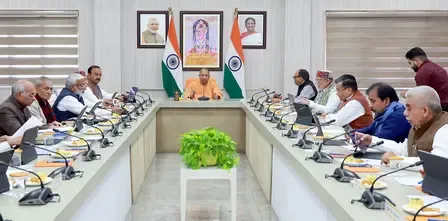
New Delhi, Dec 22 (NationPress) - Uttar Pradesh's Deputy Chief Minister Keshav Prasad Maurya defended the government's decision to introduce a supplementary budget on Monday, emphasizing that this extra financial provision is essential for boosting development throughout the state.
He stated that the supplementary budget aligns with the national growth strategy and aims to ensure the seamless advancement of critical projects and welfare initiatives.
“The supplementary budget is vital for Uttar Pradesh's development. Just as it is imperative for India's overall progress, this additional budget aims to foster growth within the state,” Maurya asserted, highlighting the government's dedication to enhancing infrastructure, public services, and welfare programs.
The announcement of the supplementary budget, however, ignited substantial political discourse within the Uttar Pradesh Assembly, with opposition figures questioning its timing and necessity.
The Leader of the Opposition, Mata Prasad Pandey, acknowledged the legality of presenting a supplementary budget but insisted that the context in which it is introduced warrants thorough examination.
“According to the Constitution, the government is permitted to present a supplementary budget when necessary expenditures surpass allocated funds. This must be submitted to the House to draw from the Consolidated Fund,” Pandey stated, adding that the House's approval is crucial before any extra spending occurs. “The focus now will be on the timing and context of the supplementary budget's introduction,” he noted, signaling that the opposition would closely scrutinize the government's rationale during discussions.
The Samajwadi Party intensified its criticism, alleging mismanagement and ineffective use of the funds provided in the initial budget. Party MLA Kamal Akhtar questioned the rationale for introducing a supplementary budget when a significant portion of the original budget remains unutilized.
“When the government proposes a budget, it typically follows up with a supplementary one only after the previous budget has been spent. Official records show that only about 24 percent has been expended to date, so what is the justification for this new supplementary budget now?” Akhtar inquired.
He accused the government of misleading the public by announcing substantial budgets without ensuring timely execution. “The government presents a large budget but subsequently fails to utilize it, hindering development and impacting ongoing schemes,” he asserted.
Regardless of the criticism, the ruling party insists that supplementary allocations are a standard financial procedure intended to address emerging needs, fund priority sectors, and guarantee that flagship programs are not stalled due to budgetary limitations.
The discussion surrounding the supplementary budget is expected to escalate in the Assembly, with the opposition demanding accountability and transparency, while the government aims to portray the move as a proactive measure to maintain Uttar Pradesh's developmental momentum.
Point of View
The supplementary budget presented by the Uttar Pradesh government reflects a common practice in financial management, yet it also raises valid concerns regarding transparency and accountability. The opposition's scrutiny is essential in ensuring that taxpayer funds are utilized effectively, and it highlights the need for a balanced approach to governance.
NationPress
23/12/2025
Frequently Asked Questions
What is a supplementary budget?
A supplementary budget is an additional budget proposal submitted to the legislature to allocate extra funds beyond what was originally approved, often due to unforeseen expenses.
Why is the UP government presenting a supplementary budget?
The UP government claims that the supplementary budget is necessary to support ongoing development projects and welfare schemes that require additional financial resources.
What are the criticisms regarding the supplementary budget?
Opposition leaders criticize the supplementary budget's timing and necessity, questioning why it is needed when a significant portion of the original budget remains unspent.
Who is responsible for approving the supplementary budget?
The supplementary budget must be approved by the legislative assembly before any additional spending can occur.
How does the supplementary budget affect development?
The supplementary budget is intended to expedite development by providing the necessary funds for key projects and welfare schemes, ensuring they are not delayed due to budgetary constraints.