UP launches Vande Mataram Vatika in all 75 districts on Independence Day
Synopsis
Uttar Pradesh is turning Independence Day into an ecological statement — planting 150 saplings in every one of its 75 districts to mark 150 years of Vande Mataram. With community ownership built in from day one, this is one of the state's most ambitious single-day plantation drives, and a test of whether patriotic symbolism can translate into lasting green cover.
Key Takeaways
The Uttar Pradesh government will establish Vande Mataram Vatika in all 75 districts on 15 August 2025 .
150 saplings will be planted per district under the 'Ek Ped Maa Ke Naam' campaign, marking 150 years of Vande Mataram .
The flagship site at Kukrail picnic spot, Lucknow features an Ashoka Chakra with Ashoka saplings planted along its 24 spokes .
Participants include NCC/NSS volunteers, freedom fighters' families, students, NGOs, and Indian Forest Service officers.
Local communities will manage day-to-day upkeep to ensure long-term survival of the planted saplings.
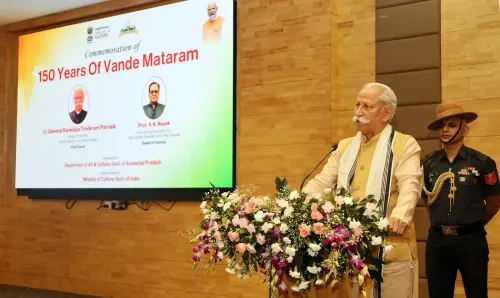
The Uttar Pradesh government has decided to establish 'Vande Mataram Vatika' — dedicated green zones — across all 75 districts of the state as part of its 80th Independence Day celebrations on 15 August. The initiative, spearheaded by the state's Forest Department, commemorates 150 years of the national song 'Vande Mataram' and ties patriotic sentiment to environmental conservation.
What the Vande Mataram Vatika Involves
Under the programme, 150 saplings will be planted in every district — each sapling symbolising one year of Vande Mataram's 150-year legacy. The plantation drive runs under the 'Ek Ped Maa Ke Naam' (One Tree in Mother's Name) campaign, which has been a recurring environmental push by the state administration.
Each Vatika will feature shady, fruit-bearing, and ecologically beneficial species, selected by the Forest Department. Day-to-day upkeep will be handed to local communities, ensuring the sites serve as lasting green heritage rather than one-time ceremonial plantations.
Kukrail Vatika: A Flagship Site
Sitanshu Pandey, Divisional Forest Officer of Awadh Forest Division, said the Vande Mataram Vatika at Kukrail picnic spot in Lucknow will be expanded on Independence Day. 'An Ashoka Chakra has been constructed here, and Ashoka saplings will be planted on the outer area of its 24 spokes. Fencing will be installed around the area to protect the plants. Sapling plantation will be conducted by retired and serving Indian Forest Service officers, as well as representatives from various sections of society,' Pandey said.
Who Will Participate
Deepak Kumar, Additional Principal Chief Conservator of Forests (Social Forestry), described the Vatika as 'an important link in the Ek Ped Maa Ke Naam campaign,' adding that the drive is designed for broad-based public involvement. Participants are expected to include public representatives, students from schools, colleges, and universities, non-governmental organisations, social groups, families of freedom fighters, NCC and NSS volunteers, Youth and Women Welfare Squads (Yuvak/Mahila Mangal Dal), serving and former Indian Forest Service officers, and multiple government departments.
Broader Significance
This comes amid a nationwide push to mark the 150th anniversary of Vande Mataram, the song composed by Bankim Chandra Chattopadhyay that became a rallying cry during India's independence movement. By anchoring a mass plantation drive to this cultural milestone, the Uttar Pradesh government is attempting to blend civic memory with ecological action — a model that, if community ownership takes hold, could outlast the ceremonial occasion. The Forest Department's emphasis on local upkeep is notably different from past drives where plantations withered without sustained follow-through.
Point of View
But India's mass plantation drives have a poor track record on survival rates — government audits have repeatedly found that a significant share of ceremonially planted saplings do not survive beyond one season. The UP Forest Department's decision to embed community ownership from the start is the right instinct, but intent and execution are different things. The real measure of this programme will not be the number of saplings planted on 15 August, but how many are standing — and thriving — by the next Independence Day.
NationPress
28 Sept 2026
Frequently Asked Questions
What is the Vande Mataram Vatika initiative in Uttar Pradesh?
Vande Mataram Vatika is a state-wide plantation programme launched by the Uttar Pradesh government to mark the 80th Independence Day on 15 August and the 150th anniversary of the national song Vande Mataram. Under the scheme, 150 saplings will be planted in each of the state's 75 districts, with local communities responsible for ongoing upkeep.
How many saplings will be planted and why 150?
Exactly 150 saplings will be planted in every district — one for each year of Vande Mataram's 150-year legacy. The number is a deliberate tribute to the national song composed by Bankim Chandra Chattopadhyay, which became a symbol of India's freedom movement.
Where is the flagship Vande Mataram Vatika located?
The flagship site is at the Kukrail picnic spot in Lucknow, where an Ashoka Chakra structure has been built and Ashoka saplings will be planted along its 24 spokes. The site will be fenced and inaugurated by retired and serving Indian Forest Service officers on Independence Day.
Who is involved in the plantation drive?
The programme is designed for broad public participation, involving students from schools, colleges, and universities, NCC and NSS volunteers, NGOs, families of freedom fighters, Youth and Women Welfare Squads, serving and former Indian Forest Service officers, and various government departments.
How will the Vande Mataram Vatika be maintained after Independence Day?
The Forest Department has assigned day-to-day maintenance to local communities, with the aim of ensuring the sites develop into lasting green heritage rather than one-time ceremonial plantations. Shady, fruit-bearing, and ecologically beneficial species have been selected to maximise long-term survival.