Sitharaman: UPI clocked 2,366 cr transactions in July 2026
Synopsis
Finance Minister Nirmala Sitharaman told the Rajya Sabha that UPI processed 2,366 crore transactions worth ₹29.9 lakh crore in July 2026 alone, attributing the system's record scale to grassroots adoption by SVANidhi street vendors and push-cart sellers.
Key Takeaways
UPI processed 2,366 crore transactions in July 2026 , worth ₹29.9 lakh crore .
Finance Minister Nirmala Sitharaman made the announcement in the Rajya Sabha on August 10, 2026 .
She credited PM SVANidhi micro-credit beneficiaries — street vendors and push-cart sellers — as key drivers of UPI's scale.
UPI has been operated by NPCI since its launch in April 2016 as a 24x7 real-time inter-bank payment system.
PM SVANidhi , launched in June 2020 , extended working-capital loans to street vendors and integrated them into digital commerce.
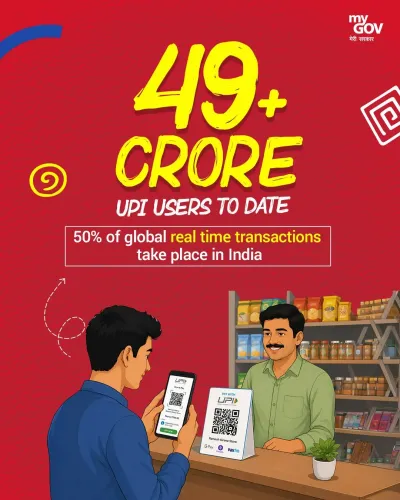
India's UPI is now positioned as the world's largest real-time payment system by transaction volume.
The numbers are staggering — and Union Finance Minister Nirmala Sitharaman made sure Parliament heard every digit. Rising in the Rajya Sabha on Monday, August 10, 2026, she declared that India's Unified Payments Interface (UPI) processed 2,366 crore transactions worth ₹29.9 lakh crore in July 2026 alone — cementing its status as the world's largest real-time payment system.
What 2,366 crore transactions actually means
To put that figure in perspective: ₹29.9 lakh crore in a single month is a volume that most national economies would struggle to match across their entire retail payment infrastructure in a year. Sitharaman's framing was deliberate — 'World's largest real-time payment system belongs to us' — a claim grounded in the sheer scale that UPI has achieved since the National Payments Corporation of India (NPCI) launched it in April 2016.
The system operates 24x7, settling inter-bank transfers instantly, and has become the backbone of India's push away from cash. What has changed in recent years is who is driving the volume.
Street vendors powering a trillion-dollar rail
Sitharaman singled out a specific, often-overlooked constituency: the SVANidhi merchants — the redi-patriwalas (push-cart vendors and pavement sellers) who were brought into the formal financial system through the PM SVANidhi scheme, launched in June 2020. That micro-credit programme extended working-capital loans to street vendors and, critically, tied repayment and daily commerce to digital transactions.
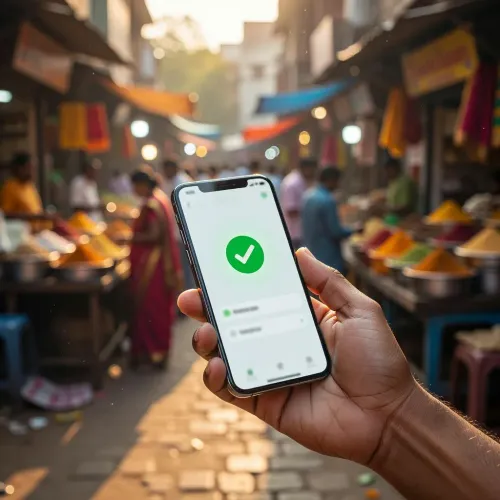
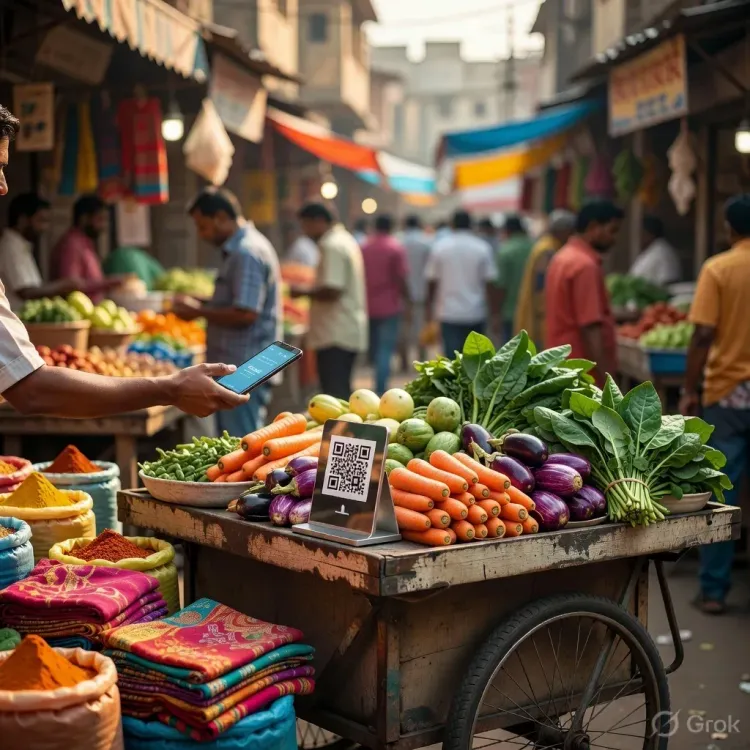
The political and policy point Sitharaman was making is hard to miss: UPI's scale is not just a story of urban smartphone users ordering food online. It is, in large part, a story of a vegetable vendor in a tier-3 town scanning a QR code. That last-mile adoption is what separates India's payment infrastructure from every comparable system on the planet.
NPCI's architecture and the inclusion dividend
NPCI, the umbrella body that operates UPI alongside other retail payment rails, has long positioned financial inclusion — not just transaction convenience — as the system's core mandate. Linking credit schemes such as SVANidhi to UPI gave small vendors both a reason and a mechanism to transact digitally, generating a transaction history that can unlock further formal credit. It is a flywheel: more vendors onboard, more transactions recorded, more data generated, more credit extended.
Sitharaman's Rajya Sabha remarks, posted as the first in a thread, suggest further data or context is forthcoming. Parliament's upper house was receiving a live account of a payment revolution that has reshaped how hundreds of millions of Indians move money — from the boardroom to the street corner.
India did not just build a payments system. It built the world's busiest one — and then handed it to a push-cart vendor.
Point of View
She repositions a fintech story as a welfare story, a framing that resonates ahead of any electoral cycle. The broader arc here is India's decade-long project of using payment rails to pull the informal economy into the formal one — and the July 2026 figures, if sustained, suggest that project has reached critical mass. The real test will be whether transaction volume translates into measurable credit access and income gains for the vendors doing the scanning.
NationPress
25 Sept 2026
Frequently Asked Questions
How many UPI transactions were processed in July 2026?
According to Finance Minister Nirmala Sitharaman's statement in the Rajya Sabha, UPI processed 2,366 crore transactions worth ₹29.9 lakh crore in July 2026.
What is PM SVANidhi and how is it linked to UPI?
PM SVANidhi is a micro-credit scheme launched in June 2020 to provide working-capital loans to street vendors. By tying loan repayments and daily commerce to digital transactions, it has brought push-cart sellers and small merchants onto the UPI network, contributing significantly to overall transaction volumes.
Is UPI really the world's largest real-time payment system?
Finance Minister Sitharaman made this claim in Parliament on August 10, 2026 , citing the July 2026 volume of 2,366 crore transactions . UPI, operated by NPCI since 2016 , has consistently ranked among the highest-volume real-time payment systems globally.
Who operates UPI in India?
UPI is operated by the National Payments Corporation of India (NPCI) , the umbrella body for retail payment systems in India. It was launched in April 2016 as an instant, 24x7 inter-bank transfer system.
What did Nirmala Sitharaman say about UPI in Rajya Sabha?
On August 10, 2026 , Sitharaman stated that India holds the world's largest real-time payment system, citing 2,366 crore UPI transactions worth ₹29.9 lakh crore in July 2026. She credited SVANidhi merchants and street vendors for driving UPI's massive scale.