UPI MDR changes: Finance Ministry rejects foreign influence claims
Synopsis
India's Finance Ministry has pushed back hard against claims that the revised UPI MDR framework was shaped by foreign interests — posting a point-by-point rebuttal on X. With 24.5 billion transactions recorded in August 2026 alone, the government argues a narrow fee on high-value merchant transactions is essential to keep the world's largest real-time payment system financially self-sustaining.
Key Takeaways
The Finance Ministry on 16 September 2026 rejected claims that UPI MDR changes were driven by foreign influence, calling them 'false.' UPI processed 24.5 billion transactions in August 2026 , making it the world's largest real-time interoperable payment system.
Only merchant transactions above ₹2,000 attract a fee of 0.4% , borne by merchants — not customers.
Over 95% of merchant payments are below ₹2,000 and remain completely free.
Vendors earning up to ₹1 lakh per month via UPI QR codes continue to face zero charges .
Merchants cannot pass MDR costs to customers; UPI apps cannot levy platform charges.
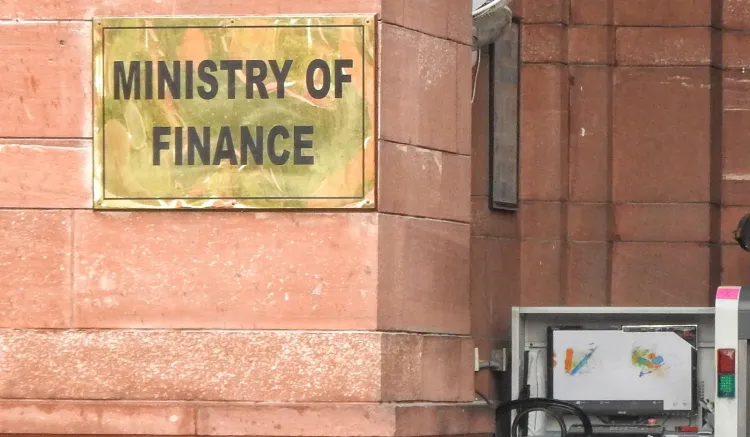
The Finance Ministry on Wednesday, 16 September 2026 firmly rejected circulating claims that changes to the Merchant Discount Rate (MDR) framework within the UPI ecosystem were driven by foreign pressure, asserting that all digital payments policy decisions in India are made independently. The clarification, posted on social media platform X, comes amid growing public debate over the restructured fee model for high-value UPI merchant transactions.
What the Government Said
The ministry posted that such claims are 'false,' adding: 'India's UPI policy decisions are made independently, with the clear goal of building a self-sustaining, inclusive, and affordable digital payments ecosystem.' It underlined that since UPI's launch in 2016, the platform has grown into the world's largest real-time interoperable payment system — entirely on India's own terms.
The ministry further clarified that a small fee on high-value merchant transactions is designed to fund three specific objectives: better infrastructure and cybersecurity, support for small merchants in Tier III–VI towns and rural areas, and expanded UPI adoption through awareness programmes and incentives.
How the New MDR Framework Works
The revised structure retains zero charges for a large majority of users and merchants. According to the ministry, Person-to-Person (P2P) transfers remain free regardless of the amount. Vendors earning up to ₹1 lakh per month via UPI QR codes continue to face no charges. Crucially, over 95% of merchant payments fall below ₹2,000 — and these transactions attract no fee whatsoever.
Only merchant transactions above ₹2,000 attract a fee of 0.4%, to be borne by the merchant — significantly lower than prevailing credit card or other network charges. Specific sectors carry a flat fee: railways, fuel, telecom, bill payments, and insurance are charged a flat ₹5 per transaction above ₹2,000. Mutual fund and securities payments attract just 0.02%, capped at ₹300.
The ministry was emphatic that merchants cannot pass MDR costs to customers, and UPI apps cannot levy platform charges of any kind.
The Scale Behind the Policy Shift
UPI processed a record 24.5 billion transactions in August 2026 alone, underscoring the system's extraordinary scale. The government argued that sustaining this volume — while keeping the network secure and innovative — requires a self-funding mechanism, and the new framework is designed precisely for that purpose.
'The new framework ensures resources from higher-value merchant transactions are reinvested to support small businesses and strengthen digital payments across the country,' the Finance Ministry stated.
Context and What It Means for Users
The MDR revision is the first significant structural change to UPI's fee architecture since the government waived MDR on UPI and RuPay debit card transactions in 2020, compensating banks through a separate government fund. Critics at the time had warned that the zero-MDR mandate was financially unsustainable for payment infrastructure providers. The current framework appears to be a calibrated response to those concerns — narrowly targeting only high-value merchant transactions while insulating small merchants and all consumers entirely.
Notably, the government's rebuttal of 'foreign influence' claims signals heightened sensitivity around UPI's policy narrative, particularly as the platform expands internationally across Southeast Asia, the Middle East, and Europe. All retail customers sending money or paying at shops via QR codes continue to transact at zero cost.
With UPI's international footprint growing and domestic transaction volumes at record highs, the sustainability of the payment infrastructure will remain a closely watched policy question in the months ahead.
Point of View
000 is, by any measure, modest — but the optics of introducing any charge after years of zero-cost promises require careful management. The ministry's X post is as much a narrative intervention as a policy clarification, and its success will depend on whether the 95%-free framing holds in public perception as UPI's international expansion brings fresh scrutiny.
NationPress
16 Sept 2026
Frequently Asked Questions
What are the new UPI MDR charges introduced in 2026?
Under the revised framework, only merchant transactions above ₹2,000 attract a fee of 0.4%, which is borne by the merchant and cannot be passed on to customers. Person-to-Person transfers remain free regardless of amount, and merchants earning up to ₹1 lakh per month via UPI QR codes continue to face zero charges.
Why did the Finance Ministry reject foreign influence claims on UPI MDR?
The Finance Ministry stated that India's UPI policy decisions are made independently, calling the foreign influence claims 'false.' It clarified that the MDR revision is aimed at making the system self-sustaining, secure, and innovative — not at the behest of any external party.
Are UPI payments still free for regular users?
Yes. All Person-to-Person transfers remain free, and over 95% of merchant payments — those below ₹2,000 — attract no charge. UPI apps are also barred from levying platform charges on users.
Which sectors have special MDR rates under the new UPI framework?
Railways, fuel, telecom, bill payments, and insurance attract a flat fee of ₹5 per transaction above ₹2,000. Mutual fund and securities payments are charged at just 0.02%, capped at ₹300.
How large is UPI's transaction volume, and why does it matter for the MDR debate?
UPI processed 24.5 billion transactions in August 2026 alone, making it the world's largest real-time interoperable payment system. The government argues that sustaining this scale requires a self-funding mechanism, which the revised MDR structure is designed to provide.