UPI charges above ₹2,000: Congress's Surjewala accuses Centre of betrayal
Synopsis
Congress's Surjewala has put a ₹5,040 crore price tag on the government's newly notified 0.4% UPI charge — and raised a harder question: why does publicly-funded infrastructure now generate revenue for Walmart-owned PhonePe and Google Pay, which together control 80% of UPI volume, while ordinary merchants and consumers bear the cost?
Key Takeaways
The Modi government notified a 0.4 per cent charge on UPI P2M transactions above ₹2,000 on 14 September 2026 , effective 15 October 2026 .
Congress's Randeep Singh Surjewala estimates the charge will impose an additional burden of ₹5,040 crore annually on merchants and consumers in 2026-27 .
The legal basis is the Taxation and Other Laws (Amendment) Bill, 2026 , passed on 10 August 2026 , amending the Payment and Settlement Systems Act, 2007 .
UPI recorded ₹314 lakh crore across 24,162 crore transactions in 2025-26 , according to PIB data cited by Surjewala.
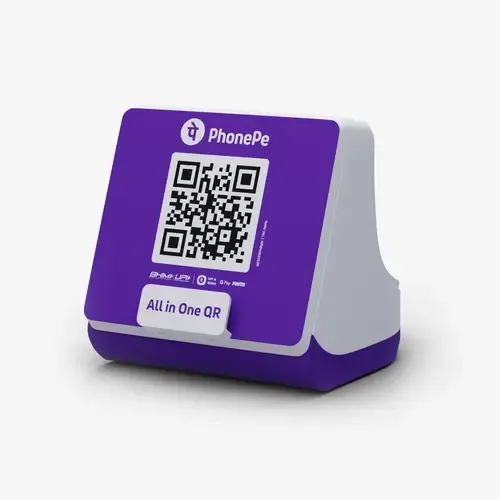
PhonePe (Walmart) and Google Pay together process around 80 per cent of UPI volume, raising questions about who benefits from monetisation.
NPCI reportedly holds ₹6,119 crore in cash reserves and posted a pre-tax profit of ₹1,900 crore , according to Surjewala's figures.
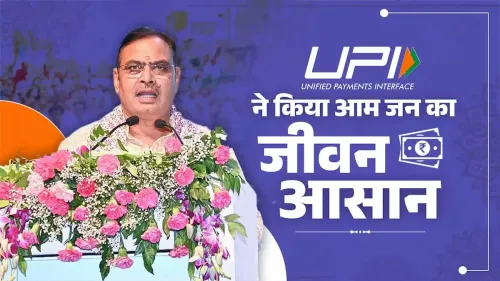
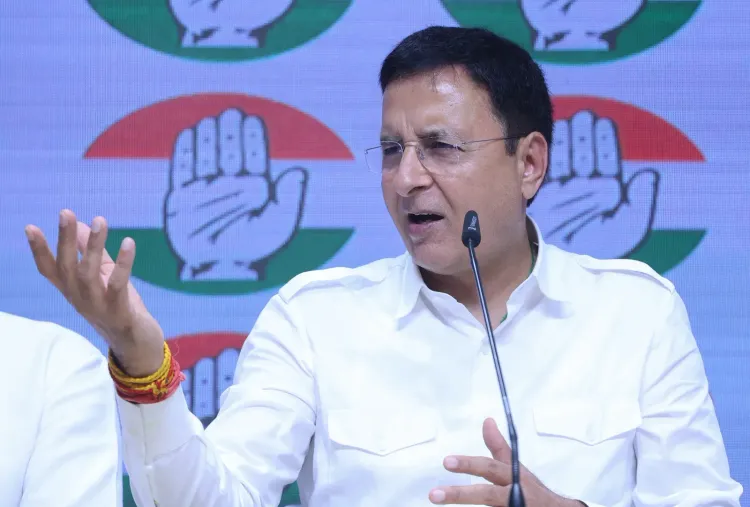
Congress leader and All India Congress Committee (AICC) General Secretary Randeep Singh Surjewala on Wednesday, 16 September 2026, accused the Narendra Modi-led Union government of betraying ordinary citizens by notifying a 0.4 per cent transaction charge on UPI payments above ₹2,000, a move he warned would erode India's digital and cashless economy. Speaking from Bengaluru, Surjewala said 14 September 2026 would go down as a day of 'digital somersault' and 'betrayal and surrender.'
The Notification and the Law Behind It
According to Surjewala, the government on 14 September 2026 formally notified the 0.4 per cent charge on Person-to-Merchant (P2M) UPI transactions above ₹2,000, with the charge set to take effect from 15 October 2026. He alleged the legal groundwork was laid quietly through the Taxation and Other Laws (Amendment) Bill, 2026, introduced on 4 August 2026 and passed by Parliament on 10 August 2026. The bill, he claimed, amended Section 10A of the Payment and Settlement Systems Act, 2007, enabling the government to impose or revise UPI charges via notification — without requiring fresh parliamentary approval each time.
Surjewala argued that UPI was built as a publicly-funded payment infrastructure developed by Indian institutions and banks, and was never intended to become a revenue-generating mechanism for private players. He said the legislative amendment has now handed the government sweeping powers to expand charges to other transaction categories or raise the rate through executive action alone.
The Numbers Surjewala Cited
Drawing on two PIB releases dated 30 April and 24 August, Surjewala said UPI recorded ₹314 lakh crore worth of transactions across 24,162 crore individual payments during 2025-26. He projected the total value could reach ₹400 lakh crore in 2026-27.
Surjewala estimated that transactions above ₹2,000 account for roughly 63 per cent of total UPI value. Assuming P2M transactions constitute around 5 per cent of the total, he calculated that the affected segment could be worth approximately ₹12.60 lakh crore in 2026-27. At the notified 0.4 per cent charge, this would translate into an additional burden of ₹5,040 crore annually, he said. He further warned that if the charge were extended to all UPI categories at a rate of 1 per cent, it could generate as much as ₹2.53 lakh crore per year.
Impact on Traders, Merchants and Consumers
Surjewala argued that while the charge would initially fall on traders, shopkeepers and merchants, it would inevitably be passed on to consumers through higher prices. He said the move effectively taxes the cashless behaviour that successive governments — including the current one — have actively encouraged. He also raised the prospect of the charge being extended to Person-to-Person (P2P) transactions in the future, amplifying the potential burden on ordinary users.
The Foreign Companies Question
Surjewala trained particular attention on the role of foreign-owned digital payment platforms. He alleged that PhonePe, owned by Walmart, processes around 45 per cent of all UPI transactions, and that PhonePe and Google Pay together handle approximately 80 per cent of UPI volume. He questioned why these companies, which benefit from India's publicly-funded UPI infrastructure, are not required to pay an annual participation fee.
He also referenced Visa and Mastercard, alleging that the United States had previously raised concerns about the competitive impact of UPI and RuPay on their India business. Surjewala questioned whether such foreign pressure had in any way influenced the government's decision to permit transaction charges on the platform.
NPCI Finances and the Government's Reported Rationale
On the financial health of the National Payments Corporation of India (NPCI), Surjewala claimed the organisation reported a pre-tax operating profit of ₹1,900 crore and held approximately ₹6,119 crore in cash reserves. He also alleged the government collected ₹1,000 crore in taxes from NPCI last year.
Rejecting the government's reported argument that free UPI transactions and associated security protocols require substantial ongoing funding — reportedly estimated at ₹20,000 crore annually — Surjewala countered by citing the ₹2 lakh crore profit recorded by Public Sector Banks in 2025-26, an RBI dividend transfer of ₹2.86 lakh crore to the Union government for the same year, and a 28 July Rajya Sabha response showing banks collected ₹57,259 crore through minimum-balance penalties, debit-card charges and account-maintenance fees. He demanded that the government publicly justify the rationale for the charges and account for why the law was changed without wider public debate.
The government had not issued a formal response to Surjewala's allegations at the time of this report. How the Centre responds — and whether it clarifies the scope and ceiling of the new charge — will shape the political and economic debate around UPI's future in the weeks ahead.
Point of View
But the numbers deserve scrutiny on both sides. His ₹5,040 crore burden estimate rests on assumptions about P2M's share of total UPI value that the government has not confirmed. The deeper issue, however, is structural: amending the Payment and Settlement Systems Act to allow charge revisions by notification — bypassing parliamentary debate each time — sets a precedent that could outlast any single rate or threshold. The foreign-ownership angle is the most uncomfortable question for the government: if Walmart-owned PhonePe and Google Pay are the primary beneficiaries of a monetised UPI, the 'Make in India' framing of digital payments starts to look contradictory. The Centre's silence so far has only amplified the political noise.
NationPress
16 Sept 2026
Frequently Asked Questions
What is the new UPI transaction charge announced by the government?
The Union government notified a 0.4 per cent charge on Person-to-Merchant (P2M) UPI transactions above ₹2,000 on 14 September 2026, with the charge set to take effect from 15 October 2026. Congress leader Randeep Singh Surjewala has alleged this will impose an annual burden of ₹5,040 crore on merchants and consumers.
What law enables the government to impose UPI charges?
According to Surjewala, the Taxation and Other Laws (Amendment) Bill, 2026 — introduced on 4 August and passed by Parliament on 10 August 2026 — amended Section 10A of the Payment and Settlement Systems Act, 2007. He claims this allows the government to revise or expand UPI charges through executive notification, without fresh parliamentary approval.
Who will bear the cost of the UPI transaction charges?
Surjewala argues the charge will initially fall on traders, shopkeepers and merchants conducting P2M transactions above ₹2,000, but will eventually be passed on to consumers through higher prices. He also warned that the charge could be extended to Person-to-Person (P2P) transactions in the future.
Why has Congress raised concerns about PhonePe and Google Pay?
Surjewala alleged that PhonePe (owned by Walmart) and Google Pay together process around 80 per cent of UPI transactions and stand to benefit commercially from the monetisation of a publicly-funded payment infrastructure. He questioned why these foreign-owned companies are not required to pay an annual participation fee for using India's UPI network.
What is NPCI's financial position, according to Surjewala?
Surjewala claimed NPCI reported a pre-tax operating profit of ₹1,900 crore and held approximately ₹6,119 crore in cash reserves. He used these figures to counter the government's reported argument that free UPI transactions require substantial annual funding, estimated at ₹20,000 crore.