Future of US-India Energy Cooperation Strengthened by SHANTI Bill

Synopsis
In a significant meeting, US Ambassador Sergio Gor discussed the future of energy cooperation with US Secretary of State Wright and Indian Foreign Secretary Misri, following India's passage of the SHANTI Bill, which enhances nuclear collaboration.
Key Takeaways
US-India energy collaboration is set to strengthen following the SHANTI Bill's passage.
The SHANTI Bill enables enhanced civil nuclear partnerships.
Cooperation will extend to coal gasification and LPG exports.
This marks a pivotal milestone in India's energy strategy.
Increased strategic alignment between US and India in energy security.
New Delhi, April 10 (NationPress) United States Ambassador to India, Sergio Gor, expressed optimism after a "constructive dialogue" with US Secretary of State Wright and Foreign Secretary Vikram Misri in New Delhi, concentrating on the prospects of US-India energy collaboration.
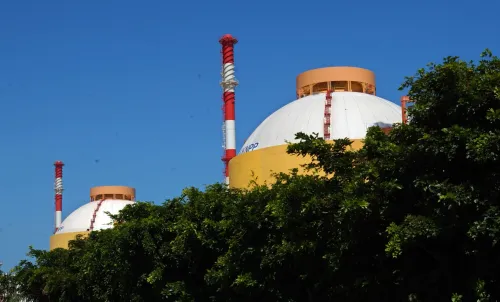
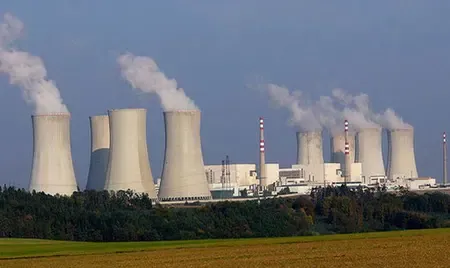
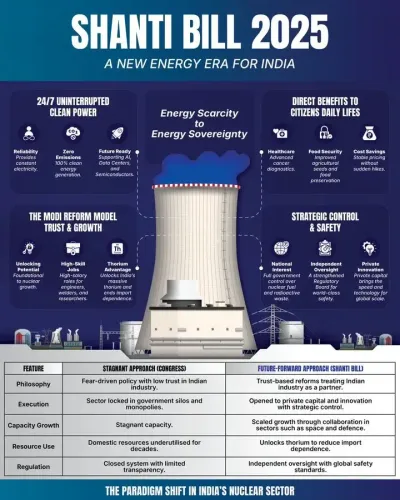
This meeting follows the recent landmark approval of the Sustainable and Holistic Advancement of Nuclear Technology and Infrastructure (SHANTI) Bill in India, which facilitates broader civil nuclear partnerships.
Ambassador Gor pointed out that the US is eager to engage with India not only in civil nuclear energy but also in sectors such as coal gasification and the export of liquefied petroleum gas.
He remarked, "The SHANTI Bill signifies a crucial advancement in India's energy strategy. We are dedicated to collaborating with India to enhance clean and secure energy channels."
The SHANTI Bill, which was passed earlier this year, aims to modernize India’s nuclear energy framework, improve safety protocols, and foster international collaborations.
India has been actively seeking to diversify its energy portfolio, aiming to strike a balance between renewable energy growth and nuclear power to fulfill increasing energy demands while minimizing carbon emissions.
Civil nuclear cooperation has been a fundamental aspect of US-India strategic relations since the pivotal 2008 nuclear agreement, which granted India access to nuclear technology despite its non-signatory status to the Nuclear Non-Proliferation Treaty.
This new legislation is anticipated to expedite joint initiatives, including reactor construction, fuel supply, and technology exchange.
Additionally, officials deliberated on broader energy connections, including US assistance for India’s transition to clean energy, investments in coal gasification technology, and the potential ramp-up of US liquefied petroleum gas shipments to India.
This meeting highlights the increasing strategic alignment between Washington and New Delhi in areas such as energy security, climate initiatives, and technology collaborations, all crucial for India’s long-term development objectives under the Viksit Bharat 2047 initiative.
Point of View
The dialogue between US and Indian officials marks a significant step forward in bilateral energy cooperation. The passage of the SHANTI Bill opens new avenues for collaboration, especially in nuclear energy and clean technologies, aligning with global climate goals and India's developmental vision.
NationPress
18 Sept 2026
Frequently Asked Questions
What is the SHANTI Bill?
The SHANTI Bill stands for Sustainable and Holistic Advancement of Nuclear Technology and Infrastructure, aimed at modernizing India's nuclear energy framework and enhancing international partnerships.
Why is US-India energy cooperation important?
US-India energy cooperation is crucial for strengthening strategic ties, enhancing energy security, and addressing climate change challenges through clean energy initiatives.
What areas will the US cooperate with India in energy?
The US plans to cooperate with India in civil nuclear energy, coal gasification, and liquefied petroleum gas exports.
How does the SHANTI Bill affect India’s energy policy?
The SHANTI Bill significantly advances India's energy policy by modernizing its nuclear framework and opening doors for international collaboration.
What was the significance of the 2008 nuclear agreement?
The 2008 nuclear agreement was pivotal as it allowed India access to nuclear technology despite not being a signatory to the Nuclear Non-Proliferation Treaty, enhancing civil nuclear cooperation.