CM Office Highlights Champawat Woman's REAP Success
Synopsis
The Chief Minister's Office of Uttarakhand spotlighted Pooja from Champawat district as a beneficiary of the REAP rural enterprise scheme, crediting the project with enabling her shift to self-employment. The post underscores the state's focus on women-centric livelihood interventions in remote hill districts prone to out-migration.
Key Takeaways
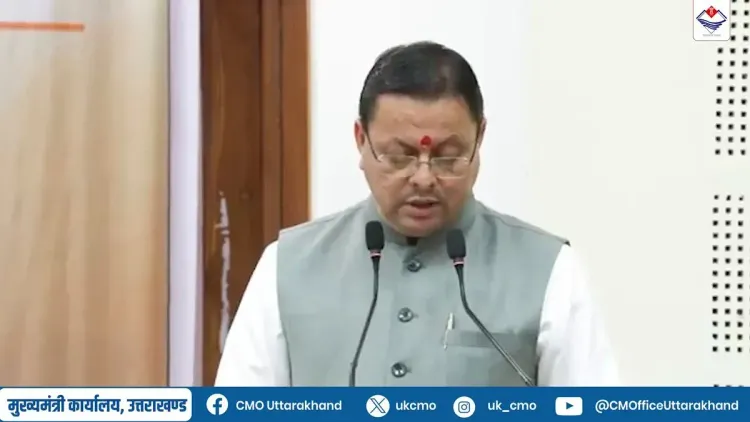
The Chief Minister's Office of Uttarakhand on 4 July 2026 shared a video post highlighting a REAP scheme beneficiary.
Pooja , a woman from Champawat district , is cited as having transformed her livelihood through self-employment under the REAP project .
Champawat is a border district adjoining Nepal , historically affected by rural out-migration and targeted by women's livelihood programmes.
REAP operates within the framework of the National Rural Livelihoods Mission (NRLM) , which Uttarakhand adopted in 2011 .
The post reflects a broader state strategy of using individual beneficiary stories to communicate the reach of rural enterprise schemes.
Future budget allocations and rural development outcome reports will indicate whether REAP-type projects are expanded to additional blocks.
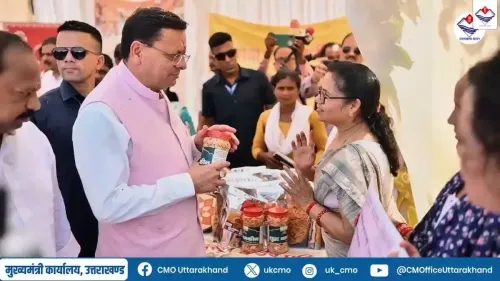
The Chief Minister's Office of Uttarakhand on Saturday, 4 July 2026, spotlighted Pooja, a woman from Champawat district, as a beneficiary of the REAP (Rural Enterprise and Advancement Project) scheme, crediting the initiative with transforming her livelihood through self-employment.
The post, shared in Hindi, stated: 'REAP pariyojana se mili nayi pehchaan, janpad Champawat ki Pooja ne swarozgar se badli apni tasveer' — meaning, 'The REAP project gave a new identity; Pooja from Champawat district changed her own story through self-employment.' A video was attached to the post, though its contents were not independently available for review.
Context
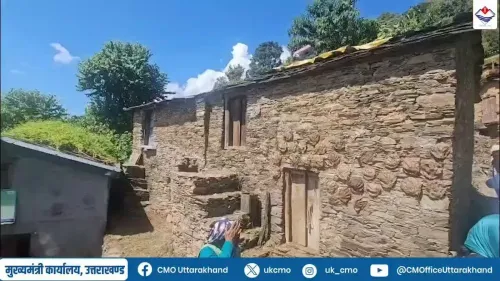
Champawat is a remote hill district in Uttarakhand, bordering Nepal, and has long been among the districts prioritised under rural livelihood and women empowerment programmes. The district, like much of the Himalayan hill belt, faces chronic out-migration as residents — particularly men — leave in search of wage employment in the plains. Women left behind often form the backbone of rural economies, making targeted livelihood interventions especially consequential here. Pooja's story, as presented by the Chief Minister's Office, represents the kind of individual transformation the REAP project is designed to enable: a shift from dependence on irregular or absent household income toward structured self-employment and enterprise ownership.Policy Backdrop
The REAP project is an Uttarakhand rural enterprise initiative aimed at supporting self-employment and micro-enterprises in the state's hill districts. It operates within the broader institutional framework established when Uttarakhand adopted the National Rural Livelihoods Mission (NRLM) in 2011, which created the foundation for women-led self-help groups and enterprise support across the state. Under NRLM and allied state schemes, women's self-help groups have been mobilised at the village level to access credit, skill training, and market linkages. REAP builds on this base by offering more targeted enterprise development support. The specific launch year, operational scale, and detailed programme structure of REAP are not independently verified at this time.Stakeholders and Impact
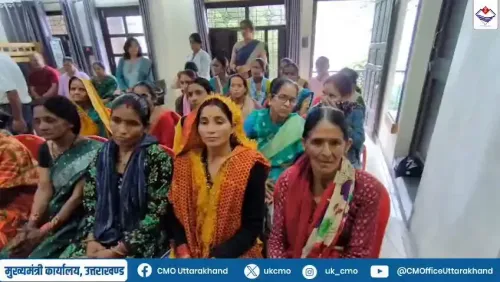
The primary beneficiaries of REAP are rural women in Uttarakhand's hill districts, particularly those in economically marginalised or migration-affected households. By highlighting Pooja's journey, the Chief Minister's Office is signalling the scheme's human impact beyond aggregate statistics — a communication approach that state governments across the Himalayan region have increasingly adopted to demonstrate the reach of rural enterprise programmes. This visibility strategy serves dual purposes: it validates the investment in such schemes for policymakers and budget planners, and it provides aspirational models for other potential beneficiaries in similar circumstances. Women who see themselves reflected in stories like Pooja's are more likely to engage with scheme outreach workers and enrol in available programmes.What's Next
The broader question for Uttarakhand's rural development agenda is whether REAP-type interventions can be scaled to additional blocks and districts beyond current coverage. Upcoming state rural development outcome reports and annual budget allocations will be closely watched for signals on whether the government intends to expand the scheme's footprint. If Champawat's experience is presented as a model, it could influence how similar districts — particularly those with high out-migration rates — are prioritised in future planning cycles. The sustained visibility given to individual beneficiary stories by the Chief Minister's Office also suggests that women-centric livelihood schemes will remain a central plank of the state's welfare communication in the months ahead.Point of View
Translating policy outcomes into a human narrative that resonates far beyond official reports. It reflects a pattern common to Himalayan state governments: using visible individual success to sustain political and public support for rural enterprise schemes that are otherwise difficult to evaluate in real time. The focus on Champawat — a border district with persistent out-migration — signals that the state is keen to demonstrate that its livelihood agenda reaches even its most peripheral geographies. Whether this translates into expanded allocations for REAP or similar schemes will be the real test of intent.
NationPress
3 Oct 2026
Frequently Asked Questions
What is the REAP project in Uttarakhand?
The REAP (Rural Enterprise and Advancement Project) is an Uttarakhand government initiative that supports self-employment and micro-enterprise development in the state's hill districts, building on the foundation of the National Rural Livelihoods Mission adopted in 2011.
Who is Pooja from Champawat mentioned in the Uttarakhand CM post?
Pooja is a woman from Champawat district in Uttarakhand who is cited by the Chief Minister's Office as a beneficiary of the REAP project, having transitioned to self-employment through the scheme.
What is Champawat district known for in Uttarakhand?
Champawat is a remote hill district in Uttarakhand bordering Nepal. It is known for being a focus area of rural livelihood and women empowerment programmes, partly because of high rates of out-migration among its male population.
How does the REAP project help women in Uttarakhand?
The REAP project provides enterprise development support to rural women, enabling them to start or grow micro-enterprises and shift toward structured self-employment, reducing dependence on irregular household income in migration-affected areas.
What is the National Rural Livelihoods Mission and how does it relate to Uttarakhand?
The National Rural Livelihoods Mission (NRLM) is a Government of India programme that Uttarakhand adopted in 2011. It created the institutional base — including women-led self-help groups and credit linkages — on which state schemes like REAP are built.