Uttarakhand CMO Cites Pt. Shriram Sharma Acharya's Reform Message
Synopsis
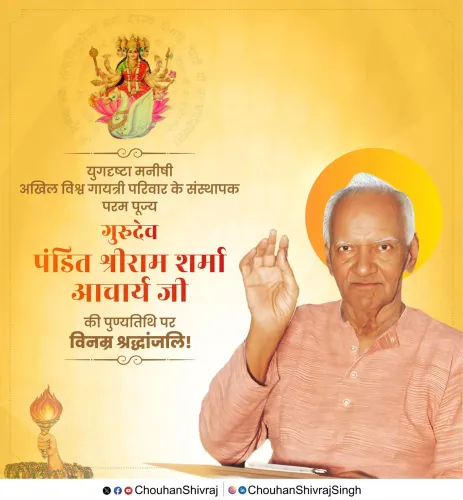
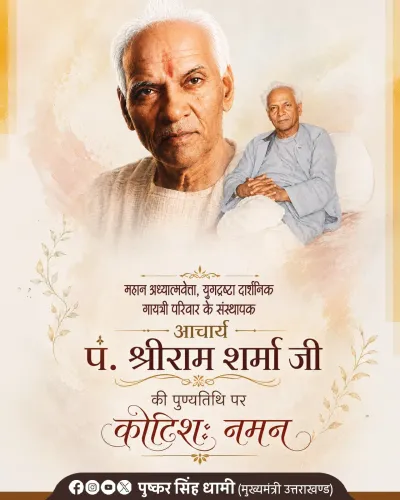
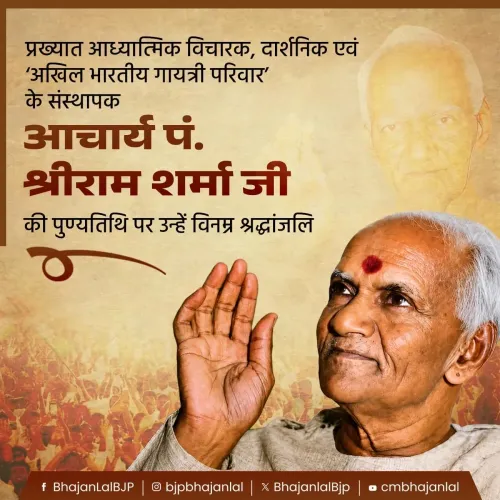
The Uttarakhand Chief Minister's Office on 27 June 2026 paid tribute to spiritual leader Pandit Shriram Sharma Acharya, highlighting his mission to blend spiritual and scientific thought and his rallying message that personal change drives societal transformation.
Key Takeaways
The Uttarakhand CMO posted a tribute to Pandit Shriram Sharma Acharya on 27 June 2026 .
The post cited his work in making spiritual and scientific thought accessible to ordinary people.
His message 'Hum badlenge toh yug badlega' ('If we change, the age will change') was highlighted as a call for positive social transformation.
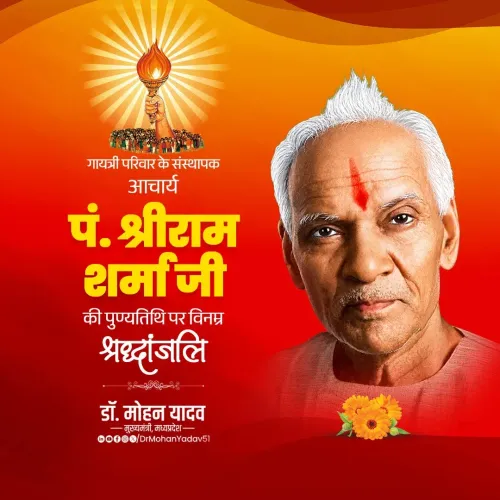
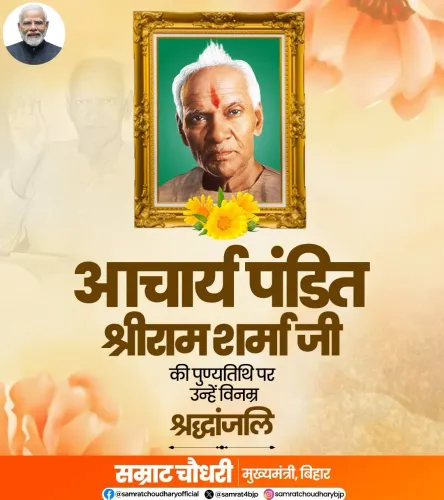
Pandit Shriram Sharma Acharya (1911–1990) founded the All World Gayatri Pariwar and the Shantikunj ashram in Haridwar .
The tribute reflects Uttarakhand's broader effort to align official communications with the state's Vedic and yogic heritage.
The Chief Minister's Office of Uttarakhand on Saturday, 27 June 2026 shared a tribute to spiritual leader Pandit Shriram Sharma Acharya, quoting a remark that his life's work brought together spiritual thought and a scientific outlook in a form accessible to every person.
Context
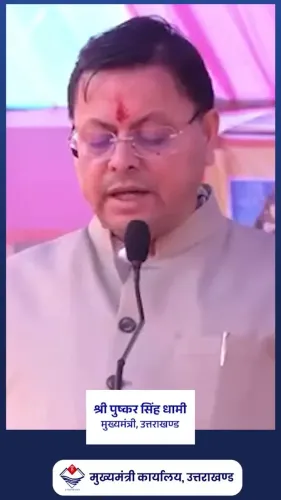
The official post quoted a speaker — whose identity has not been independently confirmed — as saying that Pandit Shriram Sharma Acharya 'adhyatmik chintan aur vaigyanik drishtikon ko saral roop mein jan-jan tak pahunchane ka karya kiya' ('worked to bring spiritual thought and a scientific outlook to every person in a simple form'). The statement further highlighted Acharya's celebrated message: 'Hum badlenge toh yug badlega' — 'If we change, the age will change' — as an enduring inspiration for positive transformation in society.
Who Was Pandit Shriram Sharma Acharya
Pandit Shriram Sharma Acharya (1911–1990) was the founder of the All World Gayatri Pariwar movement and the Shantikunj ashram in Haridwar, Uttarakhand. He dedicated his life to propagating the Gayatri Mantra and to bridging Vedic spiritual traditions with rational, scientific inquiry. His writings and teachings reached millions across India and the diaspora, positioning him as one of the most widely read spiritual authors in modern Hindi literature.
The Shantikunj ashram he established continues to function as a major centre of spiritual education and social reform, drawing pilgrims and scholars to Haridwar — a city that sits at the heart of Uttarakhand's identity as a land of yogic and Vedic heritage.
Policy Backdrop
The Uttarakhand government has consistently woven references to the state's rich spiritual legacy into its public communications, reflecting a broader effort to position the state as a living centre of India's Vedic and yogic traditions alongside its development agenda. Official acknowledgements of figures like Pandit Shriram Sharma Acharya serve to reinforce themes of personal reform, social harmony, and value-based governance that state leadership has emphasised in recent years.
Uttarakhand hosts some of India's most prominent ashrams and spiritual institutions, and the government has periodically aligned cultural outreach programmes with anniversaries and milestones connected to these traditions.
Stakeholders and Impact
The All World Gayatri Pariwar, with its millions of followers across India and abroad, forms the primary community for whom this tribute carries direct resonance. Devotees of Pandit Shriram Sharma Acharya regard his message of self-reform as a practical guide to social change, and official recognition from the state government lends institutional weight to that legacy.
More broadly, the post signals the Uttarakhand government's continued engagement with spiritual communities that are deeply embedded in the social and cultural fabric of the state.
What's Next
Observers will watch for any follow-up state-level events — such as programmes at Shantikunj or cultural outreach initiatives — that build on this acknowledgement. If the government integrates Pandit Shriram Sharma Acharya's philosophy of individual transformation into formal policy messaging or educational programmes, it could mark a more sustained effort to align state identity with the Vedic reform tradition he championed.
Point of View
The CMO subtly frames personal responsibility as a complement to state policy, a rhetorical move that sidesteps partisan lines while appealing broadly to reform-minded citizens. With Haridwar and Rishikesh increasingly positioned as global destinations for wellness and spiritual tourism, such official acknowledgements also carry soft economic signalling — validating Uttarakhand's identity as a living centre of Vedic tradition. Whether this tribute is a standalone gesture or the precursor to a more structured cultural programme around the Gayatri Pariwar's legacy will be worth monitoring.
NationPress
27 Jun 2026
Frequently Asked Questions
Who was Pandit Shriram Sharma Acharya?
Pandit Shriram Sharma Acharya (1911–1990) was an Indian spiritual leader who founded the All World Gayatri Pariwar movement and the Shantikunj ashram in Haridwar, Uttarakhand. He is known for propagating the Gayatri Mantra and integrating spiritual practice with a scientific worldview.
What does 'Hum badlenge toh yug badlega' mean?
'Hum badlenge toh yug badlega' translates to 'If we change, the age will change.' It is one of Pandit Shriram Sharma Acharya's most widely cited messages, emphasising that positive societal transformation begins with individual self-reform.
Why did the Uttarakhand CMO pay tribute to Pandit Shriram Sharma Acharya?
The Uttarakhand Chief Minister's Office shared the tribute on 27 June 2026 to honour Acharya's contribution in making spiritual and scientific thought accessible to the general public, reflecting the state government's broader engagement with Uttarakhand's Vedic and yogic heritage.
What is the All World Gayatri Pariwar?
The All World Gayatri Pariwar is a spiritual organisation founded by Pandit Shriram Sharma Acharya, headquartered at the Shantikunj ashram in Haridwar, Uttarakhand. It promotes the Gayatri Mantra and values of personal reform and social harmony, and has millions of followers in India and abroad.
Where is Shantikunj ashram located?
Shantikunj ashram is located in Haridwar, Uttarakhand, India. It was established by Pandit Shriram Sharma Acharya and continues to serve as the global headquarters of the All World Gayatri Pariwar movement.