Kerala liquor tax cut: CM Satheesan holds firm as Finance Bill sparks UDF rift
Synopsis
Kerala CM V.D. Satheesan has locked in a low-alcohol liquor tax cut inside the draft Finance Bill — despite open revolt from coalition partner IUML and senior Congress leader V.M. Sudheeran. With the Bill hitting the Assembly floor on 1 July, what began as a tax technicality has become the UDF's sharpest internal crisis of the session.
Key Takeaways
Satheesan has included a low-alcohol liquor tax reduction in the draft Finance Bill , published on 27 June 2025 .
The Bill is scheduled for introduction in the Kerala Assembly on 1 July 2025 .
Coalition partner Indian Union Muslim League (IUML) has openly opposed the proposal, exposing a UDF rift.
Senior Congress leader V.M.
Sudheeran has demanded the provision be dropped before the Bill reaches the floor.
The government maintains the move is tax rationalisation only and will not automatically permit new low-alcohol products without separate Excise Department approval.
Religious organisations, the principal Opposition, and anti-liquor groups have also registered objections.
Kerala Chief Minister V.D. Satheesan has pressed ahead with a contentious proposal to reduce taxes on low-alcohol beverages, formally embedding the measure in the draft Finance Bill published on Saturday, 27 June. The Bill is scheduled to be introduced in the Kerala Legislative Assembly on 1 July, setting the stage for what is shaping up as one of the most charged political confrontations of the current session.
What the Finance Bill Proposes
The draft legislation lowers the tax burden on low-alcohol liquor products. However, the government has been quick to clarify that passage of the Bill will not automatically open the market to new low-alcohol beverages. Officials confirmed that any new product would still require a separate, independent approval from the Excise Department before it can be sold commercially. The government insists the measure is a tax rationalisation exercise and does not represent a shift in Kerala's broader liquor policy.
Cracks Within the UDF Coalition
The proposal has exposed significant fault lines within the ruling United Democratic Front (UDF). Key coalition partner, the Indian Union Muslim League (IUML), has openly opposed the move, making it one of the more visible instances of intra-coalition friction under Satheesan's tenure. With differences persisting, the Chief Minister is reportedly expected to hold consultations with constituent partners in the coming days in a bid to build consensus before the policy is implemented.
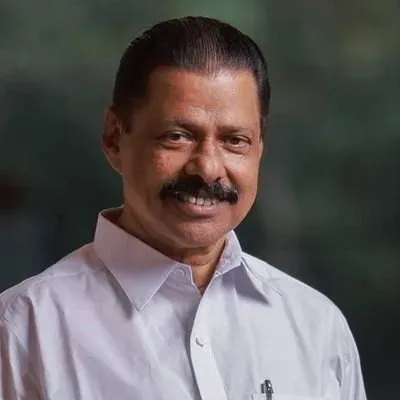
Within the Indian National Congress (Congress) itself, the picture is equally complicated. Excise Minister T. Siddique, who had initially raised reservations, now maintains that the controversy has been resolved within the party. Yet dissent has not subsided. Senior Congress leader and former Kerala Pradesh Congress Committee (KPCC) president V.M. Sudheeran has emerged as the sharpest internal critic, demanding that the tax concession be withdrawn and the relevant provisions dropped from the Finance Bill before it reaches the floor of the House. Sudheeran has argued that the move contradicts Congress's long-standing commitment to restricting liquor availability.
Opposition and Civil Society Push Back
Resistance has extended well beyond the ruling coalition. The principal Opposition, religious organisations, and anti-liquor campaigners have all voiced concern, contending that reducing taxes on low-alcohol beverages would undermine Kerala's stated policy of discouraging alcohol consumption. Critics argue that a tax reduction, regardless of how it is framed, sends a permissive signal on alcohol access — particularly for younger consumers who might find lower-priced, low-alcohol products more accessible.
This is not the first time a Kerala government has faced pressure over alcohol policy. The state has historically oscillated between prohibition-leaning positions and pragmatic revenue considerations, with liquor taxes forming a substantial share of state excise revenue.
What Happens Next
The Finance Bill's introduction on 1 July will force a formal legislative reckoning. Government sources have stated there is no immediate plan to alter the tax regime beyond the provisions already in the Bill. Whether Satheesan can hold the coalition together through the Assembly debate remains the central political question. The proposed tax cut has rapidly evolved from a fiscal footnote into a potent flashpoint — one the Opposition is well-positioned to exploit both inside and outside the Kerala Assembly.
Point of View
The government faces the embarrassing prospect of amending its own Finance Bill on the floor of the House. What mainstream coverage underplays is the revenue subtext — Kerala's fiscal position makes any rationalisation of excise duty attractive to the treasury, and that pressure is unlikely to disappear regardless of how this particular confrontation resolves. The deeper contradiction is that Congress, which frames itself as a party committed to restricting liquor, is now defending a tax cut on alcohol as 'rationalisation' — a framing its own senior leaders are publicly rejecting.
NationPress
26 Sept 2026
Frequently Asked Questions
What is the Kerala liquor tax cut proposal in the Finance Bill?
The draft Kerala Finance Bill, published on 27 June 2025, proposes a reduction in taxes on low-alcohol beverages. The government says this is a tax rationalisation measure and that any new product will still require separate Excise Department approval before it can be sold.
When will the Kerala Finance Bill be introduced in the Assembly?
The Finance Bill is scheduled to be introduced in the Kerala Legislative Assembly on 1 July 2025, where it is expected to trigger significant debate given the opposition from within the ruling UDF coalition and from outside it.
Why is the IUML opposing the Kerala liquor tax cut?
The Indian Union Muslim League (IUML), a key UDF coalition partner, has openly opposed the proposal on the grounds that reducing taxes on alcohol contradicts the coalition's stated commitment to discouraging liquor consumption in Kerala.
Who is V.M. Sudheeran and why is he opposing his own government?
V.M. Sudheeran is a senior Congress leader and former Kerala Pradesh Congress Committee (KPCC) president. He has emerged as the sharpest internal critic of the proposal, demanding that the low-alcohol tax concession be withdrawn from the Finance Bill before it is taken up in the Assembly, arguing it is inconsistent with Congress's long-standing position on liquor policy.
Will the tax cut automatically allow new low-alcohol drinks to be sold in Kerala?
No, according to the government. Officials have clarified that passage of the Finance Bill will not automatically permit the sale of new low-alcohol beverages — any new product will still require a separate approval from the Excise Department before it can enter the market.