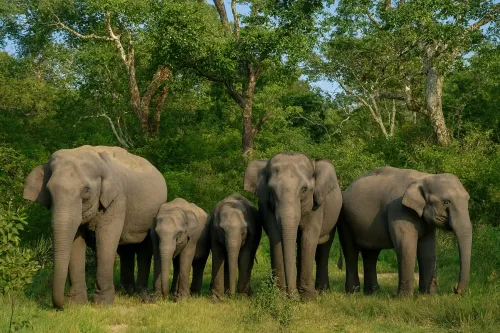
Bhupender Yadav Reaffirms India's Elephant Conservation Pledge
Synopsis
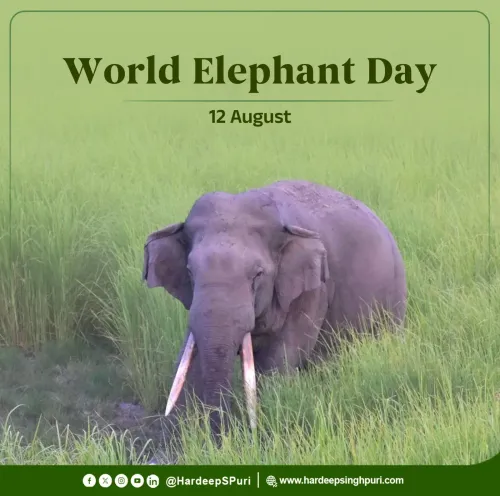
Union Environment Minister Bhupender Yadav marked World Elephant Day on August 12, 2026 by reaffirming India's conservation commitments — pointing to 33 Elephant Reserves, 150 validated corridors, and intensified human-elephant conflict measures as the pillars of a decades-long effort to keep elephants and people coexisting.
Key Takeaways
Union Environment Minister Bhupender Yadav marked World Elephant Day (August 12, 2026) by outlining India's elephant conservation framework.
India operates 33 Elephant Reserves spanning 14 states , backed by 150 scientifically validated corridors .
Project Elephant , launched in 1992 , is the central scheme providing financial and technical support to range states.
The Wildlife (Protection) Act, 1972 provides the legal basis for notifying reserves and protecting corridors.
Human-elephant conflict — driven by habitat fragmentation — remains the most pressing on-ground challenge for forest departments and border communities.
Elephants are keystone species; their corridor protection directly underpins India's broader forest, biodiversity, and climate commitments.
On World Elephant Day, August 12, 2026, Union Environment Minister Bhupender Yadav placed India's elephant conservation record squarely in the spotlight — citing 33 Elephant Reserves across 14 states and 150 scientifically validated corridors as the architecture holding together one of the world's most ambitious wildlife protection programmes.
A network built over three decades
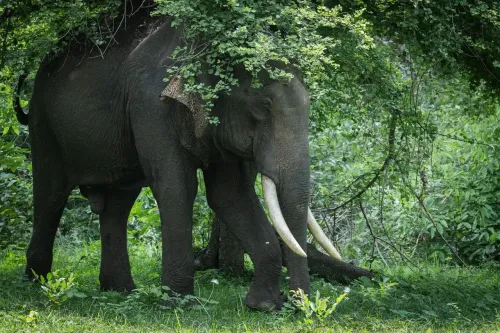
The scaffolding beneath these numbers is Project Elephant, the centrally sponsored scheme launched in 1992 to channel financial and technical support to range states. Modelled on the same state-centre coordination logic as Project Tiger, it provides the legal muscle — rooted in the Wildlife (Protection) Act, 1972 — to notify reserves, protect movement corridors, and fund on-ground management by state forest departments.
Corridors are the critical piece. Habitat fragmentation caused by roads, farms, and settlements has pushed elephants into closer, often fatal, contact with human communities. The ministry's emphasis on 150 validated corridors signals that connectivity — not just protected area size — is now the metric that matters.
Human-elephant conflict: the harder problem
Yadav's post specifically flags 'stronger measures to mitigate human-elephant conflict,' the sharpest political and ecological pressure point in elephant range states. Communities in Assam, Odisha, West Bengal, Tamil Nadu, Kerala and elsewhere have long borne the cost of living alongside one of the subcontinent's most powerful animals — crop raids, property damage, and, in the worst cases, fatalities on both sides.
Advanced population monitoring, also mentioned by the minister, feeds directly into conflict management: knowing where herds are, how they move, and which corridors are under stress allows forest departments to intervene before flashpoints ignite.
Why elephants are an ecological proxy
Yadav's framing — 'when we secure the future of elephants, we secure our forests, biodiversity and ecological heritage' — is not rhetorical decoration. Elephants are keystone species: their movement disperses seeds across vast distances, their feeding opens forest canopy, and their presence is a reliable indicator of ecosystem health. A functioning elephant corridor is, almost by definition, a functioning forest.
That ecological logic is also a political argument. Protecting elephants protects the carbon sinks, the watershed cover, and the biodiversity corridors that India has committed to in its international climate and biodiversity obligations.
The next all-India elephant population estimation exercise will be the real test of whether the network of reserves and corridors is holding — and whether the conflict mitigation measures are translating into fewer casualties on both sides of the forest edge.
Point of View
Corridors) to signal institutional depth at a moment when India's international biodiversity and climate commitments demand credible domestic action. The explicit mention of human-elephant conflict mitigation is telling: it acknowledges that conservation credibility now depends on outcomes for border communities, not just protected-area statistics. The post also fits a broader BJP government pattern of framing wildlife conservation as an expression of cultural and ecological heritage, lending it both nationalist resonance and multilateral legitimacy. The real accountability moment will come with the next population census and any corridor notification data — numbers that will either validate or complicate the ministry's confident framing.
NationPress
26 Sept 2026
Frequently Asked Questions
What is Project Elephant and when was it launched?
Project Elephant is a centrally sponsored scheme launched in 1992 to conserve wild elephants, their habitats, and movement corridors by providing financial and technical support to range states. It operates through state-centre coordination under the Union Environment Ministry.
How many Elephant Reserves does India have?
According to Environment Minister Bhupender Yadav 's statement on World Elephant Day 2026 , India has 33 Elephant Reserves spread across 14 states .
What are elephant corridors and why do they matter?
Elephant corridors are scientifically identified strips of land that connect fragmented habitats, allowing herds to move freely between reserves. India has 150 validated corridors ; without them, elephants become isolated, biodiversity declines, and human-elephant conflict intensifies.
What is human-elephant conflict and which states are most affected?
Human-elephant conflict refers to clashes — crop raids, property damage, and fatalities — that arise when elephants move through agricultural or residential areas due to habitat loss. States such as Assam, Odisha, West Bengal, Tamil Nadu, and Kerala are among the most affected range states.
What is World Elephant Day?
World Elephant Day is observed every year on August 12 to raise global awareness about the threats facing both African and Asian elephants and to promote their conservation.