Dia Mirza calls for elephant corridor protection on World Elephant Day

Synopsis
On World Elephant Day, Dia Mirza issued a pointed appeal that reframes elephant conservation entirely — it is no longer just about forests, but about the ancient corridors connecting them. With roads, mines, and settlements severing routes elephants have used for millennia, she argues that landscape connectivity must become a non-negotiable part of India's land-use policy.
Key Takeaways
Dia Mirza appealed to the government to protect elephant corridors on World Elephant Day, 12 August .
She described safe elephant movement as a 'right of passage' , framing connectivity as essential to long-term elephant survival.
Expanding roads, railways, settlements, and mines are fragmenting habitats and intensifying human-elephant conflict , she warned.
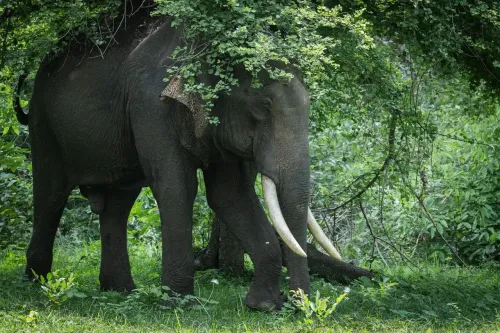
The Asian Elephant is recognised as India's National Heritage Animal .
Wildlife Trust of India (WTI) has been working with governments and communities to identify and restore critical elephant corridors nationwide.
Mirza called on governments to integrate landscape connectivity into land-use planning as a policy priority.
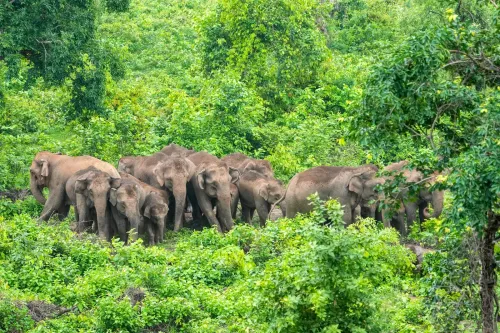
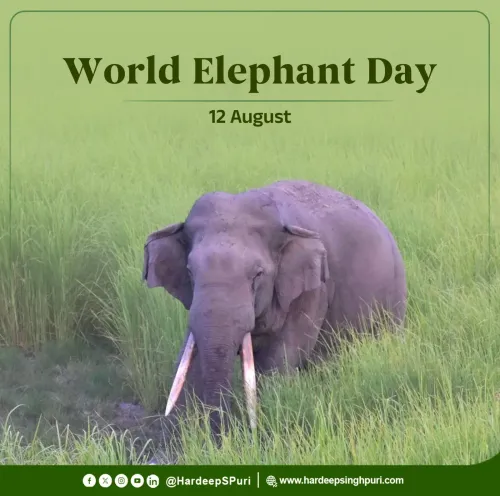
Actress and environmental advocate Dia Mirza on 12 August appealed to the government to strengthen protections for elephant corridors across India, emphasising that the safe movement of elephants through their ancestral landscapes is as critical as preserving forests and wildlife sanctuaries. Her call came on the occasion of World Elephant Day, observed annually on 12 August to spotlight the threats faced by elephants globally.
The Right of Passage Appeal
In a video shared on Instagram, Mirza described elephants as among the world's greatest travellers, tracing routes across rivers, grasslands, farms, and forests for thousands of years in search of food, water, mates, and genetic diversity. She framed the preservation of these routes as a 'right of passage' — a term also central to the Wildlife Trust of India (WTI)'s ongoing conservation initiative of the same name.
'When we think about protecting elephants, we often picture dense forests and protected areas. But what if I told you that the future of elephants depends just as much on the landscapes beyond these forests?' Mirza said in the video.
What Is Threatening Elephant Corridors
Mirza pointed to expanding roads, railways, settlements, and mines as the primary drivers fragmenting elephant habitats into isolated pockets. She warned that as ancient routes disappear, elephants are forced into shrinking spaces, intensifying human-elephant conflict and undermining the long-term genetic health of wild populations.
'These ancient routes are disappearing. Fragmented habitats are breaking landscapes into isolated islands. Elephants are forced into smaller spaces, increasing conflict with people and threatening their long-term survival,' she said.
What Science and Policy Must Do
Citing scientific consensus, Mirza argued that elephant conservation must now extend beyond protected areas to encompass landscape connectivity — ensuring that development planning, business activity, and local land use all account for wildlife movement. She called on governments to integrate connectivity into land-use frameworks, businesses to build responsibly, and local communities — whom she described as the true stewards of these landscapes — to remain central to solutions.
'Science is now unequivocal. Protecting elephants is no longer just about protecting forests. It's about protecting connectivity,' she said.
Wildlife Trust of India's Role
Mirza highlighted the work of the Wildlife Trust of India (WTI), which has spent decades identifying, securing, and restoring critical elephant corridors in partnership with governments, communities, and conservation organisations. She urged the public to contribute to WTI's efforts, noting in her caption that the Asian Elephant is also India's National Heritage Animal. 'Every contribution, big or small, can make a meaningful difference,' she wrote.
As human infrastructure continues to encroach on wildlife habitats, advocates argue that corridor protection must be written into national land-use policy — not treated as an afterthought to development planning.
Point of View
Yet many remain unnotified, leaving them vulnerable to infrastructure projects that clear environmental clearance without accounting for wildlife movement. Until corridor protection is embedded in environmental impact assessment norms — not left to voluntary corporate responsibility or celebrity advocacy — the 'right of passage' will remain a slogan rather than a safeguard.
NationPress
27 Sept 2026
Frequently Asked Questions
What is the 'right of passage' for elephants that Dia Mirza is advocating for?
The 'right of passage' refers to the protection of ancient movement corridors that elephants have used for thousands of years to travel across rivers, grasslands, farms, and forests in search of food, water, and mates. Dia Mirza, in partnership with the Wildlife Trust of India, argues these corridors are as vital to elephant survival as protected forest areas.
Why are elephant corridors under threat in India?
Expanding roads, railways, human settlements, and mining operations are fragmenting elephant habitats, cutting off ancestral movement routes. This forces elephants into smaller, isolated spaces, escalating human-elephant conflict and reducing genetic diversity within wild populations.
What is the Asian Elephant's status in India?
The Asian Elephant is designated as India's National Heritage Animal, reflecting its cultural and ecological significance. It is also listed as an endangered species, making corridor protection a matter of both conservation and national heritage policy.
What is the Wildlife Trust of India doing about elephant corridors?
The Wildlife Trust of India (WTI) has been working for decades with governments, local communities, and conservation partners to identify, secure, and restore critical elephant corridors across India through its Right of Passage initiative, aiming to ensure that development and conservation can advance together.
When is World Elephant Day observed and why?
World Elephant Day is observed every year on 12 August to raise global awareness about the threats facing both African and Asian elephants, including habitat loss, human-wildlife conflict, and poaching.