Uttarakhand CM Office: Life Certificate Verification Simplified for Pensioners
Synopsis
The Chief Minister's Office of Uttarakhand announced on 8 June 2026 that life certificate verification for state pensioners has been simplified. The move reduces the physical compliance burden on retired government employees, building on India's Aadhaar-enabled Jeevan Pramaan framework launched in 2014.
Key Takeaways
The Chief Minister's Office of Uttarakhand announced on 8 June 2026 that life certificate verification for state pensioners has been made easier.
The Jeevan Pramaan Patra (life certificate) is a mandatory annual submission for retired government employees to continue receiving pension payments.
The announcement builds on the national Jeevan Pramaan portal launched by the Government of India in November 2014 , which enabled Aadhaar-based biometric verification.
Pensioners in Uttarakhand's remote hill districts are expected to benefit most, as physical travel for in-person verification has historically been a significant barrier.
Specific implementation details — such as mobile app integration, doorstep verification, or CSC-based facilitation — are yet to be officially announced by the state.
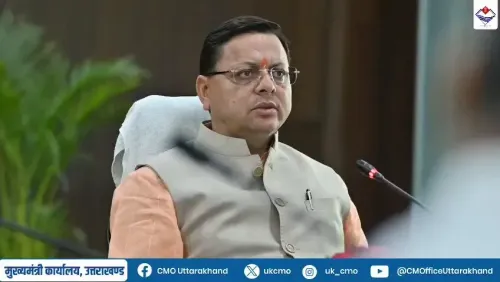
The Chief Minister's Office of Uttarakhand announced on Monday, 8 June 2026 that the process of life certificate verification for pensioners in the state has been made easier, signalling a push to reduce bureaucratic burden on retired government employees.
Context
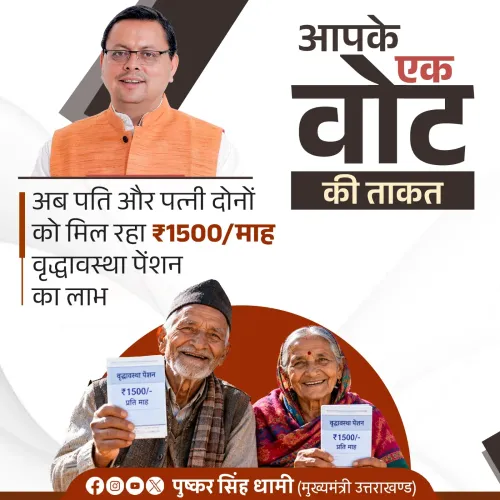
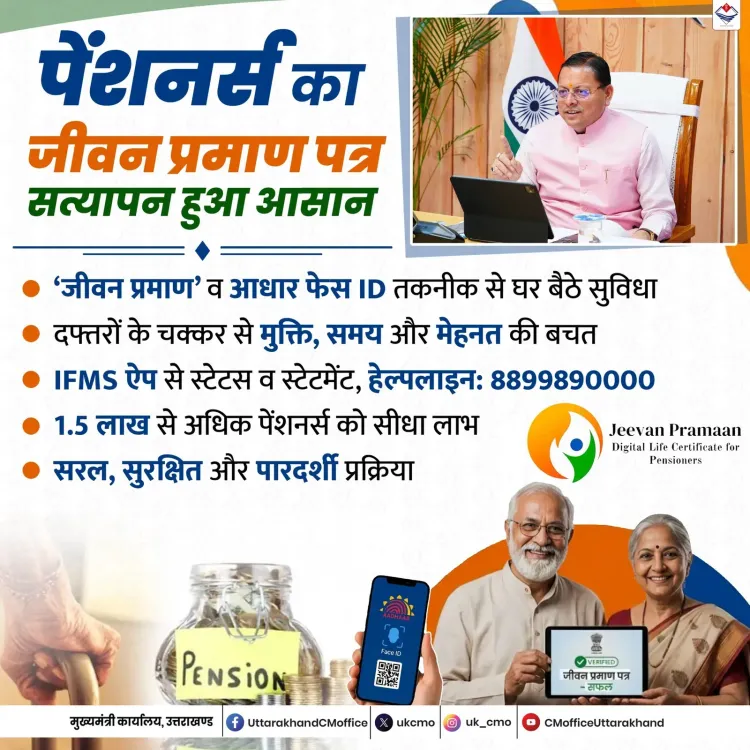
The post, shared on the official CMO handle, states in Hindi: 'Pensioners ka Jeevan Pramaan Patra satyapan hua aasan' — meaning 'Life certificate verification for pensioners has become easier.' The announcement directly addresses a long-standing pain point for Uttarakhand's retired state government workforce, who are required to submit annual life certificates to continue receiving their pension disbursements without interruption.
Life certificates, known formally as Jeevan Pramaan Patra, serve as proof that a pensioner is alive and eligible to continue receiving pension. Historically, this has required physical visits to banks, treasuries, or government offices — a process that has been particularly burdensome for elderly or differently-abled retirees.
Policy Backdrop
The move aligns with a national e-governance framework that has been evolving since the Government of India launched the Jeevan Pramaan portal in November 2014. That platform introduced Aadhaar-enabled biometric life certificate submission, allowing pensioners to authenticate their identity digitally without appearing in person before a disbursing authority.
Indian states have progressively integrated Aadhaar-based digital verification tools to reduce mandatory physical visits, consistent with broader Direct Benefit Transfer (DBT) and digital public infrastructure reforms. Uttarakhand's latest step appears to build on this national foundation, though the specific mechanism — whether a new mobile application, a treasury portal integration, or a district-level facilitation drive — has not been detailed in the post.
Stakeholders and Impact
The primary beneficiaries are retired state government employees of Uttarakhand who draw pensions from the state treasury. For many pensioners, especially those residing in the state's hilly and remote districts, travelling to a bank branch or government office for annual verification has historically involved significant physical effort and cost.
A simplified verification process is expected to reduce dependency on intermediaries, cut down on delays in pension credit, and improve the overall welfare of a demographic that skews older and often lives in geographically challenging terrain. The announcement is consistent with the state government's stated focus on citizen-centric service delivery.
What's Next
The operational details of the simplified system — including whether it involves doorstep verification drives, Aadhaar-based app submissions, or Common Service Centre (CSC) integration — are expected to be communicated through the state's finance or treasury department. District-level implementation timelines and outreach to pensioners in remote areas will be critical to the measure's real-world impact.
If the state rolls out a scalable digital or assisted-verification model, it could serve as a template for other hill states grappling with similar last-mile service delivery challenges for their pensioner populations.
Point of View
It elevates a routine administrative improvement to a governance achievement, which is a well-worn playbook in Indian state politics. The broader arc here is India's decade-long effort to digitise pension infrastructure, and Uttarakhand's move — if backed by genuine last-mile implementation — could meaningfully ease compliance for pensioners in its difficult hill terrain. The real test will be whether the simplification reaches the elderly retiree in a remote block, or remains a headline confined to urban beneficiaries.
NationPress
26 Oct 2026
Frequently Asked Questions
What is Jeevan Pramaan Patra and why do pensioners need it?
Jeevan Pramaan Patra is an annual life certificate that pensioners must submit to prove they are alive and eligible to continue receiving their pension. Without it, pension payments can be paused or stopped.
How has Uttarakhand made life certificate verification easier for pensioners?
The Uttarakhand Chief Minister's Office announced on 8 June 2026 that the verification process has been simplified, though full operational details such as specific apps or doorstep services are yet to be officially detailed.
What is the Jeevan Pramaan portal launched by the Government of India?
The Jeevan Pramaan portal, launched by the Government of India in November 2014, is an Aadhaar-enabled digital platform that allows pensioners to submit biometric life certificates without physically visiting a bank or treasury.
Who benefits from the simplified pension verification in Uttarakhand?
Retired state government employees of Uttarakhand who receive pensions from the state treasury are the primary beneficiaries, particularly elderly pensioners in remote hill districts who face difficulty travelling for in-person verification.
Is digital life certificate submission available across all Indian states?
Yes, the national Jeevan Pramaan platform is available to both central and state government pensioners across India, and many states have progressively integrated it with their treasury and banking systems as part of broader e-governance reforms.