CM Dhami Hails Uttarakhand Police's President's Colour Award

Synopsis
Chief Minister Pushkar Singh Dhami congratulates Uttarakhand Police on receiving the President's Police Colour, noting force growth from 13,000 to 26,000 personnel, over Rs 307 crore in drug seizures in four years, and plans for a State Cyber Crime Coordination Centre and a Centre of Excellence at Narendra Nagar.
Key Takeaways
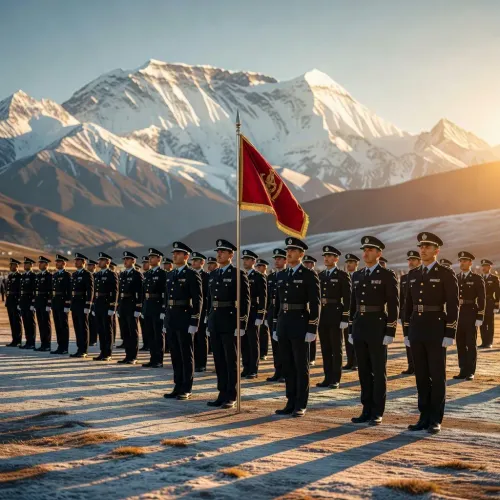
Uttarakhand Police has been awarded the President's Police Colour (Rashtrapati Police Nishan) , the highest peacetime honour for an Indian police force.
The state force has grown from roughly 13,000 personnel, 96 stations and 42 outposts at statehood in 2000 to over 26,000 personnel today.
The Drugs Free Devbhoomi campaign has resulted in over 7,000 arrests and seizure of narcotics worth more than Rs 307 crore in four years.
Women now constitute approximately 14 percent of Uttarakhand Police, with the late Kanchan Chaudhary Bhattacharya recognised as India's first woman DGP who led the force.
Uttarakhand is establishing a State Cyber Crime Coordination Centre and upgrading the Narendra Nagar Police Training College into a Centre of Excellence.
The state has implemented a Uniform Civil Code , an anti-conversion law and an anti-riot law alongside the Centre's three new criminal codes.
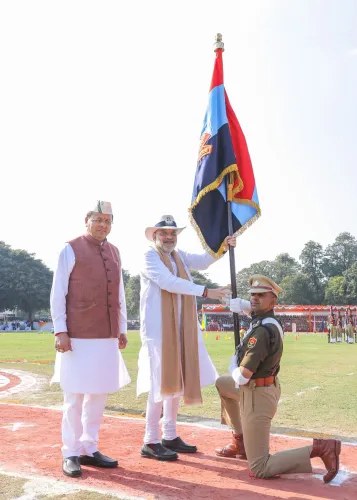
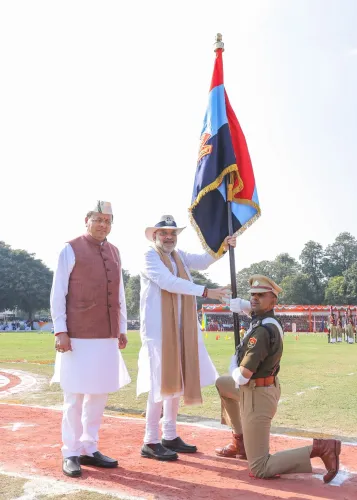
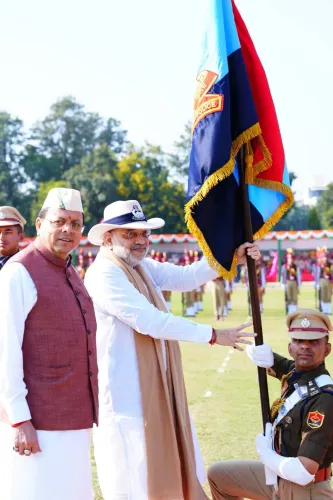
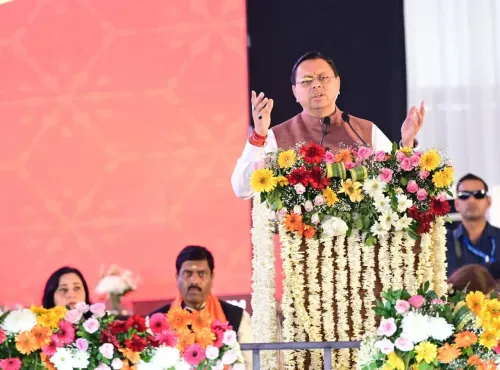
The highest peacetime honour a police force can receive in India — the President's Police Colour (Rashtrapati Police Nishan) — has been awarded to Uttarakhand Police, and Chief Minister Pushkar Singh Dhami used the occasion to lay out just how far the force has come since statehood and where it is heading next. The announcement was made on 6 November 2026 as Union Home Minister Amit Shah visited Devbhoomi Uttarakhand for the ceremony.
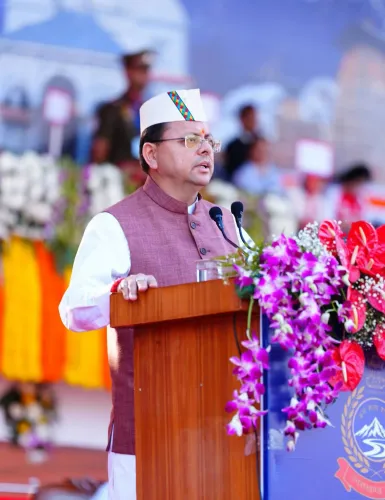
CM Dhami said the honour is 'national recognition of Uttarakhand Police's courage, dedication to duty, discipline and public service — a matter of pride for every citizen of the state.' He welcomed Shah to the state, calling the Home Minister's visit a marker of the Centre's continued commitment to police modernization.From 13,000 Jawans to 26,000-Plus: The Growth Story
The numbers tell a stark story. When Uttarakhand was carved out of Uttar Pradesh in November 2000, the nascent state police had roughly 13,000 personnel, 96 police stations and 42 outposts. Today, over 26,000 police personnel are deployed across the state. That is a doubling of force strength in a quarter-century — and Dhami framed it as a foundation, not a finish line.
The Chief Minister also paid tribute to the late Kanchan Chaudhary Bhattacharya — India's first woman Director General of Police — who led Uttarakhand Police, calling her leadership a source of enduring pride for the state. Women now make up roughly 14 percent of the state force, Dhami noted, a figure the government says it intends to push further.
Drugs Free Devbhoomi: Rs 307 Crore Seized, 7,000 Arrested
The centrepiece of the state's internal-security pitch is the Drugs Free Devbhoomi campaign. Over the past four years, Uttarakhand Police has arrested more than 7,000 accused under the drive and seized illegal narcotics worth over Rs 307 crore. For a hill state whose identity is built around pilgrimage and tourism, the numbers carry political as well as law-enforcement weight.
Alongside the anti-narcotics push, two welfare-focused operations are running in parallel. Operation Smile reunites missing children with their families. Operation Mukti pulls children out of begging and mainstreams them into education. Neither operation has a flashy arrest figure attached, but Dhami's decision to name both in the same breath as drug seizures signals where the state's policing philosophy is meant to land.
Three New Criminal Laws, UCC, and a Cyber Centre in the Works
Dhami placed Uttarakhand's local reforms inside the Centre's larger legal overhaul: the three new criminal codes — enacted by Parliament in 2023 and implemented from 2024 — replacing the colonial-era IPC, CrPC and Indian Evidence Act. At the state level, Uttarakhand has also enacted a Uniform Civil Code, an anti-conversion law and an anti-riot law, making it one of the most legislatively active states on law-and-order questions in recent years.
Two infrastructure projects are now on the drawing board. A State Cyber Crime Coordination Centre is being established to tackle the surge in digital fraud. The Police Training College at Narendra Nagar is being developed into a Centre of Excellence — a signal that the government wants the next generation of officers trained for a more complex threat environment.
The Bigger Picture: Modernization as a National Pattern
The ceremony was attended by former Chief Ministers Bhagat Singh Koshyari, Tirath Singh Rawat and Dr. Ramesh Pokhriyal 'Nishank', along with Chief Secretary Anand Bardhan and Director General of Police Deepam Seth. Their presence underlined that the President's Colour is being read not just as a police milestone but as a political statement about the direction of governance in Uttarakhand.
Receiving the President's Colour is a rare distinction — it formally recognises 'distinguished service' to the nation and can only be conferred by the President of India. For a 25-year-old state force, earning it now places Uttarakhand Police in a select national company.
The challenge, of course, is converting ceremony into capability. The cyber centre, the Centre of Excellence, the drug campaign's next phase — these are the deliverables that will define whether 6 November 2026 was a proud afternoon or a genuine inflection point for policing in the hills.
Point of View
Force expansion, gender representation, and new criminal codes — suggests a deliberate effort to convert a ceremonial honour into a governance narrative ahead of a competitive political cycle. The parallel mention of three new criminal laws and state-level codes like the UCC positions Uttarakhand as a model for the Centre's broader internal-security agenda. How quickly the cyber centre becomes operational and whether the Narendra Nagar training upgrade translates into measurable outcomes will determine the lasting policy value of this milestone.
NationPress
7 Nov 2026
Frequently Asked Questions
What is the President's Police Colour (Rashtrapati Police Nishan)?
The President's Police Colour is the highest peacetime honour conferred by the President of India on a police force in recognition of distinguished and meritorious service to the nation.
How many personnel does Uttarakhand Police have today compared to when the state was formed?
At the time of Uttarakhand's formation in 2000, the police force had approximately 13,000 personnel across 96 stations and 42 outposts. Today, over 26,000 police personnel serve the state.
What is the Drugs Free Devbhoomi campaign?
Drugs Free Devbhoomi is an Uttarakhand government anti-narcotics initiative under which the state police has arrested more than 7,000 accused and seized illegal drugs worth over Rs 307 crore in four years.
What are Operation Smile and Operation Mukti in Uttarakhand?
Operation Smile is a police initiative to trace and reunite missing children with their families, while Operation Mukti works to remove children from begging and bring them into mainstream education.
What new legal reforms has Uttarakhand implemented in recent years?
Uttarakhand has enacted a Uniform Civil Code, an anti-conversion law and an anti-riot law at the state level, while also implementing Parliament's three new criminal codes that replaced the IPC, CrPC and Indian Evidence Act from 2024.