Vaishnaw Highlights 7 Amrit Stations Celebrating Odisha Heritage
Synopsis
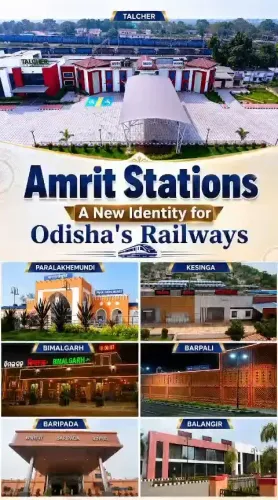
Union Minister Ashwini Vaishnaw on 17 July 2026 highlighted seven Odisha stations — including Talcher, Balangir and Baripada — being redeveloped under the Amrit Bharat Station Scheme to reflect the state's Sambalpuri handloom traditions, royal heritage and mining-region identity.
Key Takeaways
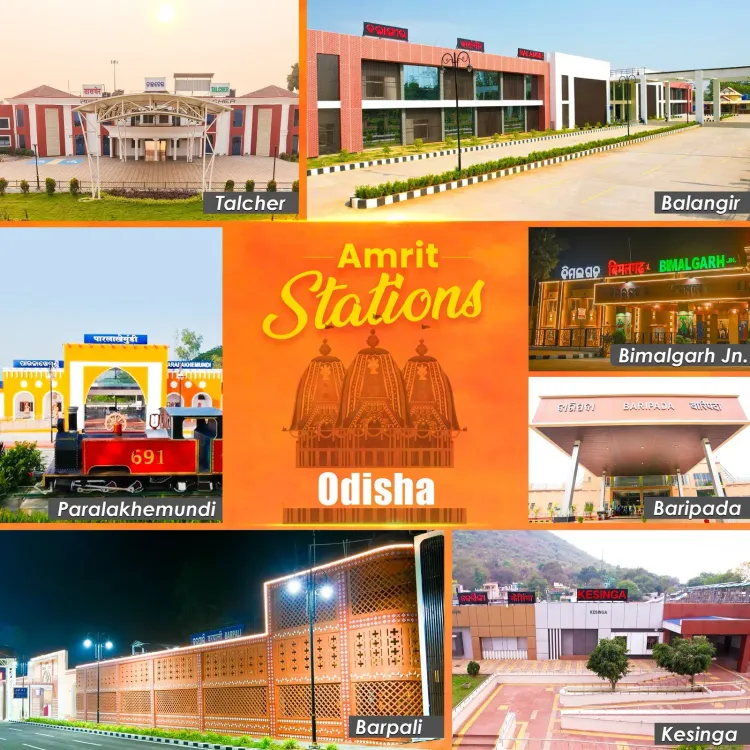
Seven Odisha stations named: Talcher, Balangir, Paralakhemundi, Kesinga, Barapali, Bimlagarh Junction and Baripada.
Redevelopments are part of the Amrit Bharat Station Scheme , launched in 2023 to upgrade over 1,200 stations nationwide.
Station designs are intended to reflect Sambalpuri handloom , royal heritage and local cultural traditions.
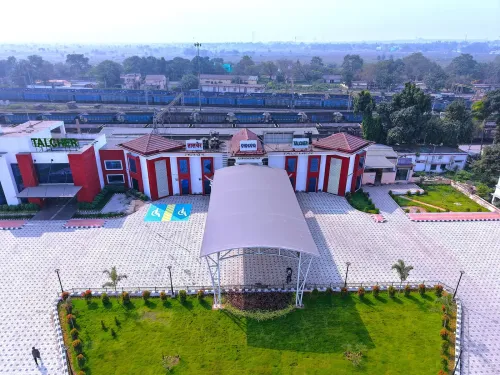
Talcher , a major coal-mining hub, illustrates the scheme's dual focus on industrial connectivity and cultural identity.
Union Budget 2024-25 included dedicated railway infrastructure allocations for Odisha, covering station upgrades in mining and tribal districts.
Inauguration timelines for the listed stations have not yet been officially confirmed.
Union Minister Ashwini Vaishnaw on Friday, 17 July 2026 spotlighted seven railway stations in Odisha being redeveloped under the Amrit Bharat Station Scheme, emphasising how each site reflects the state's distinct regional identity — from mining belts to royal heritage and handloom traditions.
Context
The post, part of a thread on Odisha's Amrit Stations, names Talcher, Balangir, Paralakhemundi, Kesinga, Barapali, Bimlagarh Junction and Baripada as stations undergoing redevelopment. Vaishnaw noted that the upgraded stations honour 'Sambalpuri hastantan o rajakiya aitihasya' — Sambalpuri handloom and royal heritage — alongside the region's mining economy and rich cultural traditions.
The minister's framing presents the redevelopment not merely as infrastructure work but as an exercise in celebrating Odisha's diverse regional identities through public railway architecture.
Policy Backdrop
The Amrit Bharat Station Scheme, launched in 2023, targets the redevelopment of more than 1,200 stations nationwide, with each station designed to incorporate local art, architecture and cultural motifs alongside modern passenger amenities. Odisha has been a priority state in the scheme given its combination of mineral-belt connectivity needs and tourism potential linked to its heritage sites.
The Union Budget 2024-25 included dedicated allocations for railway infrastructure in Odisha, covering station upgrades and new lines in mining and tribal districts. Talcher, one of the seven stations named, is a major coal-mining hub, illustrating how the scheme ties industrial connectivity to cultural presentation.
Stakeholders and Impact
Railway passengers across western and southern Odisha stand to benefit from improved facilities at these stations. Local artisans and handloom weavers — particularly those associated with the Sambalpuri weaving tradition — gain visibility through design elements embedded in station architecture, potentially boosting cultural tourism.
Communities in mining regions such as Talcher and Barapali, where industrial traffic dominates rail use, will see upgraded passenger infrastructure that has historically lagged behind commercial freight priorities. Cultural and heritage groups in towns like Paralakhemundi, known for its royal legacy, also stand to see their local identity reflected in a nationally visible public asset.
What's Next
Completion timelines and inauguration dates for the seven listed stations have not been officially announced. Observers will watch for updates in subsequent railway budget statements or coordination meetings between the Ministry of Railways and the Odisha state government. The expansion of the Amrit Stations list in future budgets — and whether additional Odisha stations are included — will be a key indicator of the scheme's momentum in the state.
With the central government's eastern India connectivity push linking mineral belts, ports and cultural centres through upgraded rail assets, the trajectory of these seven stations will serve as a bellwether for the broader programme's delivery on its cultural-infrastructure promise.
Point of View
Sustained visibility of central railway investment in the state carries clear electoral signalling. The cultural-identity framing also insulates the programme from purely technocratic scrutiny by embedding it in questions of regional pride.
NationPress
15 Oct 2026
Frequently Asked Questions
What is the Amrit Bharat Station Scheme?
The Amrit Bharat Station Scheme is an Indian Railways programme launched in 2023 to redevelop more than 1,200 railway stations across India, incorporating local art, architecture and cultural motifs alongside modern passenger facilities.
Which Odisha stations are being redeveloped under the Amrit Bharat Scheme?
Union Minister Ashwini Vaishnaw named seven stations: Talcher, Balangir, Paralakhemundi, Kesinga, Barapali, Bimlagarh Junction and Baripada as Odisha stations under the scheme.
How does the Amrit Station scheme reflect Odisha's culture?
The redeveloped stations are designed to incorporate elements of Sambalpuri handloom traditions, royal heritage and the mining-region identity of areas like Talcher, celebrating Odisha's diverse regional character through public infrastructure.
When will the Odisha Amrit Stations be completed?
Specific completion timelines and inauguration dates for the seven Odisha stations highlighted by Vaishnaw in July 2026 have not been officially announced yet.
What is Talcher known for in the context of Indian Railways?
Talcher is a major coal-mining hub in Odisha; its inclusion in the Amrit Station redevelopment list highlights the scheme's goal of upgrading passenger infrastructure in industrially significant areas alongside cultural heritage towns.