Vaishnaw Quotes PM Modi on India's Data Centre Rise

Synopsis
Union Minister Ashwini Vaishnaw on June 11, 2026, shared PM Modi's assertion that India is now building the world's largest and most modern data centres, positioning them as a foundational pillar of India's global supply and value chain integration.
Key Takeaways
Union Minister Ashwini Vaishnaw shared a quote by PM Narendra Modi on June 11, 2026 , highlighting India's data centre growth.
PM Modi stated that the world's largest and most modern data centres are currently being built in India.
The development is framed as a 'strong pillar' of India's global supply and value chain.
The Digital India programme (launched 2015 ) and MeitY's Draft National Data Centre Policy (2020) form the policy foundation for this push.
PLI schemes and infrastructure status designations have been used to attract hyperscale investment and reduce dependence on overseas facilities.
Future policy attention centres on state-level data centre rollouts and potential fresh allocations in the next Union Budget .
Union Minister Ashwini Vaishnaw on Thursday, June 11, 2026, shared a statement by Prime Minister Narendra Modi underscoring India's emergence as a global hub for large-scale, modern data centre infrastructure, framing it as a cornerstone of the country's integration into global supply and value chains.
Context
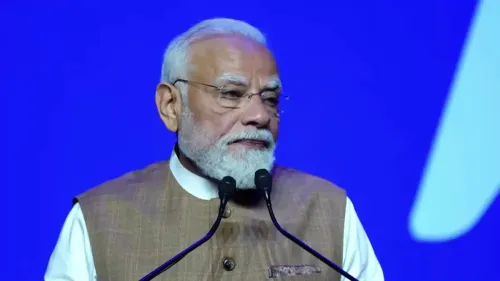
The minister quoted Prime Minister Modi as saying: 'Aaj vishwa ke sabse bade aur aadhunik data centers Bharat mein ban rahe hain. Yahi Bharat ki global supply aur value chain ka mazboot pillar banayegi.' ['Today, the world's largest and most modern data centres are being built in India. This will become the strong pillar of India's global supply and value chain.'] The post, shared with the hashtag #LongestServingElectedPMModi, was accompanied by a video, suggesting the quote was drawn from a public address by the Prime Minister.
The statement positions data centre development not merely as a technology investment but as a structural element of India's broader economic architecture, linking digital infrastructure directly to the country's role in global commerce.
Policy Backdrop
India's push to attract hyperscale data centre investment has deep policy roots. The Digital India programme, launched in 2015, established the foundational goal of transforming India into a digitally empowered economy, with data infrastructure as a key pillar. MeitY (Ministry of Electronics and Information Technology) subsequently circulated a Draft National Data Centre Policy in 2020 aimed at incentivising large-scale investment through fiscal measures and streamlined land allocation.
Successive Union Budgets have reinforced this direction through Production Linked Incentive (PLI) schemes and infrastructure status designations for data centres, reducing the cost of capital for developers and operators. The intent has been to reduce India's dependence on overseas facilities while positioning the country as an alternative hub amid global supply-chain diversification.
Stakeholders and Impact
The primary beneficiaries of this policy thrust include global cloud providers, domestic IT conglomerates, and the broader ecosystem of colocation operators and enterprise technology firms. As Western and Asian corporations accelerate supply-chain diversification strategies, India's combination of land availability, a large domestic data consumption market, and improving power infrastructure has made it an increasingly attractive destination.
For the IT industry, large-scale domestic data centre capacity reduces latency, lowers compliance risk under data localisation frameworks, and creates significant employment in construction, operations, and ancillary services. State governments have also begun competing actively through their own data centre policies, offering dedicated zones and subsidised power tariffs.
What's Next
Attention will now focus on the rollout of state-level data centre policies and whether the next Union Budget introduces fresh PLI outlays or expanded land allocations for hyperscale projects. Minister Vaishnaw, who oversees both the Electronics and IT portfolio and the broader digital infrastructure agenda, is expected to remain central to translating the Prime Minister's articulated vision into specific policy instruments.
India's ability to sustain momentum in this space will depend on resolving persistent challenges around uninterrupted power supply, land acquisition timelines, and submarine cable connectivity — factors that global operators weigh heavily when committing to hyperscale builds.
Point of View
Moving the conversation beyond domestic digital access toward India's positioning as a node in the global technology economy. This aligns with a consistent pattern in which the Electronics and IT ministry uses high-visibility social media moments to signal policy continuity and attract foreign direct investment. The hashtag context suggests the post is also tied to a broader political messaging campaign around the Prime Minister's tenure.
NationPress
26 Oct 2026
Frequently Asked Questions
What did PM Modi say about data centres in India?
PM Modi stated that the world's largest and most modern data centres are currently being built in India, and that this infrastructure will serve as a strong pillar of India's global supply and value chain.
Why is India focusing on building large data centres?
India aims to reduce dependence on overseas data facilities, attract global cloud and technology investment, and integrate more deeply into global technology supply chains, supported by policies like the Digital India programme and PLI schemes.
What is MeitY's role in India's data centre policy?
MeitY, the Ministry of Electronics and Information Technology headed by Minister Ashwini Vaishnaw, circulated a Draft National Data Centre Policy in 2020 and has been the lead ministry for incentivising hyperscale data centre investment in India.
What is the Digital India programme?
Digital India is a flagship government programme launched in 2015 to transform India into a digitally empowered economy, with data infrastructure, broadband expansion, and digital services at its core.
What challenges does India face in becoming a global data centre hub?
Key challenges include ensuring uninterrupted power supply, streamlining land acquisition, and improving submarine cable connectivity — factors that global operators assess carefully before committing to large-scale data centre builds in India.