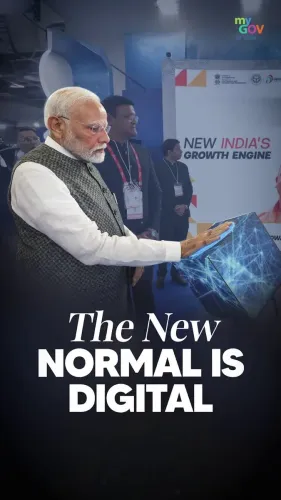
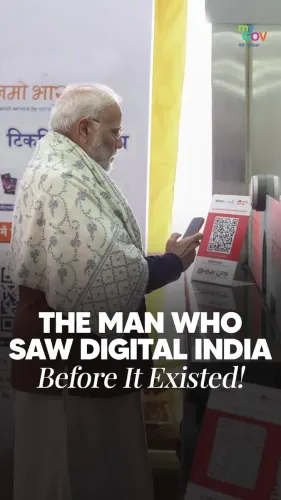
Vaishnaw marks 11 years of Digital India, calls it a way of life

Synopsis
Union Minister Ashwini Vaishnaw marked eleven years of Digital India on 1 July 2026, describing the programme as a 'way of life' where every phone functions as a bank, marketplace, classroom and lifeline — reflecting the scheme's evolution into India's core digital public infrastructure since its 2015 launch.
Key Takeaways
Digital India completed 11 years on 1 July 2026 , having been launched by Prime Minister Narendra Modi on 1 July 2015 .
Union Minister Ashwini Vaishnaw described the programme as a 'way of life', noting that phones now serve as banks, marketplaces, classrooms and lifelines.
The JAM Trinity — Jan Dhan, Aadhaar and Mobile — laid the foundational architecture for Digital India's financial and social inclusion goals from 2014 onwards.
UPI (Unified Payments Interface) emerged as the programme's most visible proof point, enabling real-time mobile payments at scale across India.
Key stakeholders include smartphone users, rural citizens and MSMEs , all of whom have integrated digital infrastructure into daily economic and social activity.
Upcoming policy focus areas include 5G rollout , AI integration in government portals, and implementation of the Digital Personal Data Protection Act rules.
Union Minister Ashwini Vaishnaw, who oversees the Electronics and Information Technology portfolio, marked the 11th anniversary of Digital India on 1 July 2026 with a post on X describing the programme's transformation of everyday life across the country.
Posting on the occasion of #11YearsOfDigitalIndia, the minister wrote: 'When every phone becomes a bank, a marketplace, a classroom and a lifeline, Digital India becomes a way of life.' The statement encapsulates the programme's evolution from a government digitisation drive into an infrastructure layer that underpins commerce, education, healthcare access and financial inclusion for hundreds of millions of Indians.
Context
Digital India was launched by Prime Minister Narendra Modi on 1 July 2015 as a flagship initiative to transform India into a digitally empowered society and knowledge economy. The programme set out three core pillars: building digital infrastructure as a utility for every citizen, delivering government services on demand, and driving digital literacy at scale. Over the eleven years since its launch, the programme has expanded well beyond its original scope to become the backbone of India's digital public infrastructure. The minister's framing — phone as bank, marketplace, classroom, lifeline — maps directly onto four distinct policy streams that have matured under the Digital India umbrella. Each metaphor corresponds to a measurable domain: payments through UPI, e-commerce and MSME digitisation, edtech and online learning platforms, and telemedicine or emergency services access.Policy Backdrop
The JAM Trinity — Jan Dhan accounts, Aadhaar biometric IDs and Mobile connectivity — was rolled out from 2014 onwards to link financial access, identity and telecommunications for direct benefit transfers and broader inclusion. This architecture provided the foundation on which Digital India's subsequent layers were built. UPI, the Unified Payments Interface, became the most visible proof point of this approach: a mobile-first, real-time payment system that effectively converted smartphones into bank accounts and point-of-sale terminals simultaneously. India's digital public infrastructure model — built on open APIs and interoperable standards — has since drawn attention from multilateral institutions and other large emerging economies as a replicable framework. Successive Union Budgets have reinforced this trajectory, allocating resources for broadband expansion, semiconductor policy, and regulatory architecture including the Digital Personal Data Protection Act.Stakeholders and Impact
The programme's reach spans urban smartphone users, rural citizens accessing government services through Common Service Centres, and MSMEs that have integrated digital payments and e-commerce into their operations. For rural India in particular, the convergence of mobile connectivity and digital identity has enabled access to banking, subsidies, and educational content that was previously out of reach. Edtech platforms and government e-learning portals have extended classroom access to students in remote districts, while telemedicine services have used the same mobile infrastructure to connect patients with doctors across geographies. The minister's anniversary message is directed at this breadth of impact rather than any single metric.What's Next
The next phase of Digital India is expected to focus on 5G network rollout metrics, integration of AI-based services into government portals, and the operationalisation of rules under the Digital Personal Data Protection Act. Parliamentary scrutiny of data protection implementation and the pace of AI adoption in public services are likely to define the policy conversation in the months ahead. As digital infrastructure deepens, the government's ability to deliver on both inclusion and data governance will increasingly determine how the programme's legacy is assessed.Point of View
Akin to electricity or roads. By anchoring the message in lived experience (bank, marketplace, classroom, lifeline), the minister sidesteps metrics debates and appeals directly to the experiential reality of India's estimated 900 million-plus internet users. The timing, on the programme's precise anniversary date, also signals the BJP's intent to keep Digital India central to its governance narrative heading into the next phase of policy rollout. The subtext points toward Digital India 2.0: AI, data protection rules and 5G are the next proof points the government will need to deliver on to sustain this framing.
NationPress
30 Sept 2026
Frequently Asked Questions
When was Digital India launched and by whom?
Digital India was launched on 1 July 2015 by Prime Minister Narendra Modi as a flagship initiative to transform India into a digitally empowered society and knowledge economy.
What did Ashwini Vaishnaw say about Digital India's 11th anniversary?
Union Minister Ashwini Vaishnaw posted on X that 'when every phone becomes a bank, a marketplace, a classroom and a lifeline, Digital India becomes a way of life,' marking the programme's 11th anniversary on 1 July 2026 .
What is the JAM Trinity and how does it relate to Digital India?
The JAM Trinity — Jan Dhan bank accounts, Aadhaar biometric identity and Mobile connectivity — was rolled out from 2014 to link financial access, identity and telecom infrastructure, forming the foundational layer on which Digital India was built.
How has UPI contributed to Digital India's goals?
UPI (Unified Payments Interface) enabled smartphones to function as bank accounts and payment instruments in real time, making it the most visible proof point of Digital India's mobile-first, financially inclusive approach.
What is the next phase of Digital India expected to focus on?
The next phase is expected to prioritise 5G network expansion, integration of AI-based services into government portals, and the implementation of rules under the Digital Personal Data Protection Act .