Vaishnaw: Khelo India Scheme Extended for Five More Years
Synopsis
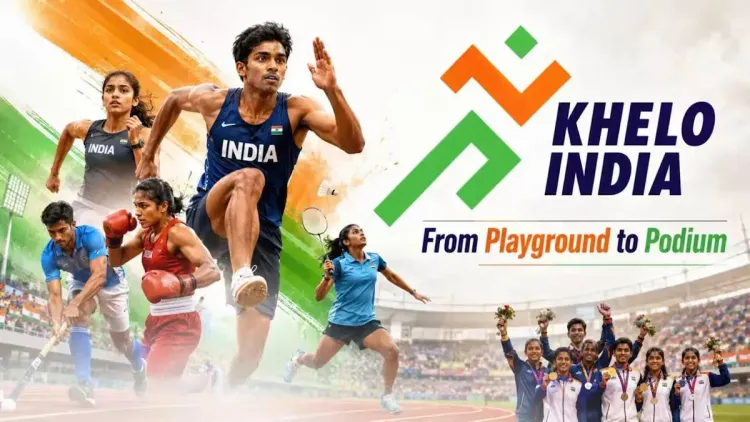
Union Minister Ashwini Vaishnaw announced on 1 August 2026 that the Khelo India Scheme has been extended for five years, aiming to strengthen grassroots talent development, world-class training, and a robust sporting ecosystem across India.
Key Takeaways
The Khelo India Scheme has been extended for the next five years , as announced by Union Minister Ashwini Vaishnaw on 1 August 2026 .
The scheme was originally launched in 2017 to promote grassroots sports, talent identification, and infrastructure development across India.
The extension targets three pillars: talent development , world-class training , and a robust sporting ecosystem .
Budget allocations and detailed implementation guidelines for the extended period are yet to be announced.
The extension is widely seen as part of India's build-up toward the 2028 Los Angeles Olympics .
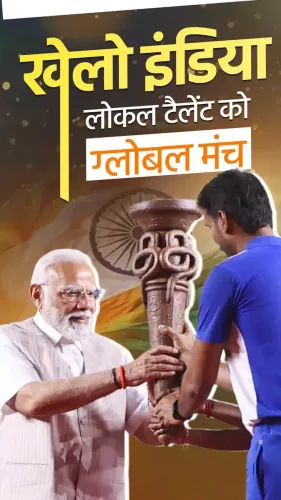
India's most ambitious grassroots sports programme just got a five-year lifeline. Union Minister Ashwini Vaishnaw announced on Saturday, 1 August 2026 that the Khelo India Scheme has been extended for the next five years, with a mandate to sharpen talent development, deliver world-class training, and build a sporting ecosystem capable of producing champions at the global level.
Posting in a characteristically bilingual burst — 'भारत खेलेगा भी... और जीतेगा भी!' ('India will play... and India will win!') — the minister framed the extension not merely as a policy renewal but as a national declaration of sporting ambition.
Nine Years of Khelo India — and Why This Extension Matters
The Khelo India Scheme was first launched in 2017 by the Ministry of Youth Affairs and Sports to do something deceptively simple: find India's best young athletes before the world does. The programme built a pipeline — school-level competitions, high-performance centres, direct athlete support — designed to catch talent early and carry it all the way to the podium. After nearly a decade, the extension signals the government's conviction that the model works and deserves deeper investment.
India has consistently backed this approach across successive budgets, treating sports infrastructure not as a luxury but as a long-term national project. The Khelo India framework sits at the centre of that bet, connecting rural districts to elite training environments in a way few earlier schemes managed.
What the Next Five Years Are Built to Deliver
The extension focuses on three pillars: talent development, world-class training, and a robust sporting ecosystem. Together, they point toward a single horizon — the 2028 Los Angeles Olympics, where India will be expected to build on its recent performances at major multi-sport events. Budget allocations and detailed implementation guidelines for the extended period are awaited and will determine the programme's real reach.
For young athletes in small towns and semi-urban centres, the extension means the infrastructure and support systems they depend on remain intact — and are set to grow. For Indian sport as a whole, it is a signal that the grassroots-to-glory pipeline is not being wound down. It is being doubled down on.
India said it will play. Now the clock starts on proving it will win.
Point of View
Scheme-based framework rather than episodic bursts before major events. By renewing the programme for five years, the government insulates the grassroots pipeline from budget-cycle uncertainty and sends a signal to sports federations and coaches that the infrastructure commitment is durable. With the 2028 Los Angeles Olympics on the horizon, the timing is deliberate — this is as much about expectation-setting as it is about policy. The real test will be whether the next set of budget allocations matches the ambition of the announcement.
NationPress
1 Aug 2026
Frequently Asked Questions
What is the Khelo India Scheme?
The Khelo India Scheme is a national programme launched in 2017 by the Ministry of Youth Affairs and Sports to promote grassroots sports, identify young talent, and develop sports infrastructure across India, including school-level competitions and high-performance training centres.
How long has the Khelo India Scheme been extended?
Union Minister Ashwini Vaishnaw announced on 1 August 2026 that the Khelo India Scheme has been extended for the next five years .
What are the goals of the Khelo India Scheme extension?
The extended scheme focuses on strengthening talent development , providing world-class training to young athletes, and building a robust sporting ecosystem across India.
How does Khelo India help young athletes in India?
Khelo India provides young athletes with access to structured school-level competitions, high-performance training centres, and direct athlete support, helping identify and nurture grassroots talent before it reaches elite international sport.
Is the Khelo India extension connected to the 2028 Olympics?
While no official statement has directly linked the extension to the 2028 Los Angeles Olympics , the five-year timeline aligns with that event and India's broader push to improve its performance at major multi-sport competitions.