Aristotle-Confucius Symposium 2026 in Varanasi: Yogi Adityanath, Dr Priti Adani to speak
Synopsis
Varanasi is set to host the Aristotle-Confucius Symposium from 2 to 4 November, bringing together scholars from Aristotelian, Confucian, Hindu, Buddhist, Jain, Catholic, Muslim and other traditions — with AI tools facilitating cross-language dialogue. UP CM Yogi Adityanath will inaugurate the event, and Adani Foundation chief Dr Priti Adani will speak on the opening day.
Key Takeaways
The Aristotle-Confucius Symposium 2026 will be held in Varanasi from 2 to 4 November 2026 .
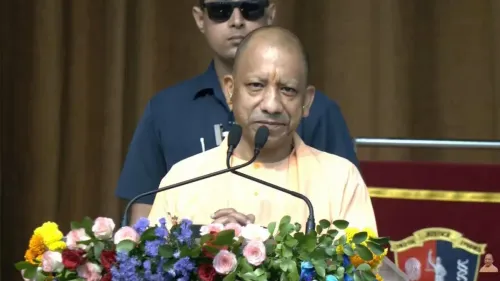
UP Chief Minister Yogi Adityanath has been invited to inaugurate and address the event, focusing on Hinduism's civilisational heritage spanning over five millennia .
Dr Priti Adani , Founder and Chairperson of the Adani Foundation , is scheduled to speak at 9 am on 2 November .
The symposium spans Aristotelian, Confucian, Hindu, Buddhist, Jain, Catholic, Muslim and other traditions, with focus on virtue ethics and governance.
Artificial intelligence tools will be integrated to facilitate cross-language and cross-cultural dialogue.
4 November is dedicated to cultural immersion including visits to the Ganges ghats , aarti ceremonies , and Sarnath .
The Aristotle-Confucius Symposium 2026, a landmark civilizational dialogue spanning multiple philosophical traditions, is set to be held in Varanasi from 2 to 4 November 2026. Uttar Pradesh Chief Minister Yogi Adityanath has been invited to inaugurate the event, while Dr Priti Adani, Founder and Chairperson of the Adani Foundation, is scheduled to deliver a keynote address on the opening morning.
Why Varanasi Was Chosen
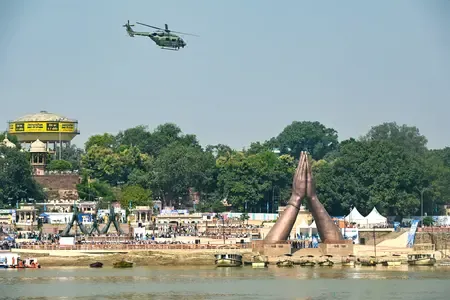
Organisers say Varanasi was selected as the host city because it is one of the world's oldest continuously inhabited urban centres and a living hub of learning, pilgrimage, and philosophical reflection. Situated along the banks of the Ganges River, the city uniquely converges three major wisdom traditions — Hinduism, Buddhism, and Jainism — making it a natural setting for cross-cultural intellectual exchange.
According to officials, the choice of Varanasi underscores the symposium's ambition to root contemporary dialogue in ancient civilisational heritage rather than treat philosophy as a purely academic exercise.
Key Speakers and Programme
Chief Minister Adityanath is expected to speak on Hinduism's civilisational heritage spanning over five millennia and on Sanatan Dharm — a term used to describe the religion's enduring philosophical character — in his keynote address. Dr Priti Adani is scheduled to take the stage at 9 am on 2 November.
The symposium will bring together scholars, practitioners, and leaders to explore commonalities and differences across Aristotelian, Confucian, Hindu, Buddhist, Jain, Catholic, Muslim, and other traditions, with a focus on virtue ethics, governance, and the ethical use of power.
AI and Emerging Technologies in Dialogue
A distinctive feature of the 2026 symposium is the planned integration of advances in artificial intelligence to support cross-cultural engagement. Organisers say AI-enabled tools will facilitate dialogue across languages and traditions, and enable new forms of interaction with philosophical ideas — described as 'new modes of dialogue using emerging technologies.'
This comes as global institutions increasingly explore how AI can serve not just technical but also ethical and humanistic functions, reflecting the symposium's broader agenda of connecting ancient wisdom to contemporary global challenges.
Three-Day Schedule
The 2 and 3 November sessions will serve as the core conference, featuring structured dialogues, keynote reflections, and thematic sessions covering comparative philosophical discussions and applied conversations on global governance and peace.
4 November has been dedicated to cultural immersion and site visits, during which participants will engage with the heritage of Varanasi and its surroundings — including the Ganges ghats, evening aarti ceremonies, major temple complexes, and a visit to Sarnath.
The Broader Purpose
According to an official statement, the meetings are 'grounded in the recognition that the world's most pressing challenges — geopolitical tensions, ecological crisis, and technological transformation — require not only technical solutions but also deeper ethical foundations and cross-cultural understanding.' Organisers say the symposium aims to demonstrate that ancient philosophical traditions hold practical relevance for present-day governance and global affairs.
With participation drawn from diverse religious and intellectual traditions across the world, the three-day event is poised to be one of the more ambitious inter-civilisational gatherings hosted in India in recent years.
Point of View
The organisers are making a quiet but pointed argument: that India's civilisational heritage is not a bystander in global philosophical discourse but a co-equal participant. The inclusion of AI tools adds a contemporary urgency, though the real test will be whether the event produces tangible frameworks for cross-cultural governance rather than remaining an elite intellectual gathering. With CM Adityanath's presence, the event also carries a political dimension worth watching — Varanasi being both his constituency and PM Modi's, this symposium arrives at a moment when India is actively projecting soft power on the world stage.
NationPress
1 Nov 2026
Frequently Asked Questions
What is the Aristotle-Confucius Symposium 2026?
It is a three-day inter-civilisational dialogue event scheduled in Varanasi from 2 to 4 November 2026, bringing together scholars, practitioners, and leaders from Aristotelian, Confucian, Hindu, Buddhist, Jain, Catholic, Muslim, and other philosophical traditions. The symposium focuses on virtue ethics, governance, and the ethical use of power, and will also incorporate AI tools for cross-cultural and cross-language dialogue.
Who are the key speakers at the Varanasi symposium?
Uttar Pradesh Chief Minister Yogi Adityanath has been invited to inaugurate the event and is expected to speak on Hinduism's civilisational heritage. Dr Priti Adani, Founder and Chairperson of the Adani Foundation, is scheduled to deliver a speech at 9 am on 2 November.
Why was Varanasi chosen to host the symposium?
Varanasi was selected because it is one of the world's oldest continuously inhabited cities and a living centre of learning and philosophical reflection. The city uniquely brings together three major wisdom traditions — Hinduism, Buddhism, and Jainism — making it an apt venue for cross-civilisational dialogue.
What is the schedule for the three-day symposium?
The 2 and 3 November sessions form the core conference, with structured dialogues, keynotes, and thematic sessions on comparative philosophy and global governance. 4 November is reserved for cultural immersion, including visits to the Ganges ghats, evening aarti ceremonies, major temples, and Sarnath.
How will artificial intelligence be used at the symposium?
Organisers plan to integrate AI tools to facilitate dialogue across languages and traditions, and to enable new forms of engagement with philosophical ideas. This is described as part of the symposium's broader goal of connecting ancient wisdom traditions to contemporary global challenges including technological transformation.