Is the VBSA Bill a Game Changer for Higher Education Regulation?
Click to start listening
Synopsis
The introduction of the VBSA Bill is set to revolutionize India's higher education system by consolidating multiple regulators into one, ensuring streamlined governance, improved transparency, and enhanced student welfare. This pivotal change aims to modernize the educational landscape, making it more accessible and accountable.
Key Takeaways
- Consolidation of multiple regulatory bodies into one.
- Streamlined governance for higher education institutions.
- Enhanced transparency in reporting and accountability.
- Focus on student welfare and grievance resolution.
- Standardized academic benchmarks across the nation.
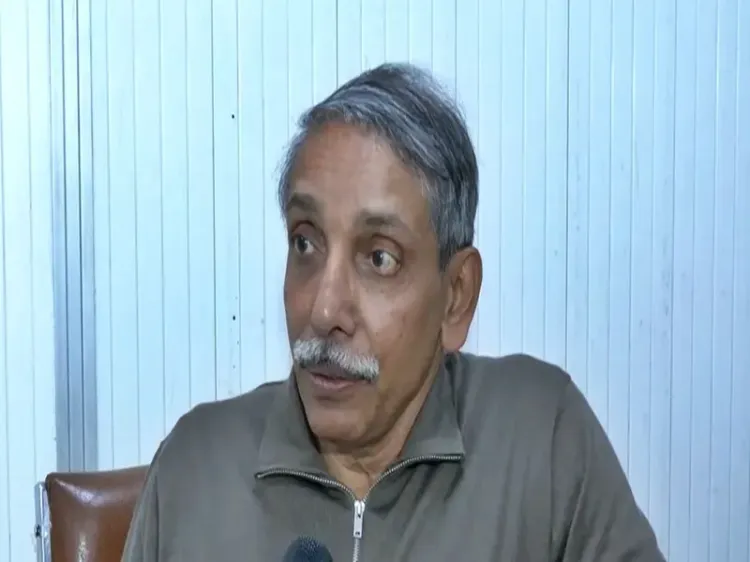
New Delhi, Dec 18 (NationPress) Former University Grants Commission (UGC) Chairman Prof. M. Jagadesh Kumar has praised the government's initiative to propose the Viksit Bharat Shiksha Adhishthan (VBSA) Bill as a groundbreaking shift for the higher education sector in India.
In a detailed discussion with IANS, Kumar elaborated that the UGC, which was formed in 1953 and granted statutory recognition in 1956, along with the All India Council for Technical Education (AICTE) and the National Council for Teacher Education (NCTE), will be consolidated into a unified regulatory body under the new legislation.
Kumar highlighted that the higher education system in India has seen rapid growth, with over 1,200 universities and numerous colleges across the nation.
He emphasized that the outdated regulatory frameworks are insufficient to handle such a large and intricate system, prompting the National Education Policy (NEP) 2020 to call for a complete reformation of the regulatory structure.
The former UGC chairman pointed out the challenges institutions face due to multiple regulators, such as the Council of Architecture, which complicates operations. A single university that offers various programs, including general degrees like BSc or BCom, engineering courses, teacher education programs like BEd, and architecture, must comply with separate applications and regulations from different authorities.
This situation leads to administrative strain and overlapping regulations. Addressing these concerns was a primary goal of the NEP 2020, which advocated for a unified and simplified regulatory system that is less bureaucratic and more predictable.
The newly proposed VBSA Bill embodies this vision and will first be reviewed by a Joint Parliamentary Committee before being considered for passage and implementation.
Kumar mentioned that once enacted, an apex organization, the Viksit Bharat Shiksha Adhishthan (VBSA), will be created, functioning through three distinct branches to avert conflicts of interest and ensure coordinated governance.
The Regulatory Council will merge the powers currently held by the UGC, AICTE, NCTE, and the Council of Architecture, thus eliminating confusion and establishing uniform, transparent standards for all higher education institutions.
The Accreditation Council will unify existing frameworks like NAAC, NBA, and NIRF under one umbrella, streamlining the accreditation process and minimizing redundant data submissions.
Meanwhile, the Standards Council will aim to introduce consistent academic standards nationally, facilitating smoother student mobility for those pursuing multidisciplinary programs or transferring between states, he noted.
Kumar stressed that educators are vital to the success of the higher education system, and this council will prioritize developing innovative teacher training programs and enhancing modern teaching and learning methodologies.
For the first time, elite institutions such as the Indian Institutes of Technology (IITs) and Indian Institutes of Management (IIMs), previously outside the direct regulatory purview of the UGC or AICTE, will now be integrated into a common regulatory framework, ensuring standardized quality across the sector.
Kumar added that student welfare remains a central concern in the proposed system.
All institutions will be mandated to set up effective grievance redressal systems, acknowledging the stress many students experience and the necessity for prompt complaint resolution.
Student input on courses, faculty, facilities, and welfare initiatives will significantly influence accreditation and ranking processes.
Perhaps the most impactful change will be the focus on transparency. Institutions will be required to publish comprehensive information on a digital platform, including details about academic offerings, infrastructure, student support systems, faculty credentials, and audited financial statements.
This, Kumar stated, would empower students and parents, bolster public confidence, and enhance accountability within India's higher education landscape.
Point of View
The introduction of the VBSA Bill represents a significant evolution in the regulatory framework for higher education in India. This initiative aligns with the growing demand for a cohesive and efficient system that not only meets the needs of educational institutions but also prioritizes student welfare and accountability.
NationPress
19/12/2025
Frequently Asked Questions
What is the VBSA Bill?
The VBSA Bill aims to unify various regulatory authorities in India's higher education sector, ensuring streamlined governance and improved quality standards.
Who will be affected by the VBSA Bill?
The bill will impact all higher education institutions, including universities and colleges, by creating a single regulatory body for better management.
What are the key benefits of the VBSA Bill?
Key benefits include reduced administrative burden, improved transparency, enhanced student welfare, and consistent academic standards across institutions.
How will the VBSA Bill improve student experience?
The bill aims to establish grievance redressal systems and promote student feedback in accreditation, ensuring that student interests are prioritized.
When will the VBSA Bill be implemented?
The VBSA Bill will be reviewed by a Joint Parliamentary Committee before it can be passed and implemented.