Tirupparankundram lamp order: VCK's Thirumavalavan warns of communal tensions
Synopsis
The Supreme Court has allowed lamp-lighting on a disputed stone pillar at Tirupparankundram during Karthigai Deepam on 24 November — even as it stayed a Madras High Court order. VCK chief Thirumavalavan warns the interim arrangement could be misread as historical validation of a religious claim, and that the mention of paramilitary deployment signals just how volatile the situation could become.
Key Takeaways
VCK president Thol Thirumavalavan on 21 November 2026 warned the Supreme Court's interim order on the Tirupparankundram disputed pillar could trigger communal tensions.
The Supreme Court stayed the Madras High Court ruling but permitted ceremonial lamp-lighting on 24 November (Karthigai Deepam).
The court clarified the order does not establish the pillar as a traditional place of worship or create an enforceable religious right.
The Madurai District Collector will decide the group composition, timing, and route in consultation with ASI , temple authorities, and the police commissioner.
The court banned fresh construction, excavation, or structural changes at the site and directed that the nearby dargah and mosque remain undisturbed.
A compliance report must be submitted within three days of the festival.
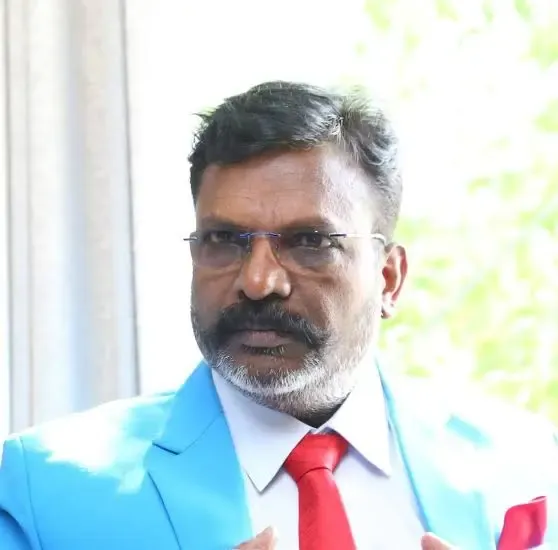
Viduthalai Chiruthaigal Katchi (VCK) president Thol Thirumavalavan on 21 November 2026 sounded a sharp alarm over the Supreme Court's interim order allowing the lighting of a ceremonial lamp atop a disputed stone pillar at Tirupparankundram in Madurai, warning that the directive could embolden communal forces and destabilise religious harmony in the region. Thirumavalavan described the order as 'surprising and shocking' and called on the Tamil Nadu government to stay vigilant against attempts to exploit the sensitive dispute.
What the Supreme Court Ordered
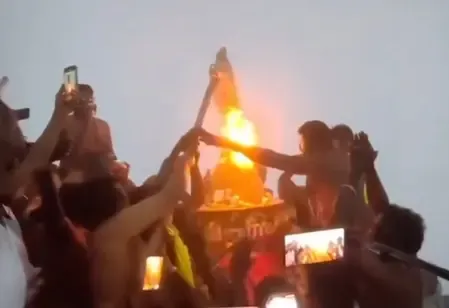
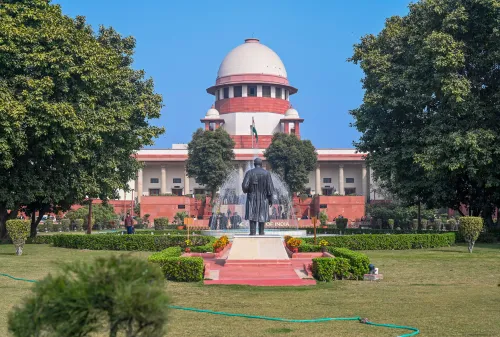
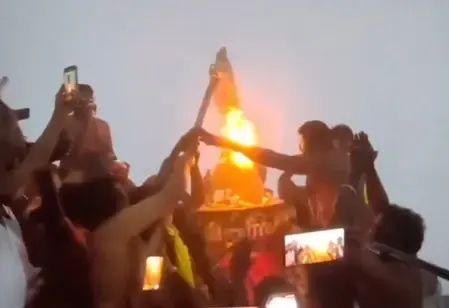
The Supreme Court granted an interim stay on a Madras High Court ruling while simultaneously permitting a designated group — organised by temple authorities — to light a ceremonial lamp on the disputed stone pillar during Karthigai Deepam on 24 November. The court has clarified, however, that this arrangement does not establish the pillar as a traditional place of worship, nor does it determine whether lamp-lighting there constitutes an essential religious practice or an enforceable legal right.
The Madurai District Collector will determine the composition and size of the group in consultation with the Archaeological Survey of India (ASI), temple authorities, and the city police commissioner. The administration will also fix the timing and route, and all participants must leave immediately after completing the ritual. The Collector must submit a compliance report within three days of the festival.
VCK's Concerns Over Communal Implications
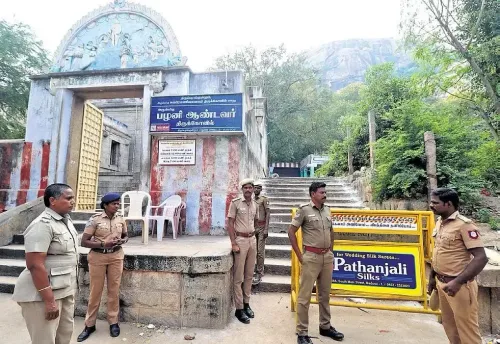
Thirumavalavan expressed particular unease over the court's observation that paramilitary forces could be deployed for security if required, characterising it as an indirect caution to the state government. He argued that allowing the lamp-lighting — even on an explicitly temporary basis — risks creating a perception that the disputed pillar has historically been associated with religious worship, despite, he said, the absence of conclusive evidence supporting such a claim.
Notably, the VCK leader cautioned that interim judicial arrangements in sensitive religious disputes can shape the trajectory of future proceedings, drawing an implicit parallel to other contentious site disputes across the country where temporary orders have been cited in later rulings.
Restrictions Imposed by the Court
The Supreme Court's order prohibits any fresh construction, excavation, or structural alterations at the Tirupparankundram site. It also directed that activities at the nearby dargah and mosque remain completely undisturbed, underscoring the multi-faith sensitivities surrounding the location.
Call for State Vigilance
Thirumavalavan urged the Tamil Nadu government to take adequate precautions to prevent communal mobilisation ahead of 24 November and to ensure that peace is maintained throughout the Karthigai Deepam observances. He stressed that the state must not allow the situation to be exploited by forces seeking to inflame religious divisions. The developments come at a moment of heightened attention to faith-based disputes in Indian courts, making the administration's handling of this case closely watched.
Point of View
However hedged, rarely stay neutral on the ground. The Supreme Court's own clarification — that the lamp-lighting establishes no historical or legal right — is legally careful but practically fragile; optics on the ground in Madurai will matter far more than footnotes in the order. The mention of paramilitary deployment as a contingency is not reassuring; it signals the court itself anticipates volatility. Tamil Nadu has managed communal flashpoints with relative competence compared to some other states, but the Tirupparankundram case tests that record precisely because the disputed site sits at the intersection of Hindu temple administration, Sufi heritage, and ASI jurisdiction — a combination that has no clean resolution.
NationPress
21 Nov 2026
Frequently Asked Questions
What is the Tirupparankundram disputed pillar case?
The case involves a stone pillar at the Tirupparankundram temple complex in Madurai , whose religious ownership and significance is disputed. The Supreme Court intervened with an interim order after a Madras High Court ruling, allowing ceremonial lamp-lighting on the pillar during Karthigai Deepam on 24 November while staying the High Court's directive.
What exactly did the Supreme Court permit?
The court permitted a designated group, organised by temple authorities, to light a ceremonial lamp atop the disputed stone pillar on 24 November during Karthigai Deepam. The group's size and composition will be determined by the Madurai District Collector in consultation with ASI , temple authorities, and the police commissioner.
Why is Thirumavalavan concerned about the order?
Thol Thirumavalavan argues that even a temporary lamp-lighting permission could create a public perception that the pillar has historically been a site of religious worship, potentially influencing future court proceedings — despite the Supreme Court explicitly stating no such right has been established.
What restrictions did the Supreme Court impose alongside the permission?
The court prohibited any fresh construction, excavation, or structural alterations at the site. It also directed that the nearby dargah and mosque remain undisturbed, and required the Madurai District Collector to submit a compliance report within three days of the festival.
What has the VCK asked the Tamil Nadu government to do?
The VCK has urged the Tamil Nadu government to remain vigilant, take adequate precautions against communal mobilisation, and ensure peace during the Karthigai Deepam observances on 24 November . Thirumavalavan specifically called on the state to prevent any forces from exploiting the sensitive dispute.