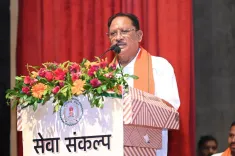
VHP blames 'jihadist elements' for Ujjain mosque stone pelting; Muslims protest at Jantar Mantar
Synopsis
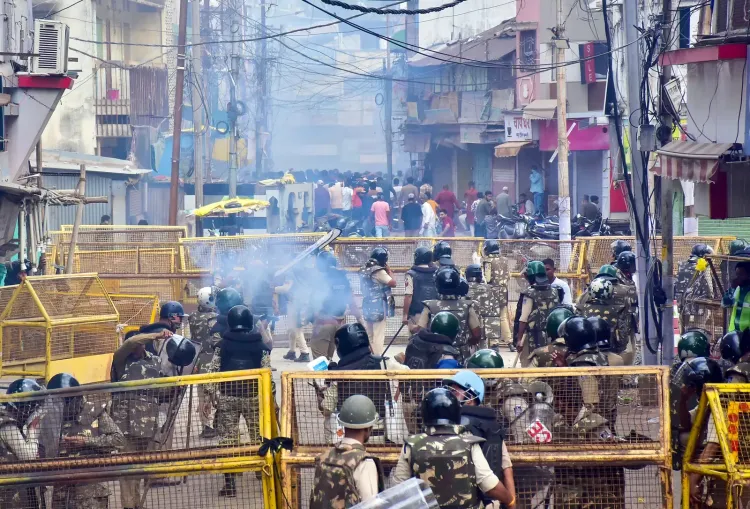
The partial removal of the Shahi Masjid in Ujjain — framed by authorities as routine Kumbh Mela road widening — has triggered stone pelting, a VHP-versus-Muslim-leadership clash, and a protest at Jantar Mantar. With SP's Ziaur Rahman Barq detained and the AIMPLB challenging the 'illegal construction' label on a 600-year-old mosque, the dispute is heading to court and Parliament.
Key Takeaways
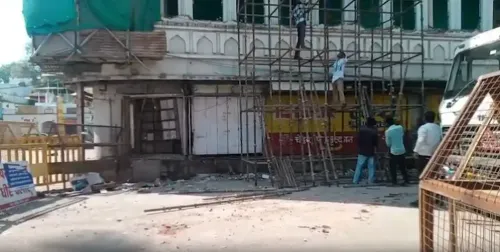
VHP spokesperson Vinod Bansal blamed 'jihadist elements' for provoking stone pelting during the demolition of a portion of the Shahi Masjid in Ujjain on 28 September 2026 .
The local administration says the demolition is part of a road-widening plan for the Simhastha Kumbh Mela , under which 80 religious sites — mostly Hindu — have already been removed.
Only 10 per cent of the mosque was slated for removal, with the city Qazi reportedly raising no objection before the incident.
AIMPLB spokesperson Syed Qasim Rasool Ilyas questioned how a 600-year-old mosque could be classified as illegal construction.
SP MP Ziaur Rahman Barq was detained at the Jantar Mantar protest and vowed to fight the issue in court, Parliament, and on the streets.
Over 200 Hindu homes and shops have reportedly been relocated for the same project, according to the VHP.
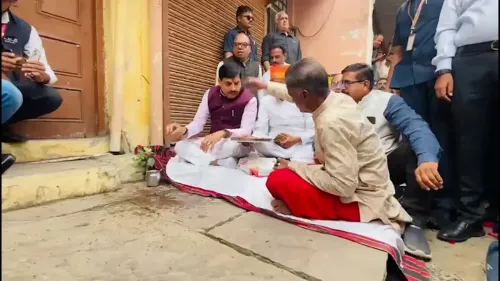
The Vishva Hindu Parishad (VHP) on Tuesday, 29 September 2026, held what it called 'jihadist elements' responsible for instigating stone pelting during the partial removal of the Shahi Masjid in Ujjain, a day after the demolition of a portion of the mosque. Simultaneously, Muslim organisations and Samajwadi Party (SP) leaders staged a protest against the demolition at Jantar Mantar in New Delhi, escalating a controversy that has drawn sharp reactions from across the political and religious spectrum.
VHP's Position: Road Widening, Not Targeting
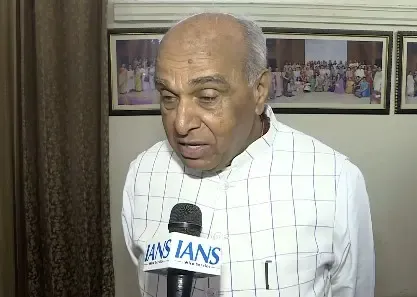
VHP spokesperson Vinod Bansal said the demolition was part of a broader road-widening and beautification drive ahead of the Simhastha Kumbh Mela scheduled in Ujjain. 'Ujjain is a religious city. The Simhastha Kumbh Mela will be held there. For this, the government and the local administration have prepared a plan for road widening and beautification. As part of that, authorities have so far removed 80 religious sites in the area. Most of them belong to Hindus,' Bansal said.
He added that only 10 per cent of the mosque was to be removed, and that the city Qazi had reportedly raised no objection. Bansal alleged that 'extremist-minded jihadist elements provoked and misled people and created a stone-pelting scene, similar to what used to happen in the Kashmir Valley.' He further stated that over 200 Hindu homes and shops had already been relocated for the same project without protest, and questioned why 'rowdy elements' appeared to belong to only one community.
Muslim Leaders Condemn the Demolition
All India Muslim Personal Law Board (AIMPLB) spokesperson Syed Qasim Rasool Ilyas, who attended the Jantar Mantar protest, challenged the legal basis for labelling the mosque an illegal structure. 'A 600-year-old mosque has been called an illegal construction? How did it suddenly become illegal construction? Your government was not in power when it was constructed. So, on what basis is it being called illegal?' he said.
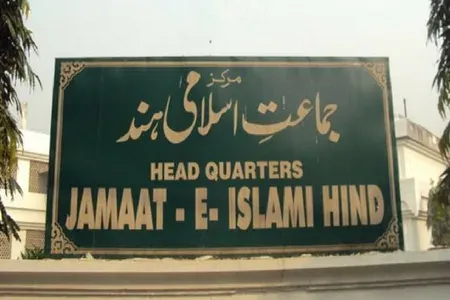
Jamaat-e-Islami Hind Vice President Professor Mohammad Salim Engineer argued that religious sites of all faiths — temples, mosques, churches, and gurdwaras — are an integral part of the nation and that the government is constitutionally responsible for protecting them, not demolishing them through municipal bodies.
SP MP Detained at Protest Site
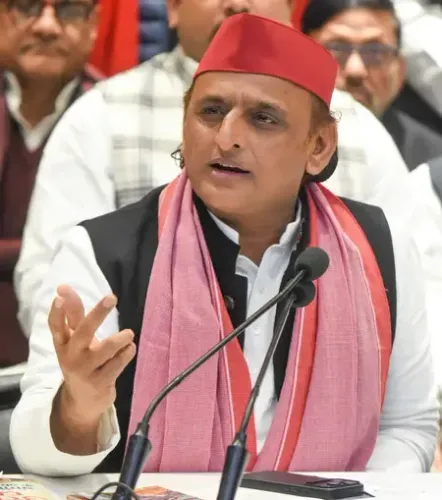
Samajwadi Party Member of Parliament Ziaur Rahman Barq was detained from the protest site. Before being taken away, he said: 'It is unfortunate that mosques and madrasas are being targeted across the country today. Even protests and demonstrations are not being allowed to be held peacefully in this free country... We will fight this battle until the very end, whether we have to fight it on the streets, in Parliament, or in court.' He described the demolition as 'part of a well-planned conspiracy.'
Context: Kumbh Mela Preparations and the 80-Site Removal Drive
The Ujjain administration's infrastructure push ahead of the Simhastha Kumbh Mela has involved the removal of 80 religious structures, the majority of which reportedly belong to the Hindu community. The VHP has used this as evidence that the drive is non-discriminatory. Critics, however, argue that the demolition of a mosque with a claimed history of 600 years raises questions about proportionality and due process that a routine road-widening project does not adequately answer. Notably, incidents of stone pelting during the demolition drew comparisons — from the VHP — to unrest in the Kashmir Valley, a framing that Muslim leaders have firmly rejected as inflammatory.
What Happens Next
The controversy is likely to reach the courts, with SP MP Barq explicitly flagging a legal fight. The AIMPLB's intervention signals that the issue may be taken up as a test case for the protection of religious sites under ongoing demolition drives across several states. The political fallout — particularly in the run-up to future state elections in Madhya Pradesh and at the national level — will be closely watched by both the ruling Bharatiya Janata Party (BJP) and the opposition.
Point of View
But it does not automatically neutralise the question of due process for a structure with a claimed 600-year history. The VHP's Kashmir comparison is a calibrated escalation of rhetoric, not a factual description of events — and it is precisely that kind of framing that converts a municipal dispute into a national communal narrative. Courts will likely become the arena where the 'illegal construction' label gets scrutinised; the political class on both sides appears more interested in the optics than the outcome.
NationPress
29 Sept 2026
Frequently Asked Questions
Why was a portion of the Shahi Masjid in Ujjain demolished?
The Ujjain administration demolished a portion of the Shahi Masjid as part of a road-widening and beautification plan ahead of the Simhastha Kumbh Mela. Authorities say 80 religious structures in the area — the majority belonging to Hindus — have been removed under the same project.
What triggered the stone pelting during the Ujjain mosque demolition?
Stone pelting broke out at the demolition site on 28 September 2026. The VHP has alleged that 'extremist-minded jihadist elements' provoked and misled people, while Muslim leaders have framed the incident as a response to what they describe as an unjust demolition of a 600-year-old mosque.
What did Muslim organisations say about the Ujjain mosque demolition?
The AIMPLB and Jamaat-e-Islami Hind condemned the demolition, questioning how a 600-year-old mosque could be labelled illegal construction. SP MP Ziaur Rahman Barq, who was detained at a protest in New Delhi, vowed to fight the issue in court, Parliament, and on the streets.
How much of the Shahi Masjid was supposed to be removed?
According to the VHP, only 10 per cent of the mosque was earmarked for removal, and the city Qazi had reportedly raised no objection before the stone-pelting incident occurred.
Where did the protest against the Ujjain mosque demolition take place?
Several Muslim organisations and Samajwadi Party leaders held a protest at Jantar Mantar in New Delhi on 29 September 2026. SP MP Ziaur Rahman Barq was detained from the protest site by authorities.