How Have Video Subscription Revenues in India Grown by 11% to Rs. 9,200 Crore?
Click to start listening

Synopsis
Discover how India's video subscription revenues surged by 11% to reach Rs. 9,200 crore, showcasing the booming OTT sector's impact on culture and global storytelling. Learn about Prasar Bharati's innovative platform 'WAVES OTT' and its role in democratizing access to Indian media.
Key Takeaways
- 11% growth in video subscription revenues in India.
- Revenue reached Rs 9,200 crore.
- Number of OTT subscribers estimated at 9.5-11.8 crore.
- 'WAVES OTT' has over 80 lakh downloads in its first year.
- Platform operates as subscription-free with advertising revenue.
New Delhi, Dec 17 (NationPress) The over-the-top (OTT) industry has played a pivotal role in enhancing India’s soft power by providing global audiences with access to Indian narratives, creative talents, cultural legacies, and independent cinema, as informed to Parliament on Wednesday.
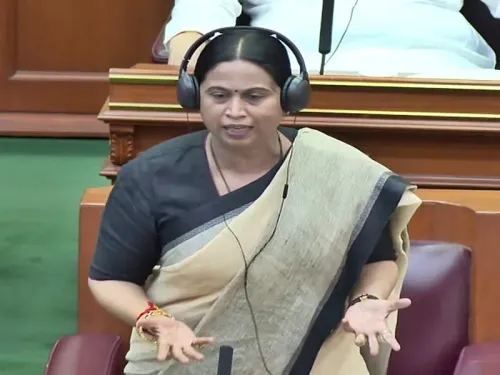
In a detailed written response in Lok Sabha, L. Murugan, Minister of State for Information and Broadcasting, highlighted that according to industry estimates from the FICCI-EY Media and Entertainment Industry Report 2025, video subscription revenues experienced an impressive growth rate of 11 percent in 2024, reaching the remarkable figure of Rs 9,200 crore. The count of individuals subscribing to streaming services on OTT platforms is projected to be between 9.5 and 11.8 crore.
Additionally, he mentioned that the platform 'WAVES OTT' of Prasar Bharati has bolstered this outreach by providing global access to Doordarshan and All India Radio's extensive archives, regional arts, documentaries, classical music, literature-themed programming, and multilingual content.
'WAVES OTT' has seen a remarkable trajectory with over 80 lakh downloads in its inaugural year, indicating a growing appetite for multilingual Indian content and public service media on digital platforms, the minister emphasized.
The platform is currently undergoing a phase of growth and expansion, with a consistent increase in its international user base. Revenue opportunities from global markets are being strategically cultivated through partnerships, he explained.
'WAVES OTT' primarily operates as a subscription-free public service platform, relying on advertising as its main revenue source. Its mission is to democratize access to public broadcasting content both within India and globally, the minister further elaborated.
The recent amendment to the Cinematograph Act, specifically the newly added Section 7(1B)(ii) of the Cinematograph Act, 1952 (revised in 2023), empowers the Central Government, as per Section 79(3) of the Information Technology Act, 2000, to take necessary actions against intermediaries hosting pirated film content, the minister concluded.
Point of View
It is imperative to recognize the significant advancements in India's OTT space, which not only contribute to the economy but also enhance India's cultural footprint globally. The government's supportive measures, combined with innovative platforms, are key to positioning India as a content powerhouse.
NationPress
17/12/2025
Frequently Asked Questions
What is the reported growth rate for video subscription revenues in India?
The reported growth rate for video subscription revenues in India is 11%, reaching Rs. 9,200 crore.
How many users are estimated to be subscribed to OTT platforms in India?
The estimated number of users paying for OTT streaming content in India is between 9.5 to 11.8 crore.
What is the primary revenue model for 'WAVES OTT'?
'WAVES OTT' operates primarily as a subscription-free platform, with advertising as its main source of revenue.
What role does 'WAVES OTT' play in promoting Indian content?
'WAVES OTT' enhances access to Doordarshan and All India Radio's archives, making rich Indian content available to global audiences.