CMRL-Exalogic case: Pinarayi Vijayan heads to Supreme Court after Kerala HC setback
Synopsis
Pinarayi Vijayan — first accused in the Exalogic corruption case — is set to take the legal fight to the Supreme Court on Friday after a Kerala High Court setback, even as the ED and VACB run parallel probes. With the CPI(M) out of power across every state and its Kerala seat tally down from 99 to 35, the apex court hearing could prove the defining moment of the veteran leader's career.
Key Takeaways
Pinarayi Vijayan , 82 , and his family are set to approach the Supreme Court on Friday after a Kerala High Court setback in the CMRL-Exalogic case.
Vijayan is the first accused and his daughter T.
Veena is the second accused in both the ED and VACB proceedings linked to her now-defunct IT firm, Exalogic .
In a separate alleged hawala transactions case, Vijayan's son-in-law P.A.
Mohammed Riyas is the first accused.
The CPI(M) has ruled out Vijayan's resignation as Leader of Opposition in the Kerala Assembly, drawing comparisons with its defence of him during the earlier SNC-Lavalin case .
The party's Kerala Assembly seat count crashed from 99 to 35 in the April 2026 elections — its worst-ever performance — with Congress-led UDF winning 102 seats .
CPI(M) is currently out of power in every state for the first time since its formation.
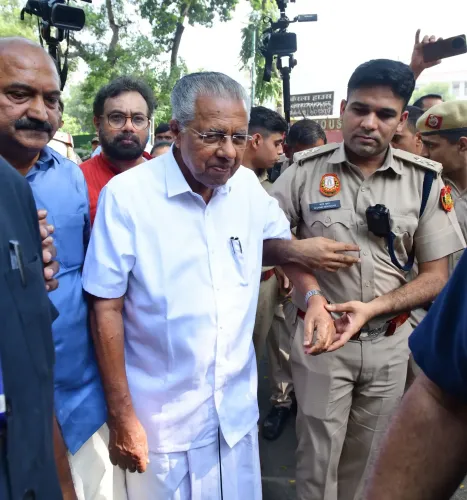
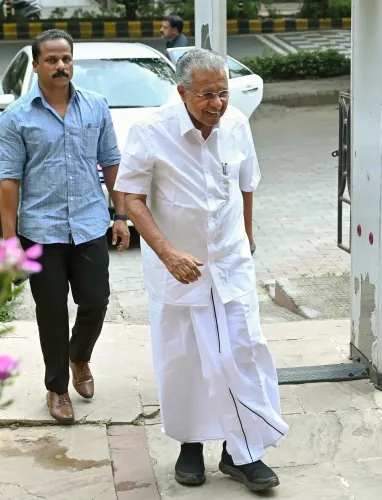
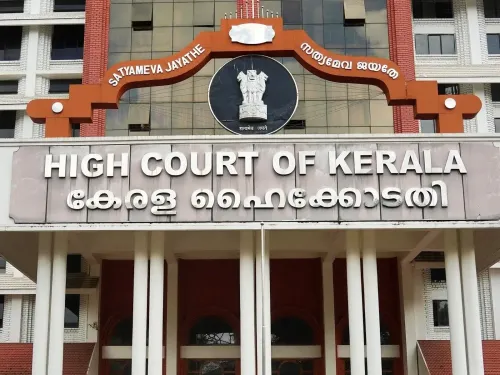
Pinarayi Vijayan and his family are set to approach the Supreme Court on Friday after suffering a setback at the Kerala High Court, as twin probes by the Enforcement Directorate (ED) and the Vigilance and Anti-Corruption Bureau (VACB) close in on the veteran Communist Party of India (Marxist) (CPI(M)) leader. The outcome of the legal battle carries significant implications for both Vijayan personally and a party already reeling from its worst electoral defeat in Kerala.
Twin Probes and the Accused
Vijayan, 82, is listed as the first accused in a case involving alleged corruption linked to his daughter, T. Veena, and her now-defunct IT firm, Exalogic. Veena is the second accused in both the ED and VACB proceedings. In a separate case involving alleged hawala transactions, former minister and CPI(M) legislator P.A. Mohammed Riyas — Vijayan's son-in-law — is named as the first accused. With the Kerala High Court setback forcing the family to escalate the legal fight, the Supreme Court has emerged as the next critical battleground.
CPI(M) Closes Ranks — But at a Cost
The CPI(M) leadership has firmly ruled out Vijayan's resignation as Leader of Opposition in the Kerala Legislative Assembly, choosing to stand behind him despite mounting legal pressure. The decision, however, has placed the party's long-stated commitment to political morality under renewed scrutiny. Critics have noted the contrast between the CPI(M)'s past demands for accountability from opposition leaders facing graft allegations and its current posture in defending Vijayan.
The controversy also draws comparisons to the SNC-Lavalin case, in which former CPI(M) general secretary Prakash Karat had argued that Vijayan need not resign as party state secretary because he held no government post at the time. The parallel is not lost on political observers, who see the leadership's current stance as a continuation of that defensive tradition.
Historic Electoral Collapse as Backdrop
The legal developments unfold against a backdrop of devastating political losses. In the April 2026 Kerala Assembly elections, the Left's seat count collapsed from 99 to 35, while the Congress-led United Democratic Front (UDF) swept to power with 102 seats and the Bharatiya Janata Party (BJP) secured three. The party's district committees are currently reviewing the reasons behind that historic defeat — and the Exalogic-linked investigations, reportedly dominating news cycles in Kerala, are widely seen as having contributed to the erosion of public trust.
Notably, this is the first time CPI(M) finds itself out of power in every state since the party's formation, making the Kerala situation doubly consequential for its national standing.
What the Supreme Court Battle Could Decide
While the CPI(M) leadership's decision to back Vijayan may stabilise his position as Leader of Opposition in the near term, it does not resolve the underlying legal uncertainty. Any further escalation of the ED or VACB investigations could deepen the political crisis for a party already struggling to rebuild public confidence. The Supreme Court's handling of the case will likely determine the pace and scope of both probes going forward.
For Vijayan, who has been the dominant figure in Kerala's CPI(M) since the late 1990s, the apex court hearing on Friday represents perhaps the most consequential legal moment of his decades-long political career. For the CPI(M), how the case unfolds will shape the party's credibility as it attempts to chart a path back to electoral relevance in Kerala.
Point of View
The party chose loyalty over the accountability standard it applies to others. If the Supreme Court does not provide the relief the Vijayan family is seeking, the party will face the harder question of whether defending a legally embattled leader is an asset or a liability in its post-collapse rebuild. The deeper irony is that a party historically positioned as the moral alternative to Congress now finds itself deploying the same institutional-loyalty arguments it once condemned.
NationPress
16 Oct 2026
Frequently Asked Questions
What is the CMRL-Exalogic case involving Pinarayi Vijayan?
The CMRL-Exalogic case involves alleged corruption linked to Vijayan's daughter T. Veena and her now-defunct IT firm, Exalogic. Vijayan is named the first accused, and Veena the second, in both the ED and VACB proceedings.
Why is Pinarayi Vijayan approaching the Supreme Court?
Vijayan and his family are approaching the Supreme Court after suffering a setback at the Kerala High Court in their bid to challenge the twin probes. The apex court hearing is scheduled for Friday, 17 October 2026.
What is the ED and VACB probe about?
The Enforcement Directorate and the Vigilance and Anti-Corruption Bureau are pursuing two separate cases — one tied to alleged corruption involving Exalogic, and another involving alleged hawala transactions in which Vijayan's son-in-law P.A. Mohammed Riyas is the first accused.
Why has the CPI(M) refused to ask Vijayan to resign?
The CPI(M) leadership has closed ranks behind Vijayan, ruling out his resignation as Leader of Opposition in the Kerala Assembly. The party argues he should not step down during an ongoing legal process, a stance that critics say contradicts its past demands for accountability from rival leaders.
What was the scale of the CPI(M)'s electoral defeat in Kerala in 2026?
In the April 2026 Kerala Assembly elections, the Left's seat count fell sharply from 99 to 35. The Congress-led UDF won 102 seats and the BJP secured three, marking the CPI(M)'s worst electoral performance in the state's history.