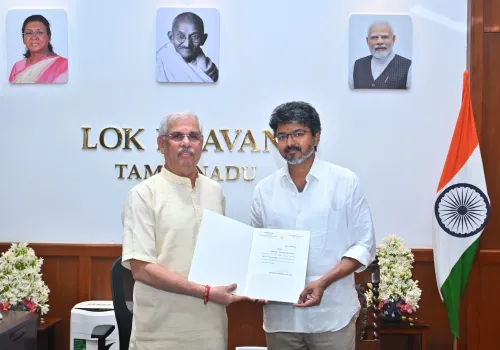
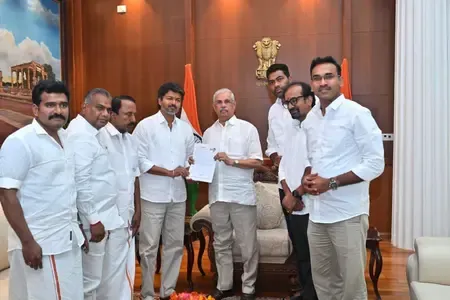
Vijay-led Tamil Nadu govt faces floor test after swearing-in on May 10
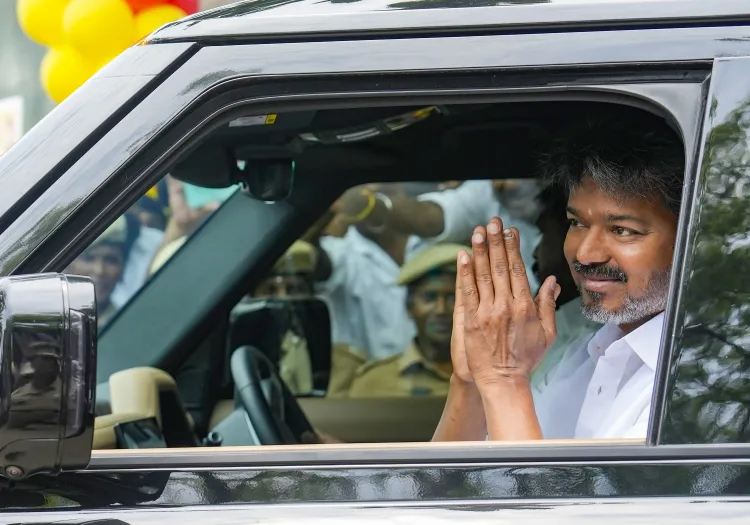
Synopsis
Actor-turned-politician C. Joseph Vijay takes oath as Tamil Nadu's Chief Minister on May 10 — but with a narrow majority and a Governor-mandated floor test by May 13, the new TVK-led government faces an immediate and high-stakes constitutional test before it can truly begin to govern.
Key Takeaways
Joseph Vijay of Tamilaga Vettri Kazhagam (TVK) is set to be sworn in as Tamil Nadu Chief Minister on 10 May 2025 along with nine ministers .
Governor Rajendra Vishwanath Arlekar has directed the government to prove its majority on or before 13 May .
The Assembly must first elect a Speaker and Deputy Speaker before the confidence motion is moved.
If the opposition demands a division vote , voting will be conducted across six divisions of the House.
The ruling alliance holds only a narrow majority , making every MLA's presence critical during the floor test.
If the confidence motion is defeated, the Governor could initiate steps to dissolve the government .
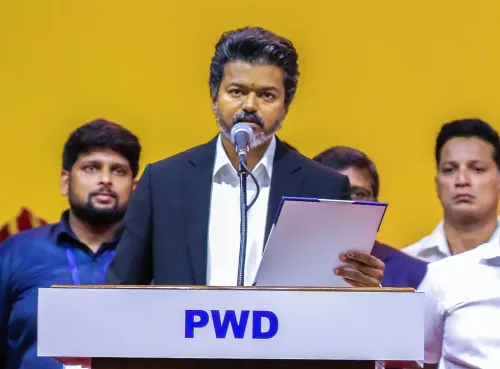
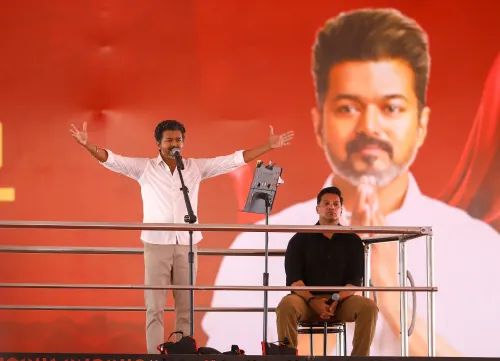
Tamilaga Vettri Kazhagam (TVK) chief C. Joseph Vijay is set to take oath as Chief Minister of Tamil Nadu on Sunday, 10 May, alongside nine ministers, marking the beginning of a new political chapter in the southern state. However, the newly formed government must clear two critical constitutional hurdles in the Assembly — the election of a Speaker and a trust vote — before it can formally begin functioning.
Governor's Directive and Timeline
Governor Rajendra Vishwanath Arlekar has directed the Vijay-led government to prove its majority on or before 13 May. The floor test is expected to be a closely watched exercise, given that the ruling alliance holds only a narrow majority in the Assembly. The presence of every alliance MLA will be crucial when the confidence motion comes to a vote.
Speaker Election: The First Hurdle
Before the trust vote, the Assembly must elect a Speaker and a Deputy Speaker. The ruling alliance is expected to nominate its candidate for the Speaker's post, while the opposition may field a rival nominee — potentially setting the stage for a contested floor vote. If a contest does take place, voting will be conducted and the winning candidate declared Speaker. Should a consensus candidate emerge instead, tradition dictates that the Chief Minister and the Leader of the Opposition escort the newly elected Speaker to the Chair together.
How the Trust Vote Will Unfold
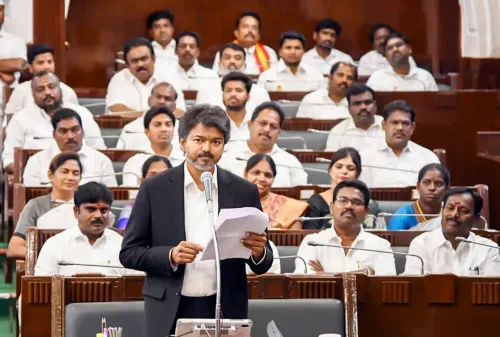
Following the Speaker's election, the government will move a confidence motion either on the same day or on 13 May. A member of the ruling side will introduce the motion, after which Chief Minister Vijay is expected to address the Assembly and appeal for support. Leaders of opposition parties are also expected to participate in the debate.
The trust vote could become particularly tense if the opposition demands a division vote — a right the Speaker is constitutionally bound to allow if requested. Under Assembly procedure, bells will be rung three times to summon all MLAs into the House before voting begins. Once the Assembly doors are closed, the Assembly Secretary will conduct division-wise voting across the six divisions of the House, with MLAs supporting and opposing the motion asked to stand separately in each division.
What the Outcome Means
The Chief Minister traditionally sits in the first division, while the Leader of the Opposition occupies a seat in the sixth division directly opposite. The final count will be submitted to the Speaker, who will announce whether the government has won or lost the confidence motion. If passed, the Vijay government will continue in office. If defeated, Governor Arlekar could initiate steps to dissolve the government — a scenario that makes the attendance and loyalty of every alliance legislator critical. With a narrow majority in hand, the coming days will be a defining early test of the new administration's political cohesion.
Point of View
And the opposition's option to demand a division vote transforms what is usually a formality into a public roll-call of loyalty. Tamil Nadu's political history is littered with governments that survived early floor tests only to fracture later — but losing one outright would be an extraordinary and immediate blow to a first-time CM who has never held elected office before.
NationPress
24 Sept 2026
Frequently Asked Questions
When will C. Joseph Vijay take oath as Tamil Nadu Chief Minister?
C. Joseph Vijay is scheduled to take oath as Tamil Nadu Chief Minister on Sunday, 10 May 2025, along with nine ministers. The swearing-in marks the start of a new political chapter under the Tamilaga Vettri Kazhagam-led alliance.
What is the deadline for the Vijay government's floor test?
Governor Rajendra Vishwanath Arlekar has directed the Vijay-led government to prove its majority on or before 13 May 2025. The government must first oversee the election of a Speaker before moving the confidence motion.
How does the division vote work in the Tamil Nadu Assembly?
If the opposition demands a division vote, bells are rung three times to summon all MLAs. Once the Assembly doors close, the Secretary conducts voting across six divisions of the House, with MLAs for and against the motion standing separately in each division.
What happens if the Vijay government loses the trust vote?
If the confidence motion is defeated, Governor Rajendra Vishwanath Arlekar could initiate steps to dissolve the government. Given the ruling alliance's narrow majority, the attendance of every alliance MLA is considered critical.
Why does the Speaker election happen before the trust vote?
Constitutional procedure requires the Assembly to elect a Speaker before any other business, including a confidence motion, can be conducted. The ruling alliance is expected to nominate its Speaker candidate, and the opposition may field a rival, potentially triggering a contested floor vote.