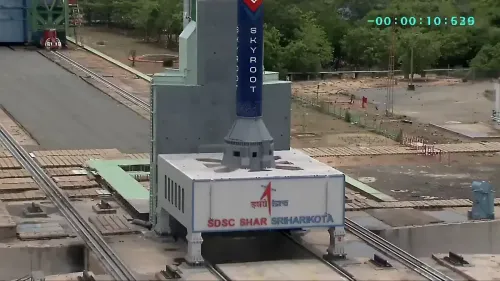
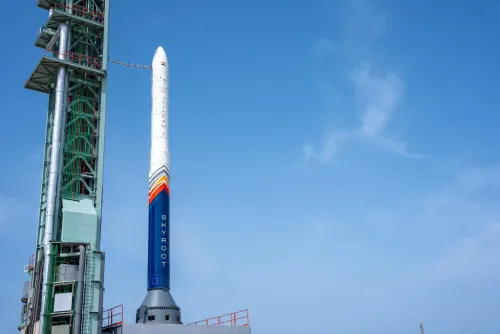
Kishan Reddy hails Vikram-1 launch, India's first private orbital rocket
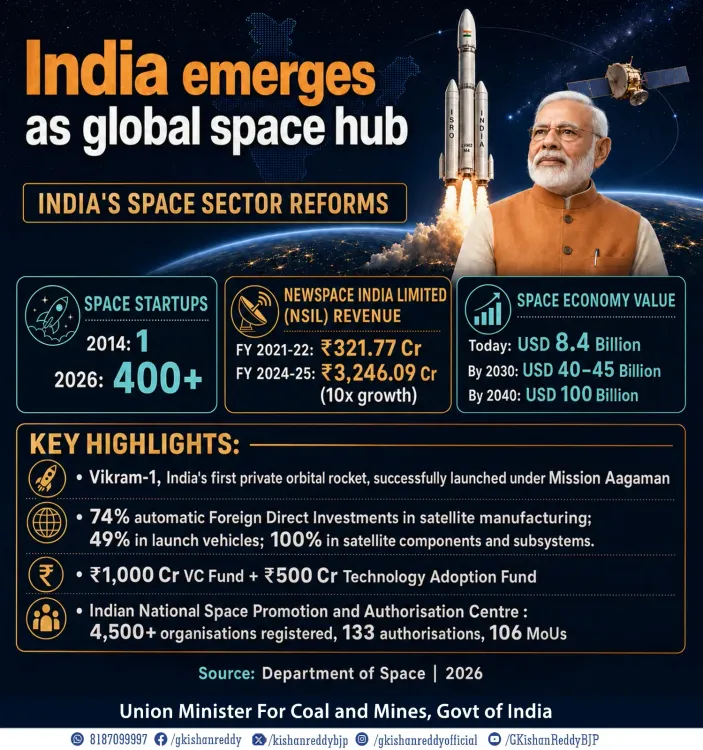
Synopsis
Union Minister G. Kishan Reddy has hailed the successful orbital launch of Skyroot Aerospace's Vikram-1 rocket under Mission Aagaman as a landmark for India's private space ecosystem, crediting the Indian Space Policy 2023 and PM Modi's reforms for enabling the milestone.
Key Takeaways
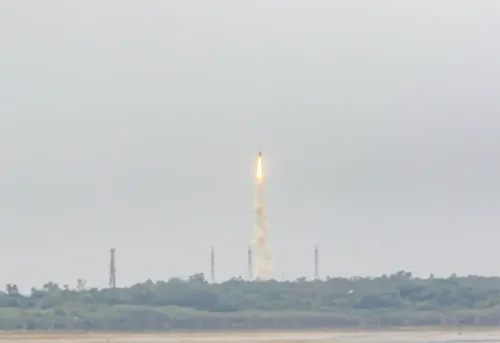
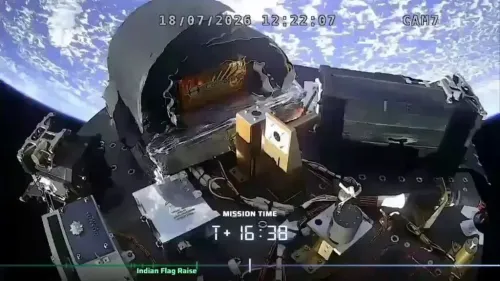
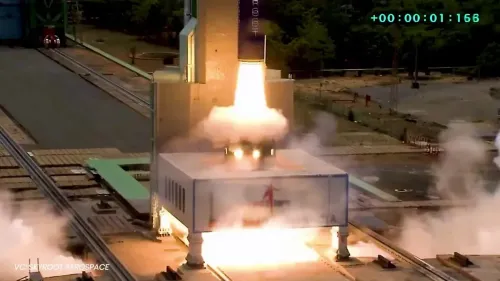
Vikram-1 , developed by Skyroot Aerospace , became India's first privately built rocket to reach orbit under Mission Aagaman .
Kishan Reddy attributed the achievement to PM Modi 's space-sector policy reforms and the Indian Space Policy 2023 .
The Indian Space Policy 2023 opened the entire space value chain — launch, satellite manufacturing, and data services — to private participation.
IN-SPACe , established in 2020 , served as the single-window authorising agency for the mission.
The launch is expected to boost investor confidence in India's private space start-up ecosystem and reduce reliance on foreign launch vehicles.
Subsequent authorisation norms from IN-SPACe and follow-on Vikram flights will determine the pace of India's commercial space expansion.
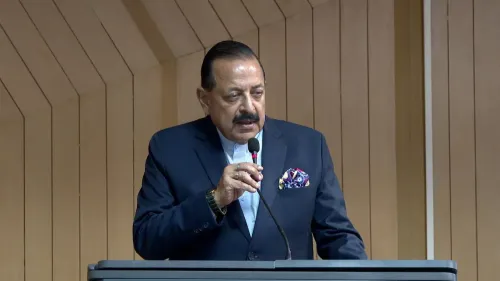
Union Coal and Mines Minister and BJP Telangana president G. Kishan Reddy on Monday, 20 July 2026 credited Prime Minister Narendra Modi's policy reforms for enabling the successful launch of Vikram-1, India's first privately developed orbital rocket, built by Hyderabad-based Skyroot Aerospace under Mission Aagaman.
Context
Reddy's post on X described the launch as 'a defining moment for the country's growing private space ecosystem,' pointing to the Indian Space Policy 2023 as the enabling framework. The mission, named Aagaman, marks the first time a privately built Indian rocket has reached orbit, a milestone that the minister attributed directly to the government's liberalisation of the space sector.
Skyroot Aerospace is a Hyderabad-headquartered start-up that has developed the Vikram series of launch vehicles. The three-stage, small-lift Vikram-1 is designed to carry payloads to low Earth orbit, targeting the fast-growing commercial small-satellite market.
Policy Backdrop
India's space sector was, for decades, the exclusive domain of the Indian Space Research Organisation (ISRO). A structural shift began in 2020 when the government announced reforms permitting private companies to participate in satellite launches and related services, and simultaneously established IN-SPACe — the Indian National Space Promotion and Authorisation Centre — as the single-window nodal agency for authorising non-governmental space activities.
The Indian Space Policy 2023 formalised and extended these changes, opening the entire space value chain — launch services, satellite manufacturing, ground-segment operations, and data services — to private participation. The policy is designed to increase India's launch cadence, attract foreign investment, and foster domestic innovation across the sector.
Reddy tagged @INSPACeIND in his post, underscoring the regulatory agency's role in authorising and enabling Mission Aagaman.
Stakeholders and Impact
The successful orbital flight of Vikram-1 is significant for India's growing constellation of private space start-ups, which have until now largely operated in sub-orbital or ground-segment roles. A proven domestic private launch vehicle reduces dependence on foreign rockets for commercial satellite operators and opens a new revenue stream for Indian aerospace companies.
ISRO scientists and the broader public-sector space establishment are also stakeholders: the policy framework positions ISRO as a mentor and facilitator rather than the sole launch provider, freeing it to focus on deep-space and strategic missions. Private players such as Skyroot are expected to handle the high-frequency, low-cost end of the market.
For Telangana, where Skyroot is headquartered, the launch carries regional significance as evidence that the state's aerospace and deep-tech ecosystem is maturing into a nationally competitive force.
What's Next
IN-SPACe is expected to release detailed authorisation norms for subsequent private orbital missions, with industry watching closely for clarity on licensing timelines and payload regulations. Follow-on test flights of the Vikram series will determine whether Skyroot can achieve the launch cadence needed to compete commercially. The government's broader ambition, articulated through the Indian Space Policy 2023, is to grow India's share of the global space economy significantly over the coming decade, and Mission Aagaman's outcome will be a key data point in assessing that trajectory.
Point of View
He is reinforcing the government's ownership of the liberalisation narrative ahead of what could be a competitive period for domestic launch providers. The milestone also carries geopolitical weight, signalling to global satellite operators that India now offers a credible private-sector alternative for small-lift orbital missions. Whether Skyroot can translate a single successful launch into a reliable commercial cadence will be the real test of the policy's durability.
NationPress
20 Oct 2026
Frequently Asked Questions
What is Vikram-1 and who built it?
Vikram-1 is India's first privately developed orbital rocket, built by Hyderabad-based start-up Skyroot Aerospace. It is a three-stage, small-lift launch vehicle designed to carry payloads to low Earth orbit.
What is Mission Aagaman?
Mission Aagaman is the name of the orbital launch mission on which Vikram-1 made its debut flight, marking the first time a privately built Indian rocket successfully reached orbit.
What is the Indian Space Policy 2023?
The Indian Space Policy 2023 is a government framework that opened the entire space value chain — including launch services, satellite manufacturing, ground operations, and data services — to private companies, formalising reforms that began in 2020.
What is IN-SPACe and what role did it play?
IN-SPACe, the Indian National Space Promotion and Authorisation Centre, is the autonomous single-window agency established in 2020 to regulate and promote non-governmental space activities. It authorised Skyroot's Mission Aagaman orbital launch.
Why is the Vikram-1 launch significant for India?
The successful orbital flight of Vikram-1 proves that Indian private companies can independently develop and operate launch vehicles, reducing dependence on foreign rockets, attracting investment, and positioning India as a competitive player in the global commercial space market.