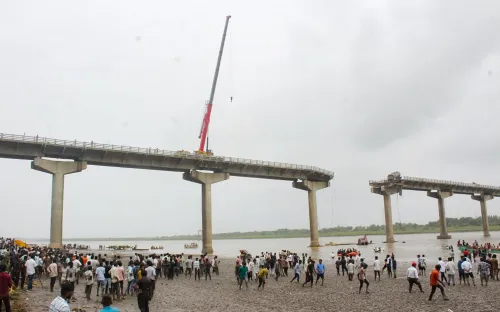
Vikramshila Setu collapse: Bihar seeks Army help, engineer suspended
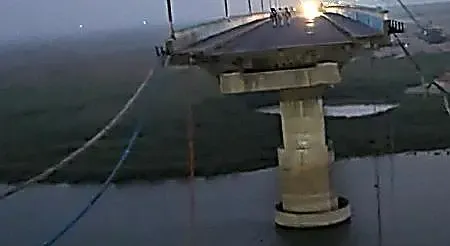
Synopsis
A 33-metre chunk of Vikramshila Setu fell into the Ganges at midnight — and the real shock is that the bridge had just been repaired in March 2026. With 16 districts cut off and 1 lakh daily commuters stranded, Bihar's infrastructure accountability is squarely in the spotlight as the state scrambles to bring in the Army for restoration.
Key Takeaways
A 33-metre section of Vikramshila Setu , Bhagalpur, collapsed near Pillar No.
133 at 12.50 am on Monday.
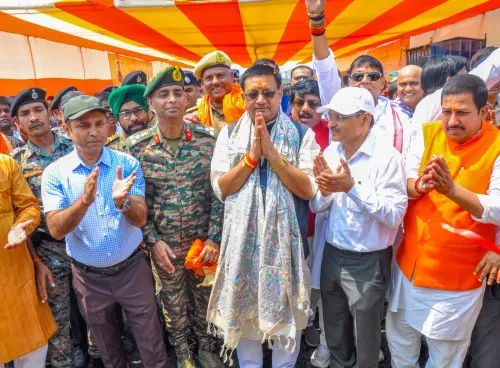
Chief Minister Samrat Chaudhary has sought Indian Army assistance for restoration after discussions with Defence Minister Rajnath Singh .
An Executive Engineer has been suspended by the Road Construction Department on negligence charges.
The bridge closure has disrupted connectivity across 16 districts , including the Seemanchal region and Jharkhand, affecting nearly 1 lakh daily commuters.
The bridge has undergone three rounds of repairs in the past decade; the latest maintenance was completed in March 2026 .
Traffic was halted in advance by authorities, preventing a potential mass casualty event.
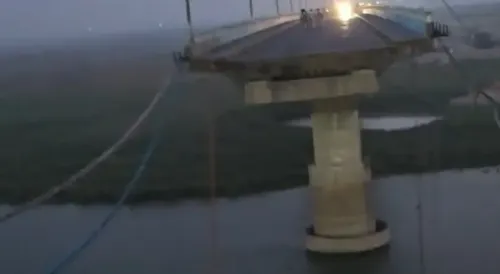
A 33-metre section of the Vikramshila Setu in Bhagalpur, Bihar, collapsed into the Ganges River in the early hours of Monday, 5 May 2025, at around 12.50 am IST, near Pillar No. 133 of the 4.7-km-long bridge. The Bihar government has moved swiftly in response, suspending a senior engineer, engaging the Indian Army for restoration support, and closing the bridge to all traffic — a disruption that has cut connectivity across 16 districts and affected nearly 1 lakh people daily.
Key Developments
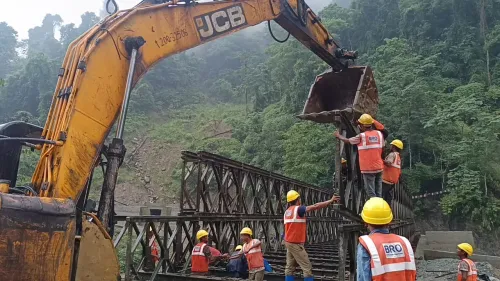
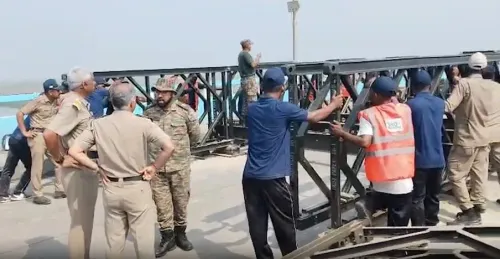
The Road Construction Department suspended an Executive Engineer on charges of negligence following the structural failure. Chief Minister Samrat Chaudhary held discussions with Defence Minister Rajnath Singh and senior military leadership, with the state now formally seeking Indian Army assistance to expedite restoration work. Bhagalpur District Magistrate Naval Kishore Chaudhary rushed to the site and ordered a complete suspension of vehicular movement. Barricades have been installed at both ends of the bridge, and a team of technical experts has been deployed to assess the structural damage.
How a Larger Tragedy Was Averted
Timely intervention by the administration — which had halted traffic in advance — prevented what could have been a catastrophic loss of life. Several vehicles were reportedly on the bridge at the time but were moved to safety before the section gave way. The sudden collapse, however, triggered widespread panic in the surrounding area and brought all cross-river movement to an abrupt halt.
Scale of Disruption
The Vikramshila Setu serves as a critical lifeline between north and south Bihar, and its closure has severed connectivity for the Seemanchal region and parts of Jharkhand. The disruption spans 16 districts, with the daily movement of nearly 1 lakh people now severely impacted. Commuters, goods vehicles, and emergency services are all affected by the indefinite closure.
A Pattern of Structural Concern
This incident has intensified scrutiny over the bridge's maintenance history. The structure has undergone three rounds of repairs in the past decade, with the most recent maintenance reportedly completed in March 2026. The recurrence of structural failure — despite recent upkeep — has raised pointed questions about construction quality, contractor accountability, and oversight mechanisms within Bihar's infrastructure administration. Critics argue that repeated repairs without lasting results point to systemic gaps in project execution and quality control.
What Happens Next
The technical inspection team's findings will be critical in determining the timeline for restoration. With the Indian Army's potential involvement, authorities are hoping to accelerate repair work. However, the broader question of long-term structural integrity and accountability for repeated failures is likely to remain under public and political scrutiny in the weeks ahead.
Point of View
But it cannot substitute for an independent forensic audit of why public money spent on repeated maintenance has produced no durable result.
NationPress
22 Sept 2026
Frequently Asked Questions
What happened to Vikramshila Setu in Bhagalpur?
A 33-metre section of the 4.7-km-long Vikramshila Setu collapsed into the Ganges River near Pillar No. 133 at around 12.50 am on Monday, 5 May 2025. The Bihar government has suspended an engineer and sought Indian Army assistance for restoration.
Has anyone been injured or killed in the Vikramshila Setu collapse?
No casualties have been reported. Timely intervention by the administration, which halted traffic in advance, allowed vehicles on the bridge to be moved to safety before the section collapsed.
Why is the Vikramshila Setu collapse significant?
The bridge is a critical link between north and south Bihar and serves 16 districts, including the Seemanchal region and Jharkhand. Its closure has disrupted the daily movement of nearly 1 lakh people, affecting commuters, goods transport, and emergency services.
What action has the Bihar government taken after the bridge collapse?
Chief Minister Samrat Chaudhary held talks with Defence Minister Rajnath Singh and is seeking Indian Army support for repairs. The Road Construction Department has suspended an Executive Engineer for negligence, and a technical expert team has been deployed to assess the damage.
How many times has Vikramshila Setu been repaired before this collapse?
The bridge has undergone three rounds of repairs in the past decade, with the most recent maintenance reportedly completed in March 2026 — just weeks before the collapse. The repeated structural issues have raised serious questions about construction quality and oversight.