Vyapam scam: Gwalior court convicts two for exam impersonation, jails both 3 years

Synopsis
A Gwalior special court has convicted two men — one who sat an exam as a proxy and the other who hired him — in a CBI-prosecuted Vyapam case, handing each a three-year jail term. The verdict, over a decade after the original FIR, underscores how slowly but steadily the judiciary is working through hundreds of Vyapam cases transferred to the CBI by the Supreme Court.
Key Takeaways
The Special Court, Vyapam Cases, Gwalior convicted Amitesh and Vipin Kumar on 12 August 2026 .
Both were sentenced to three years of rigorous imprisonment and fined ₹5,000 each.
Amitesh (Ghaziabad, UP) impersonated Vipin Kumar (Moradabad, UP) in a recruitment exam at Government PG College, Guna .
The original FIR was filed on 9 March 2014 ; the CBI re-registered the case on 5 August 2015 following Supreme Court orders.
The CBI filed its chargesheet on 6 October 2016 ; the trial concluded with Wednesday's conviction.
The case is part of the broader Vyapam scam probe involving impersonation, paper leaks, and exam irregularities across Madhya Pradesh .
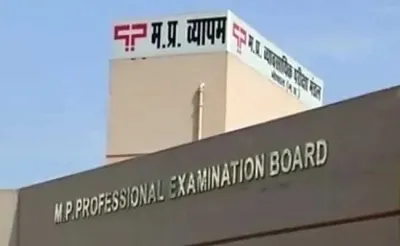
A Special Court handling Vyapam cases in Gwalior on Wednesday, 12 August 2026, convicted two individuals — Amitesh and Vipin Kumar — for impersonation in a recruitment examination, sentencing each to three years of rigorous imprisonment and a fine of ₹5,000. The verdict marks another judicial milestone in the Central Bureau of Investigation's (CBI) long-running probe into the Madhya Pradesh Professional Examination Board (Vyapam) scam.
How the Fraud Was Uncovered
The case originated on 9 March 2014, when an invigilator at the examination hall inside Government PG College, Guna, noticed that the candidate appearing as Vipin Kumar did not match the photograph on record. The Examination Superintendent conducted a preliminary verification on the spot and subsequently got a First Information Report (FIR) registered at Police Station Cantt, Guna.
The person detained was identified as Amitesh, a resident of Ghaziabad district, Uttar Pradesh. He admitted to having appeared in the examination on behalf of the original candidate, Vipin Kumar, a resident of Moradabad district, Uttar Pradesh.
CBI Takeover and Chargesheet
The Supreme Court of India, through orders in Writ Petitions (Civil) Nos. 372/2015 and 417/2015, directed the CBI to take over the matter. The agency re-registered the case on 5 August 2015 and, after completing its investigation, filed a chargesheet on 6 October 2016. In the chargesheet, Amitesh was named as the 'solver' — the impersonator who physically sat the exam — while Vipin Kumar was identified as the original candidate who had arranged and facilitated the impersonation.
The Verdict and Its Significance
After a full trial and examination of CBI-submitted evidence, the Special Court found both accused guilty and pronounced the sentence on 12 August 2026. The conviction is part of a broader pattern of judicial outcomes stemming from the Supreme Court's decision to transfer a large number of Vyapam-related cases to the CBI for independent investigation.
Notably, the Vyapam scam involved widespread irregularities — including impersonation, paper leaks, and manipulation of results — across multiple recruitment and entrance examinations conducted by the Board. The CBI has been examining numerous such instances, and this conviction adds to a growing list of concluded trials.
The Larger Vyapam Probe
The Vyapam scam is one of India's most extensive examination fraud cases, implicating hundreds of candidates, middlemen, and, according to investigators, officials across Madhya Pradesh. The Supreme Court's intervention in 2015 was itself a response to concerns about the impartiality of the state-level probe. With multiple chargesheets filed and trials at various stages, the judicial process is expected to continue for years. This latest conviction signals that the courts are working through the backlog of cases methodically.
Point of View
But the pace of trials remains a concern. With hundreds of cases still in various stages, the real test of the Supreme Court's intervention is not individual convictions but systemic deterrence — and whether the examination machinery in Madhya Pradesh has been genuinely reformed.
NationPress
27 Sept 2026
Frequently Asked Questions
What is the Vyapam scam?
The Vyapam scam refers to a large-scale examination and recruitment fraud involving the Madhya Pradesh Professional Examination Board (Vyapam), in which candidates used impersonators, leaked papers, and bribed officials to clear government recruitment and entrance exams. The Supreme Court transferred hundreds of related cases to the CBI in 2015 for independent investigation.
Who were convicted in the Gwalior Vyapam case on 12 August 2026?
The Special Court convicted Amitesh, a resident of Ghaziabad, Uttar Pradesh, who physically impersonated the candidate, and Vipin Kumar, a resident of Moradabad, Uttar Pradesh, who was the original candidate and had arranged the impersonation. Both were sentenced to three years of rigorous imprisonment and fined ₹5,000 each.
How was the impersonation detected?
An invigilator at Government PG College, Guna, noticed during the examination that the person appearing as Vipin Kumar did not resemble the photograph on the candidate's record. The Examination Superintendent verified this and got an FIR registered at Police Station Cantt, Guna, on 9 March 2014.
Why did the CBI take over the Vyapam cases?
The Supreme Court of India, responding to petitions raising concerns about the impartiality of the state-level investigation, ordered the CBI to take over Vyapam cases through its rulings in Writ Petitions (Civil) Nos. 372/2015 and 417/2015. The CBI re-registered this specific case on 5 August 2015.
What happens next in the Vyapam probe?
Multiple Vyapam-related cases filed by the CBI remain at various stages of trial across special courts. The judicial process is expected to continue for several more years as courts work through the large volume of chargesheets filed since 2015.