Hindu Rashtra in thoughts, not on paper: Dhirendra Shastri in Japan
Synopsis
Pandit Dhirendra Shastri, visiting Japan, says the Hindu Rashtra he envisions lives in ideology and culture — not in constitutional text. His sharpest diagnosis: casteism and regionalism are tearing Hindu society apart, and India needs Japan's brand of nationalism to fix it.
Key Takeaways
Pandit Dhirendra Shastri of Bageshwar Dham made the remarks during his visit to Japan on Monday, 24 August .
He said a Hindu Rashtra should be ideological — rooted in Sanatan culture — not a formal constitutional change.
He identified casteism and regionalism as the biggest problems facing Hindu society.
He cited Japan's nationalism, discipline, and infrastructure as lessons India should absorb.
On Gen Z and social media, he said Instagram is acceptable in moderation but warned against excessive screen time and chasing virality.
His single wish for India via Lord Hanuman : improvement in education and health .
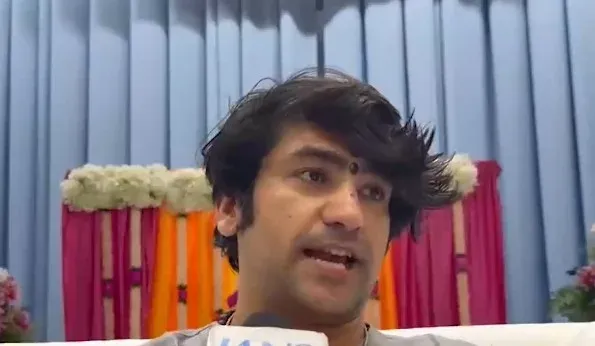
Pandit Dhirendra Shastri, head priest of Bageshwar Dham, said on Monday that the concept of a Hindu Rashtra must first take root in the minds and hearts of Indians rather than exist as a constitutional or legal construct. Speaking during his ongoing visit to Japan, Shastri said the transformation he envisions is ideological — driven by the spread of Sanatan culture — and not a formal rewriting of the nation's founding documents.
On Hindu Rashtra and the Constitution
Addressing the widely held view that a Hindu Rashtra conflicts with India's constitutional framework, Shastri drew a clear distinction. 'We want a Hindu Rashtra not on paper, but in thoughts,' he said. 'A change in thought will lead to a change in action. A change in thought will lead to a change in the nation. Our vision of a Hindu nation is ideological, not on paper.'
He argued that instilling Indian tradition and Sanatan values in children, the elderly, and every citizen is the pathway to this vision. 'The only problem is that this should be universally accepted, and everyone should become cultured, thoughtful, wise, intelligent, and strong,' he added.
Casteism and Regionalism: The Biggest Threats
When asked about the most pressing challenge facing Hindu society, Shastri was unequivocal: casteism and regionalism. He pointed to Japan as a model worth studying, noting that Japanese society is held together by nationalism — what he called 'Rashtrism' — rather than divided by caste or regional identity. 'There is no regionalism or casteism in Japan; there is Rashtrism here,' he observed. He also praised Japan's technology, infrastructure, discipline, and the physical well-being and longevity of its people.
What India Can Offer Japan
Shastri suggested the exchange of learning should go both ways. He said Japan could benefit from India's model of promoting culture among youth and its tradition of unity in diversity. He specifically cited spirituality as the most important lesson India could offer Japan.
On Gen Z, Social Media, and Faith
Shastri acknowledged the pull of social media on younger Indians but stopped short of condemning it outright. 'Instagram should be used — it's good for proper use, bad for misuse,' he said. He urged Gen Z to 'learn good values, spend less time on the screen, and rely more on real things than reels,' adding that patience and happiness matter more than going viral.
On the question of proof for the existence of God — a challenge frequently posed by younger, sceptical audiences — Shastri offered a philosophical response. 'Not everything in this world is provable. Air is invisible, but it is there. Similarly, God is invisible, but he is there,' he said. 'God isn't something to be seen; God is something to be experienced, and that too within oneself.'
Shastri's Wish for India
Asked what blessing he would seek from Lord Hanuman to transform India, Shastri gave a pointed two-word answer: improvement in education and health. The response underscored a pragmatic streak alongside his spiritual messaging — one that has made him a polarising but widely followed public figure in contemporary India.
Shastri's Japan visit comes at a time when debates around cultural nationalism, the role of religion in public life, and the influence of religious leaders on Indian politics remain sharply contested.
Point of View
The ideological unity he seeks remains distant. The Japan comparison is instructive but incomplete — Japan's social cohesion was built over centuries of ethnic and linguistic homogeneity, a condition India does not share. His two-word policy wish — education and health — sits in quiet tension with the cultural messaging, hinting that even he recognises structural deficits that no ideological shift alone can fix.
NationPress
24 Aug 2026
Frequently Asked Questions
What did Dhirendra Shastri say about Hindu Rashtra?
Pandit Dhirendra Shastri said he wants a Hindu Rashtra in thought and ideology, not as a formal change to India's Constitution. He argued that instilling Sanatan culture in every Indian's heart is the path to this vision, and that a change in thought will lead to a change in the nation.
What does Dhirendra Shastri consider the biggest problem in Hindu society?
Shastri identified casteism and regionalism as the biggest problems facing Hindu society. He pointed to Japan's culture of nationalism — which he called 'Rashtrism' — as a model India should emulate to overcome these divisions.
Why is Dhirendra Shastri visiting Japan?
Shastri is on an ongoing visit to Japan, during which he praised the country's technology, infrastructure, discipline, and the longevity of its people. He also outlined what India and Japan could learn from each other, including spirituality as India's key offering.
What did Dhirendra Shastri say to Gen Z about social media?
Shastri said social media platforms like Instagram are acceptable when used properly but harmful when misused or used excessively. He advised younger Indians to learn good values, reduce screen time, prioritise real experiences over reels, and value patience and happiness over going viral.
What is Dhirendra Shastri's vision for India's future?
When asked what he would seek from Lord Hanuman to change India, Shastri said improvement in education and health. More broadly, he envisions an India united by Sanatan cultural values, free from caste and regional divisions, and drawing on Japan's discipline and national cohesion.