Karnataka Waqf Minister Confirms No Interference with Temple and School Properties
Synopsis
In a recent statement, Karnataka's Waqf Minister B.Z. Zameer Ahmad Khan declared that the Waqf Board will not interfere with properties belonging to temples or educational institutions, addressing concerns raised in the Legislative Assembly. This is part of a broader effort to tackle encroachments on Waqf properties.
Key Takeaways
The Karnataka Waqf Minister clarified the Board's position on temple and school properties.
Encroachments on Waqf properties are a significant concern, with many acres under private control.
Waqf Lok Adalats have been instituted to address these encroachments.
The discussion highlights the ongoing debate about land ownership and community rights.
Political tensions have arisen over the management of Waqf properties.
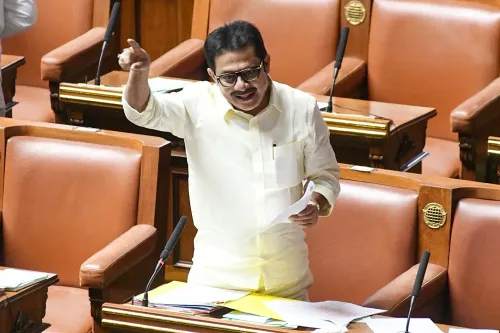
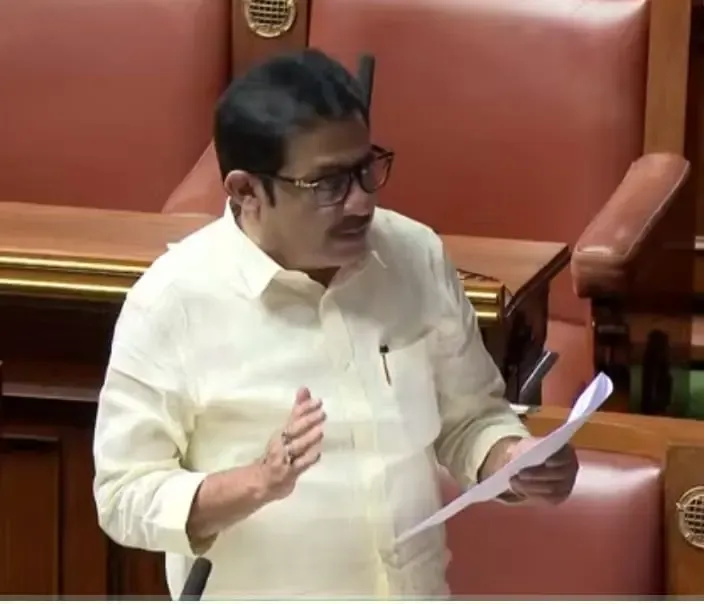
Bengaluru, March 16 (NationPress) B.Z. Zameer Ahmad Khan, the Minister for Waqf and Housing, emphasized that the Waqf Board will refrain from interfering with any properties associated with temples or educational institutions.
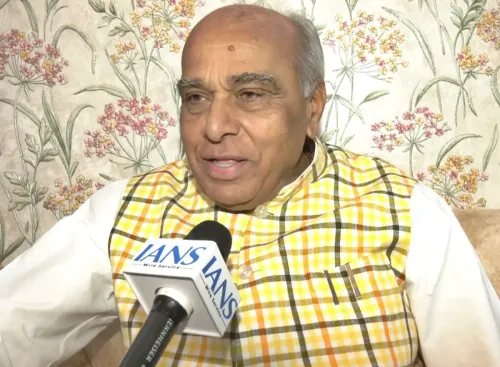
This declaration was made in the Legislative Assembly on Monday while responding to queries posed by senior Congress MLA M.Y. Patil.
Minister Zameer asserted, “I have made it abundantly clear that we will not engage with properties belonging to temples. We will equally respect the properties of schools and educational establishments.”
“Our primary concern is the encroachment of Waqf properties by private entities. In most instances, these encroachments are perpetrated by individuals from the Muslim community,” he detailed.
Zameer noted that Waqf Board properties in the state are estimated to span 1.12 lakh acres, while only 24,054 acres remain under the Board's actual control.
He further explained that approximately 17,580 acres of land have been encroached upon, 47,263 acres have fallen under Inam Abolition, and 23,627 acres have been affected by the Land Reforms Act.
“Since the Congress-led administration took office in Karnataka, I have established Waqf Lok Adalats to identify and reclaim encroached Waqf properties,” he mentioned.
He urged R. Ashoka, the Leader of the Opposition, and other BJP officials to recognize that the formation of Waqf Adalats is aimed at resolving the issue of encroachment on Waqf properties.
“The total Waqf properties exceed 1,12,860 acres. These assets were not allocated by the government but were donated by private individuals for community welfare. Out of this, around 17,969 acres have been encroached upon,” Minister Zameer highlighted.
“The encroachments have not involved temple managements or others. The individuals responsible are from the Muslim community,” he declared.
“To tackle the encroachments, I initiated Waqf Adalats. However, the BJP created considerable controversy during the Belagavi Winter Session, which is why I am clarifying this matter,” Minister Zameer stated.
R. Ashoka countered, “I am aware that in Kalaburagi and its vicinity, Muslims have encroached upon Waqf properties. That is not the crux of our inquiry.”
“We questioned the Waqf Board's claims regarding properties such as the government school attended by pioneering Indian engineer Sir M. Visvesvaraya and temple lands as Waqf properties,” he clarified.
“Historically, temple and Waqf lands were granted to farmers, who have cultivated them for generations. If farmers are in possession of these lands, they should retain them, regardless of whether they are Hindus or Muslims,” Ashoka argued.
“An investigation into Waqf encroachments is warranted. For instance, the renowned Windsor Manor hotel in Bengaluru is situated on such land. Mr. Zameer, you have not addressed this issue and instead focus on other matters. You have not mentioned it even once, possibly because you frequent it for your coffee and meals,” Ashoka critiqued.
Minister Zameer responded that the matter is currently pending with the Supreme Court.
Previously, senior Congress MLA M.Y. Patil raised concerns in the Assembly regarding the encroachment of Waqf properties by private individuals during the Question and Answer session.
MLA Patil stated that in and around Afzalpur town in Kalaburagi district, documentation indicates that numerous properties indeed belong to the Waqf. “We are unable to initiate any government projects and must seek private land instead,” he expressed.
“However, these properties are presently retained by private parties. They are not under the jurisdiction of either the Waqf Board or the government,” he added.
Point of View
The statements made by Minister Zameer reflect a commitment to addressing property encroachments while maintaining respect for religious institutions. The ongoing debate highlights the complexities of land ownership and community welfare in Karnataka. The political dynamics surrounding this issue are crucial for understanding the broader implications for the state's governance.
NationPress
16 Oct 2026
Frequently Asked Questions
What did the Waqf Minister say regarding temple properties?
The Waqf Minister stated that the Waqf Board will not meddle with properties associated with temples or schools.
How much land is estimated to be under the Waqf Board?
The Waqf Board properties are estimated to cover **1.12 lakh acres**, but only **24,054 acres** are currently under its control.
What is the purpose of Waqf Lok Adalats?
Waqf Lok Adalats were established to identify and recover encroached Waqf properties.
Who is primarily responsible for encroachments on Waqf properties?
Minister Zameer indicated that most encroachments are carried out by private parties, particularly individuals from the Muslim community.
What prompted the controversy during the Belagavi Winter Session?
The controversy was sparked by discussions concerning the claims of the Waqf Board over certain properties, which included historical sites and lands previously used by farmers.