Jan-Dhan Yojana turns 12: 59 crore accounts, ₹3.1 lakh crore in deposits
Synopsis
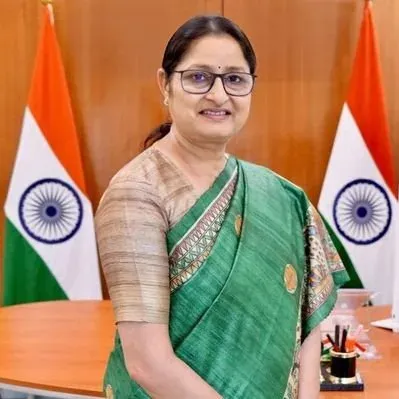
Twelve years in, Jan-Dhan Yojana has moved well beyond account-opening optics: 59 crore accounts, ₹3.1 lakh crore in deposits, and ₹53 lakh crore pushed through the JAM pipeline. With 56% of accounts held by women, the scheme's gender footprint is now central to the government's 'women-led development' narrative — and WCD Minister Annpurna Devi is making sure that story is told alongside Mission Shakti's safety-net push.
Key Takeaways
Pradhan Mantri Jan-Dhan Yojana completed 12 years on 28 August 2025 , with more than 59 crore accounts opened nationwide.
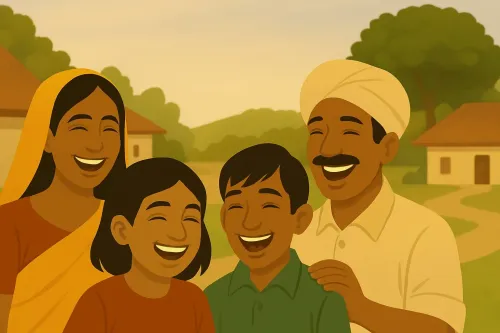
56 per cent of Jan-Dhan accounts are held by women; 78 per cent are in villages and small towns.
Total deposits in Jan-Dhan accounts have crossed ₹3.1 lakh crore ; ₹53 lakh crore transferred via the JAM trinity.
991 of 1,033 approved One Stop Centres are functional, having assisted over 15.20 lakh women since April 2015 .
Under PMMVY , mothers receive ₹5,000 for the first child directly into Aadhaar-seeded accounts in two instalments.
WCD Minister Annpurna Devi chaired a Consultative Committee meeting in Kolkata on Mission Shakti's three key components.
Pradhan Mantri Jan-Dhan Yojana (PMJDY) marked 12 years of operation on 28 August 2025, with Union Minister of Women and Child Development Annpurna Devi crediting the scheme with transforming financial inclusion into economic empowerment for crores of Indians, particularly women and rural households.
Key Milestones at 12 Years
More than 59 crore Jan-Dhan accounts have been opened since the scheme's launch, according to the Minister. Of these, 56 per cent are held by women and 78 per cent are in villages and small towns — figures that underscore the scheme's reach into India's most underserved communities.
Deposits in Jan-Dhan accounts have crossed ₹3.1 lakh crore, while a cumulative ₹53 lakh crore has been transferred directly to beneficiaries through the JAM trinity — Jan Dhan, Aadhaar, and Mobile — the digital infrastructure backbone of India's direct benefit transfer architecture.
What the Government Said
In a post on X, Annpurna Devi said that under Prime Minister Narendra Modi's leadership, the scheme has 'connected crores of citizens — especially women and rural families — with the formal banking system and built a strong foundation of financial self-reliance.' She described PMJDY as 'not merely a scheme for opening bank accounts, but a transformative journey of dignity, security and empowerment.'
Mission Shakti: Parallel Push for Women's Safety
Separately, the Minister chaired a meeting of the Consultative Committee of Members of Parliament attached to the Ministry of Women and Child Development in Kolkata, where discussions centred on three pillars of Mission Shakti — One Stop Centres (OSC), Pradhan Mantri Matru Vandana Yojana (PMMVY), and SANKALP: Hub for Empowerment of Women (HEW).
Under Mission Shakti's 'Sambal' sub-scheme — covering One Stop Centres, the Women Helpline, Beti Bachao Beti Padhao, and Nari Adalat — the Centre provides 100 per cent financial assistance to states and Union Territories. The 'Samarthya' sub-scheme follows a 60:40 Centre-state funding split, adjusted to 90:10 for North Eastern and Special Category States; UTs without a legislature receive full Central funding.
One Stop Centres and PMMVY: On the Ground
Of the 1,033 One Stop Centres approved under the Nirbhaya Fund — operational since 1 April 2015 — 991 are functional and have collectively assisted more than 15.20 lakh women affected by violence or in distress. The scheme targets at least one OSC in every district across the country.
Under PMMVY, implemented pan-India since 1 January 2017, eligible mothers receive a cash incentive of ₹5,000 for the first child — disbursed in two instalments of ₹3,000 on pregnancy registration and ante-natal check-up, and ₹2,000 on childbirth registration and completion of the first vaccination cycle — directly into Aadhaar-seeded bank or post office accounts.
Broader Significance
This comes amid a sustained government push to deepen financial access ahead of the next general cycle of welfare scheme reviews. Notably, the JAM trinity's ₹53 lakh crore direct transfer figure positions India's digital public infrastructure as a model cited by multilateral agencies. The convergence of PMJDY's banking reach with Mission Shakti's safety net signals an effort to move women's policy from single-point interventions to a layered, systemic framework. How effectively these schemes intersect on the ground — particularly for women in conflict-affected or remote districts — remains a key question for the next phase of implementation.
Point of View
But the more consequential metric is the ₹53 lakh crore pushed through the JAM pipeline — it is this direct-transfer architecture, not account ownership alone, that determines whether financial inclusion translates into real economic agency. The 56% women-account share is a genuine structural shift, yet dormancy rates in Jan-Dhan accounts have historically been high; the government has not updated those figures publicly. Layering Mission Shakti's safety-net programmes onto the PMJDY base is sound policy logic, but the gap between the 1,033 OSCs approved and actual district-level coverage points to an implementation lag that headline numbers tend to obscure.
NationPress
28 Aug 2026
Frequently Asked Questions
What is Pradhan Mantri Jan-Dhan Yojana and how old is it?
Pradhan Mantri Jan-Dhan Yojana (PMJDY) is India's flagship financial inclusion programme that provides universal access to basic banking services. Launched in 2014, it completed 12 years on 28 August 2025, by which point more than 59 crore accounts had been opened across the country.
How many Jan-Dhan accounts are held by women?
According to WCD Minister Annpurna Devi, 56 per cent of all Jan-Dhan accounts — out of a total of more than 59 crore — are held by women. Additionally, 78 per cent of all accounts are in villages and small towns, reflecting the scheme's rural reach.
How much money has been transferred through the JAM trinity?
A cumulative ₹53 lakh crore has been transferred directly to beneficiaries through the JAM (Jan Dhan-Aadhaar-Mobile) trinity, according to the Minister. Total deposits in Jan-Dhan accounts have separately crossed ₹3.1 lakh crore.
What is Mission Shakti and what does it cover?
Mission Shakti is the Union government's integrated scheme for women's safety, security, and empowerment. It comprises two sub-schemes: 'Sambal' — covering One Stop Centres, Women Helpline, Beti Bachao Beti Padhao, and Nari Adalat — and 'Samarthya', which includes Hubs for Empowerment of Women, PMMVY, Shakti Sadan, Sakhi Niwas, and Palna.
What benefits does PMMVY provide to mothers?
Pradhan Mantri Matru Vandana Yojana (PMMVY) provides a cash incentive of ₹5,000 for the first child, paid in two instalments: ₹3,000 on pregnancy registration and at least one ante-natal check-up, and ₹2,000 on childbirth registration and completion of the first vaccination cycle. The amount is transferred directly into the mother's Aadhaar-seeded bank or post office account.