Why Did the Supreme Court Deny Bail to Umar Khalid? Insights from Syed Qasim Rasool Ilyas (IANS Exclusive)
Click to start listening
Synopsis
Syed Qasim Rasool Ilyas expresses his deep disappointment over the Supreme Court's decision to deny bail to his son Umar Khalid, questioning the differentiation made between the accused in the 2020 Delhi riots case. This unprecedented move raises significant concerns about fairness in the justice system.
Key Takeaways
- Supreme Court's ruling categorized accused in the Delhi riots case.
- Umar Khalid's defense claims no evidence links him to the riots.
- The protest at JNU highlighted student dissent.
- Ilyas questions the implications for dissent in democracy.
- Concerns regarding fairness in the justice system.
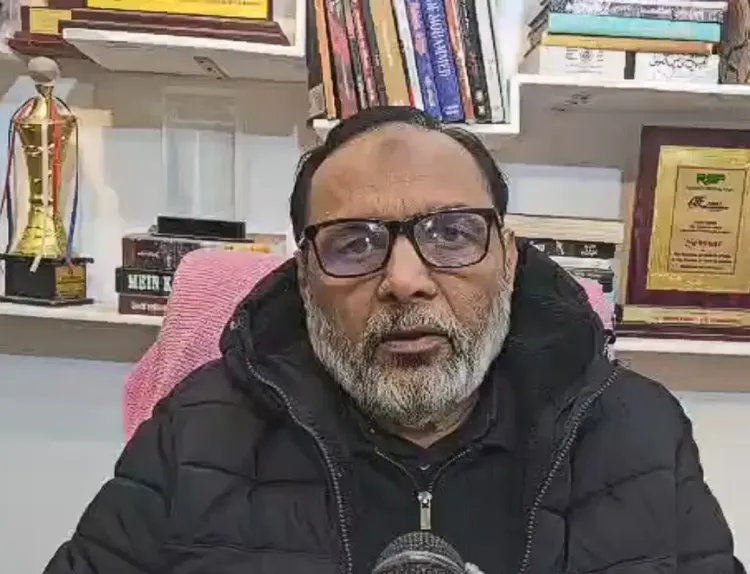
Delhi, Jan 7 (NationPress) In an expression of his profound disappointment regarding the Supreme Court's ruling that denied bail to his son, student activist Umar Khalid, in connection with the 2020 Delhi riots, Syed Qasim Rasool Ilyas stated, "This is unprecedented in the realm of criminal justice as the Apex Court has distinguished between the accused, categorizing them into two separate groups, despite all being implicated in the same case."
During an interview with IANS, Ilyas raised concerns over the logic behind dividing the seven accused in the 2020 Delhi riots into two categories for bail purposes, especially as the Delhi Police did not present any "differentiation" in their case.
"While Umar Khalid and Sharjeel Imam are labeled as ideological leaders, the others are referred to as followers. This distinction is not supported in the police chargesheet," he emphasized.
On Monday, the Supreme Court not only rejected bail for Umar Khalid and Sharjeel Imam, but also granted conditional bail to five individuals - Gulfisha Fatima, Meeran Haider, Shifa-ur-Rehman, Mohammad Salim Khan, and Shadab Ahmad.
In its decision, the Apex Court highlighted that Umar and Sharjeel had a "higher standing in the hierarchy of participation" in a broader conspiracy.
Ilyas defended his son, who has been imprisoned for nearly five years for his alleged involvement in the riots, asserting that there is no tangible evidence against him, as he was not present in the capital during the riots and did not make inflammatory statements that could incite communal discord.
"Umar protested against the Citizenship Amendment Bill and the National Register of Citizens (NRC), prompting the crucial question: does he not possess the right to voice dissent in a democratic society?" he queried.
Regarding the provocative slogans raised against Prime Minister Narendra Modi and Union Home Minister Amit Shah at Jawaharlal Nehru University (JNU) on the same day the bail pleas were denied, Ilyas explained that the students were expressing their outrage over the denial of bail to Umar and Sharjeel.
"From what I know, the protest was in response to the bail denial. The students were expressing their anger and chanted slogans," he stated, criticizing a concerning trend of prosecuting individuals for voicing dissent.
Point of View
The Supreme Court's decision to differentiate between accused individuals in the 2020 Delhi riots case raises critical questions about equity and justice. The implications of categorizing participants in this manner could set a concerning precedent for future legal proceedings, impacting the fundamental right to dissent in a democratic society.
NationPress
08/01/2026
Frequently Asked Questions
What was the Supreme Court's ruling regarding Umar Khalid's bail?
The Supreme Court denied bail to Umar Khalid and Sharjeel Imam in the 2020 Delhi riots case, citing their higher role in the alleged conspiracy.
What are the concerns raised by Syed Qasim Rasool Ilyas?
Ilyas expressed concerns about the unprecedented categorization of the accused and the lack of evidence against his son.
What was the reaction of students at JNU?
Students raised provocative slogans against the Prime Minister and Home Minister in response to the bail denial for Umar Khalid and Sharjeel Imam.