Why has 63% of Pakistan’s youth never attended school?

Synopsis
A recent report reveals a shocking statistic that 63% of Pakistan’s youth have never received formal education, emphasizing a dire crisis that marginalizes millions. The implications for societal participation and economic prospects are profound, especially for young women. What does this mean for the future of Pakistani youth? Discover the challenges and potential solutions.
Key Takeaways
63% of Pakistan’s youth lack formal education.
Financial hardship is a major barrier to education.
Girls face unique challenges, including early marriage.
Access to vocational training is critically low.
Health outcomes for out-of-school youth are concerning.
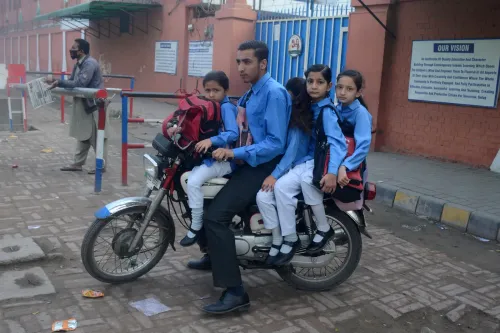
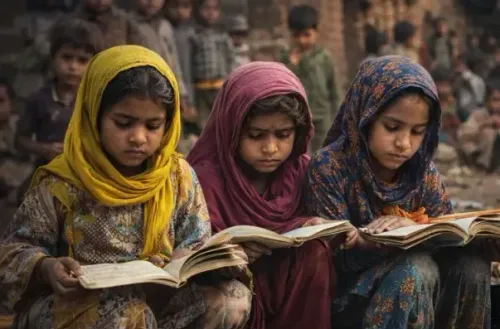
New Delhi, Jan 8 (NationPress) A shocking 63 percent of the youth in Pakistan, alongside 23 percent of adolescents, have never had the chance to receive formal education. This alarming statistic underscores a profound and ongoing crisis, relegating millions of young individuals to the periphery of society, as revealed by the Census 2023 data, according to various media outlets.
The statistics indicate that out-of-school adolescents and youth, commonly known as OOSAY, are among the most overlooked demographics in policy development.
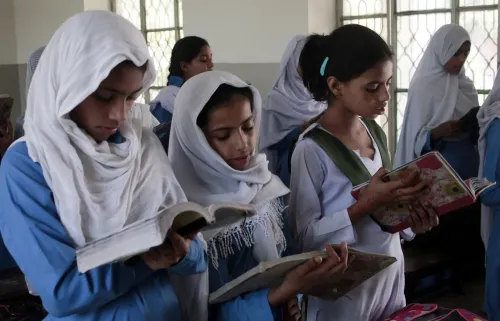
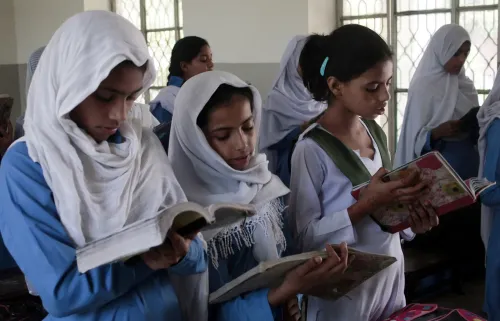
The situation is particularly dire for females, with approximately 75 percent of girls aged 15 to 29 never having attended school, in contrast to about half of their male counterparts, as reported by Dawn.
Experts assert that these figures highlight not only educational deficiencies but also a lifelong marginalization from decent employment, healthcare, and active societal engagement.
A recent assessment by the Sustainable Development Policy Institute, in collaboration with UNFPA, investigated the challenges faced by OOSAY in Khyber Pakhtunkhwa and Punjab.
This study aimed to gather insights on the types of support these young people believe they require to reintegrate into education, employment, healthcare, and civic life.
The results indicate that financial constraints are the primary obstacle preventing young individuals from remaining in school, impacting nearly 75 percent of the participants.
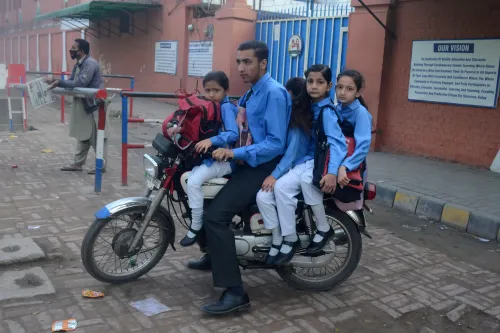
These challenges are compounded by household duties, work obligations, limited access to nearby schools, long commuting distances, unsafe transportation, and societal expectations, especially affecting girls.
Early marriage and concerns about harassment further limit girls’ educational opportunities. The consequences of being out of school differ sharply for boys and girls.
Many boys are compelled to engage in early, physically demanding, and low-paying jobs to support their families.
Close to 66 percent of male respondents reported feeling significant pressure to contribute financially from a young age.
Conversely, girls are often encumbered with unpaid domestic and caregiving responsibilities. The research revealed that over 85 percent of female OOSAY dedicate the majority of their day to household tasks, leaving little to no time for education or paid employment.
Early marriage is prevalent, with the median age of marriage for girls in the study determined to be 18 years.
Lack of education continues to adversely affect job opportunities, with nearly 75 percent of OOSAY reporting no access to paid employment, a significant majority being women.
Those who do find work are predominantly engaged in precarious and informal positions, frequently earning less than Rs25,000 a month despite long hours.
Many depend on daily wages without job security, safety protocols, or opportunities to acquire valuable skills.
The study also pointed out the lack of alternative learning pathways, with over 90 percent of respondents stating they had never participated in any vocational or skills training program.
Health outcomes are equally concerning, as many OOSAY suffer from malnutrition, chronic pain, and mental health issues, yet lack access to adequate healthcare due to financial constraints, mobility challenges, and lack of awareness.
Point of View
I find the statistics surrounding the educational deprivation of Pakistan’s youth profoundly concerning. The fact that 63% of our young population has not experienced formal education is a critical issue that needs urgent attention. We must advocate for policies that address these gaps and promote equitable access to education for all, particularly for our girls, who face additional barriers. This challenge is not just an educational failure; it has long-term implications for our society and economy. We must take a stand and work towards a solution.
NationPress
25 Sept 2026
Frequently Asked Questions
What percentage of Pakistan’s youth is uneducated?
According to the Census 2023 data, 63% of Pakistan's youth have never received formal education.
What challenges do out-of-school youth face?
Out-of-school youth, particularly girls, face challenges such as financial hardship, household responsibilities, and societal norms that restrict their access to education.
How does lack of education affect employment?
Lack of education significantly reduces job opportunities, with nearly 75% of out-of-school youth reporting no access to paid work.
What are the health implications for uneducated youth?
Many uneducated youth suffer from malnutrition, chronic pain, and mental health issues, yet lack access to proper healthcare.
What can be done to support out-of-school youth?
Support can come in the form of vocational training programs, financial assistance, and policies aimed at reducing barriers to education for young people.