How Does West Bengal’s Tableau Highlight the State’s Role in the Freedom Movement Through Vande Mataram?
Synopsis
Discover how West Bengal’s tableau at the Republic Day parade celebrates the state's pivotal role in India’s freedom movement through the powerful anthem 'Vande Mataram'. This stunning display not only honors iconic figures but also reflects Bengal's enduring legacy. A vibrant tribute to history and culture awaits you!
Key Takeaways
West Bengal’s tableau celebrates the state's rich history in the freedom movement. 'Vande Mataram' is a symbol of resistance against colonial rule.
Key historical figures depicted include Tagore, Bose, and Hazra.
The tableau reflects Bengal’s cultural heritage and its ongoing legacy.
Past themes have also focused on social empowerment initiatives.
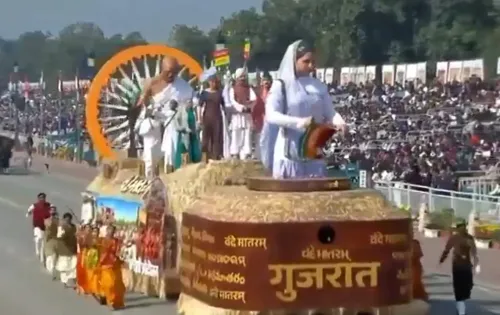
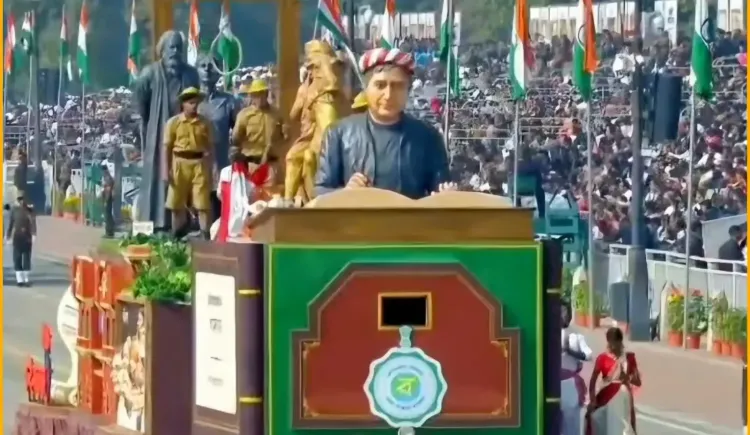
Kolkata, Jan 26 (NationPress) At the Republic Day parade in the national capital, West Bengal’s tableau gracefully traversed the Kartavya Path, emphasizing the contributions of Bankim Chandra Chatterjee and his iconic composition 'Vande Mataram'. This tableau was crafted to align with the overarching theme of the 77th Republic Day Parade, celebrating 150 years of the national anthem. The focus of the state's tableau was 'Bengal in the Freedom Movement of India'.
The vivid tableau's rear section depicted prominent figures from West Bengal, including Nobel Laureate Rabindranath Tagore and freedom fighter Khudiram Bose, who faced execution for their beliefs.
'Vande Mataram', initially created as an independent piece and later incorporated into the novel 'Anandamath', inspired Indians during the colonial period and motivated them to strive for the nation's freedom.
This song was first performed by Rabindranath Tagore at the 1896 Congress Session in Calcutta (currently Kolkata). The side panels of West Bengal’s tableau featured an archival image inscribed with 'Vande Mataram, Anandamath, Bankim Chandra Chatterjee' in Bengali. The central area showcased an equestrian statue of Netaji Subhas Chandra Bose, alongside a symbolic portrayal of Indians being oppressed by colonial police. A sculpture of freedom fighter Matangini Hazra was also prominently displayed.
The lower side panels of the tableau presented a relief sculpture of renowned Indian personalities from the undivided Bengal region who significantly influenced the freedom struggle.
Among these notable figures were Chittaranjan Das, Ishwar Chandra Vidyasagar, Sri Aurobindo, Swami Vivekananda, Benoy, Badal, Dinesh, Bagha Jatin, Pritilata Waddedar, Kazi Nazrul Islam, and Rash Behari Bose. The central section of the lower panel illustrated the facade of the historic Alipore Jail (now a museum) located in Kolkata.
According to an official note from the state government, “The tableau pays homage to Bengal’s lasting legacy, sacrifice, and leadership in shaping India’s path to independence,” featuring a musical performance based on the original score of ‘Vande Mataram’ first performed by Rabindranath Tagore in 1896.
Last year, West Bengal’s tableau highlighted the state government's social welfare initiatives, 'Lakshmir Bhandar' and 'Lok Prasar Prakalpa', aimed at showcasing empowerment and self-reliance in Bengal.
The front of the tableau prominently featured a Durga idol in Chhau attire, representing 'Naari Shakti' (women power), while a replica of the 'Kalash' of Lakshmir Bhandar symbolized women's empowerment.
Point of View
It is our responsibility to present the narrative of West Bengal's tableau as a celebration of cultural heritage and historical significance. The tableau serves as a reminder of the sacrifices made by many individuals in the quest for independence, reinforcing the importance of recognizing and honoring these contributions in shaping our nation's identity.
NationPress
7 Oct 2026
Frequently Asked Questions
What was the theme of West Bengal’s tableau at the Republic Day parade?
The theme was 'Bengal in the Freedom Movement of India', celebrating the state's significant role in the struggle for independence.
Who were some key figures depicted in the tableau?
The tableau featured notable personalities like Rabindranath Tagore, Khudiram Bose, and Netaji Subhas Chandra Bose.
What does 'Vande Mataram' represent?
'Vande Mataram' is a national song that inspired many during the colonial era and is a symbol of India's struggle for freedom.
When was 'Vande Mataram' first sung?
It was first performed by Rabindranath Tagore at the 1896 Congress Session in Calcutta.
What other themes have been showcased by West Bengal in past parades?
Last year, the tableau highlighted social welfare schemes like 'Lakshmir Bhandar' and 'Lok Prasar Prakalpa' to promote empowerment in Bengal.