Why Are Women's Voices Silenced in Bangladesh's Politics? Taslima Nasreen Speaks Out
Synopsis
In a powerful reflection on women's political representation in Bangladesh, Taslima Nasreen shares her insights on the systemic barriers women face. As the nation prepares for elections, her call for gender equality resonates strongly amidst ongoing challenges.
Key Takeaways
Bangladesh's upcoming elections reflect systemic issues affecting women's representation.
Taslima Nasreen continues to advocate for gender equality from exile.
Political competition in Bangladesh is often skewed against women.
Women’s voices are essential for achieving equality and secularism.
The need for change in perceptions and structures surrounding women's roles in politics is urgent.
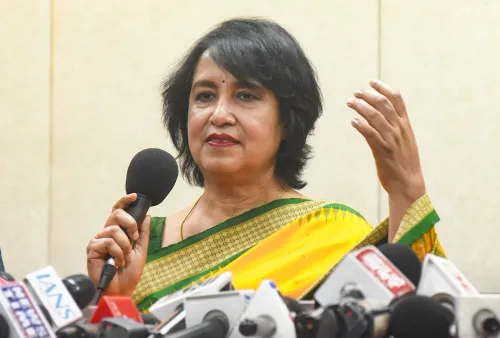
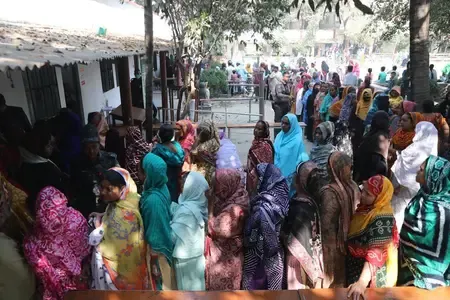
New Delhi, Jan 19 (NationPress) Expressing concern over the minimal presence of female candidates in the forthcoming elections in Bangladesh, a Dhaka newspaper recently attributed this issue to “systemic design and failure.” This sentiment reflects the views of prominent writer and activist Taslima Nasreen, although her name was not mentioned. The article in the Daily Star stated, “The lack of women candidates is not a question of their ability or desire to lead, but rather a reflection of systemic issues.”
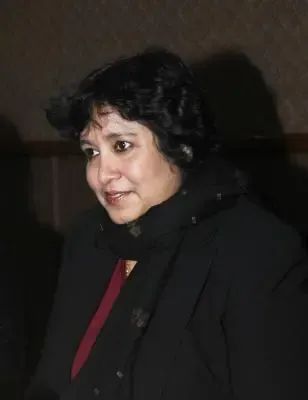
Taslima Nasreen shared her thoughts with IANS, stating, “It is encouraging to see many Bangladeshi women raising issues that I’ve been advocating for a long time, even if they cannot openly mention or quote me.” As a feminist, secular humanist, and activist who has lived in exile for over thirty years, she noted her absence from discussions on gender equality despite being a leading figure in this movement. “It’s not about my recognition; I just wish to see gender equality, secularism, and peace in Bangladesh,” she emphasized.
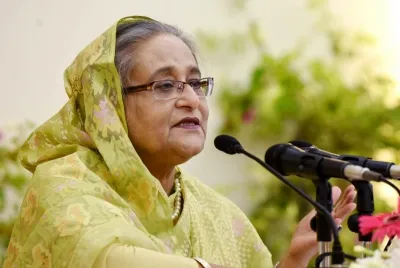
The Daily Star also pointed out that, “Bangladesh has a history of women in leadership roles, with two female leaders dominating the political landscape. Yet, when it comes to actual competition, women tend to vanish.” This refers to former Prime Ministers Sheikh Hasina and the late Khalida Zia. While the former is currently in exile after a student-led uprising and facing severe political turmoil, the latter was a leader of the Bangladesh Nationalist Party (BNP).
Both women entered politics as a result of dynastic pressures; Hasina took on a more active role following her father's assassination, while Khalida stepped into the political arena after the murder of her husband.
The article further elaborated, “Officially, women are allowed to run for office, but in practice, nominations are influenced by patronage, financial resources, and a political culture rife with intimidation. These conditions are not neutral; they benefit those entrenched in male-dominated networks.”
“When political competition is structured to disadvantage women, low representation becomes inevitable,” it added.
Meanwhile, Taslima pointed out that women in Bangladesh have historically been treated as second-class citizens, and change may come through a growing demand for equality. “My books remain banned there; no publisher can print them, and no reader can buy them. A narrative has been constructed around my work as if it poses a threat,” she explained.
“I still endure the repercussions of the punishment imposed by the Bangladeshi government for voicing my opinions,” she concluded, stating, “I remain in exile,” where her book titled Nirbashito, meaning 'banished,' is available.
Point of View
We must recognize the importance of women's representation in politics. The struggles highlighted by Taslima Nasreen reflect a broader societal issue. The voices of women should be amplified, not silenced, in the quest for a fair and equitable political landscape in Bangladesh.
NationPress
24 Sept 2026
Frequently Asked Questions
What are the main issues faced by women candidates in Bangladesh?
Women candidates face systemic barriers, including patronage, financial influences, and intimidation, which hinder their political participation.
Who is Taslima Nasreen?
Taslima Nasreen is a prominent writer and activist known for her advocacy for gender equality and women's rights in Bangladesh.
Why is there low representation of women in Bangladeshi politics?
The low representation is attributed to systemic failures that privilege male-dominated networks and create an environment where women struggle to compete.
What impact has Taslima Nasreen had on women's rights?
Taslima has been a leading voice for women's rights and gender equality, raising awareness about the challenges women face in Bangladesh.
Why are Taslima Nasreen's books banned in Bangladesh?
Her books are banned due to a narrative constructed around her work that portrays it as harmful, reflecting the government's stance on dissenting voices.