Delhi CM Rekha Gupta warns: Won't let Kejriwal, Rahul hold city hostage
Synopsis
Delhi CM Rekha Gupta went on the offensive on Saturday, accusing Rahul Gandhi, Arvind Kejriwal and the CJP of trying to turn the capital into a battleground. With over 1,000 protesters detained, 30,000 security personnel on the streets, 45 Metro stations shut and internet curbed, the city saw one of its most sweeping single-day lockdowns in recent memory — all over a demand for the CEC’s resignation.
Key Takeaways
Delhi CM Rekha Gupta on 10 October accused Rahul Gandhi , Arvind Kejriwal , and the CJP of attempting to hold the capital hostage for political gain.
Over 1,000 protesters were detained across New Delhi before they could join the agitation.
More than 30,000 police and paramilitary personnel were deployed across the city.
45 Metro stations near Jantar Mantar were shut; internet services were curbed in Central Delhi ; schools, colleges, and courts shifted online.
The protest was called by the CJP , led by Abhijeet Dipke , demanding the resignation of CEC Gyanesh Kumar over alleged irregularities in the Special Intensive Revision (SIR) of electoral rolls.
Gupta described the CJP as the “B-team” of AAP and vowed a “resolute fight against the politics of spreading anarchy.”
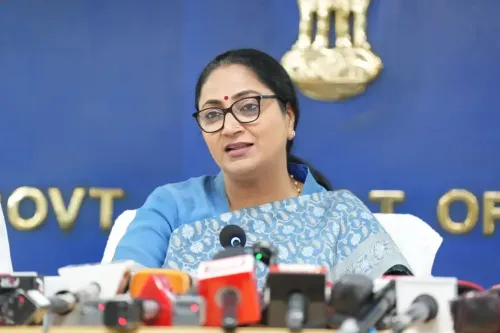
Delhi Chief Minister Rekha Gupta on Saturday, 10 October launched a sharp attack on Congress leader Rahul Gandhi, Aam Aadmi Party (AAP) leader Arvind Kejriwal, and the Cockroach Janta Party (CJP), accusing them of endangering the peace and security of the national capital for political gain. Gupta vowed that no group would be allowed to hold Delhi hostage, as authorities deployed over 30,000 police and paramilitary personnel across the city to contain a planned protest.
What Rekha Gupta Said
In a lengthy post in Hindi on X, Chief Minister Gupta said, “Rejected by the countrymen, leaders Rahul Gandhi and Arvind Kejriwal, in league with their B-team CJP, seek to turn Delhi into a battleground.” She questioned the intent behind the agitation, asking: “Who will take responsibility for the troubles of employees heading to work, labourers earning a daily wage to support their families, and patients trying to reach hospitals?”
Gupta also invoked the 2025 Delhi assembly election mandate, stating that Prime Minister Narendra Modi had been sworn in for a third consecutive term owing to “unprecedented public support,” and that parties rooted in dynastic politics were unable to “digest this public backing.” She described Kejriwal as “the instigator of anarchy who has bestowed upon himself the title of Delhi’s owner.”
The Protest and Mass Detentions
The demonstration was called by the CJP, led by Abhijeet Dipke, to demand the resignation of Chief Election Commissioner (CEC) Gyanesh Kumar over alleged irregularities in the conduct of the Special Intensive Revision (SIR) of electoral rolls. According to officials, over 1,000 protesters were detained from different parts of the capital on Saturday before they could reach the protest site.
Gupta characterised the CJP as the “B-team” of AAP, a charge the party has not publicly responded to. Critics argue the protest reflects broader concerns about electoral roll integrity, though the government maintains the SIR process was conducted lawfully.
Security Lockdown Across Central Delhi
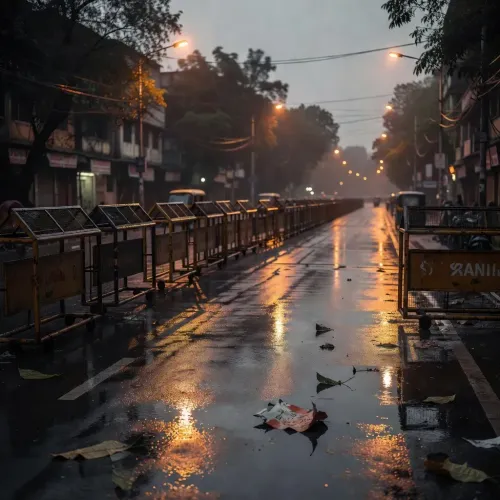
Authorities imposed sweeping restrictions across Central Delhi from as early as 6 am on Saturday. Forty-five Metro stations in the vicinity of Jantar Mantar were shut, internet services were curbed in central areas, barricades were erected, and traffic was restricted on dozens of stretches. Schools, colleges, and courts were directed to shift to online mode for the day, disrupting the daily routines of lakhs of residents.
Notably, this is among the most extensive single-day security deployments in the capital in recent years, underscoring the scale of the administration’s response to the planned agitation.
Political Context and What Comes Next
The confrontation reflects deepening tensions between the Bharatiya Janata Party (BJP)-led Delhi government and opposition groups over electoral processes and the right to protest in the capital. Gupta framed the standoff as a fight against “the politics of spreading anarchy under the guise of democracy.”
Opposition leaders have not yet issued a formal response to Gupta’s post. With the detained protesters yet to be formally charged, legal challenges to the detentions are expected in the coming days, and the demand for CEC Gyanesh Kumar’s resignation is unlikely to fade from the political agenda.
Point of View
A former state CM, and a fringe party — into a single conspiracy narrative, which is politically convenient but analytically thin. The more substantive story is the scale of the state’s response: shutting 45 Metro stations, curbing internet access, and detaining over 1,000 people to prevent a protest about electoral roll integrity raises proportionality questions that the government has not addressed. The demand for CEC Gyanesh Kumar’s resignation over the SIR process touches on institutional credibility, and suppressing the protest does not resolve the underlying grievance. If the electoral roll concerns are unfounded, the government’s strongest move would be transparency — not a lockdown.
NationPress
10 Oct 2026
Frequently Asked Questions
Why did Delhi CM Rekha Gupta criticise Rahul Gandhi and Arvind Kejriwal?
Gupta accused both leaders of backing a protest she said was designed to disrupt Delhi’s peace and security for political ends. In a post on X, she alleged that Gandhi and Kejriwal, along with the CJP, were attempting to turn the capital into a battleground after repeated electoral defeats.
What was the protest in Delhi on 10 October about?
The protest was organised by the Cockroach Janta Party (CJP), led by Abhijeet Dipke, to demand the resignation of Chief Election Commissioner Gyanesh Kumar over alleged irregularities in the Special Intensive Revision (SIR) of electoral rolls. Over 1,000 demonstrators were detained before they could assemble.
How extensive were the security measures in Delhi on 10 October?
Authorities deployed over 30,000 police and paramilitary personnel across the city. Forty-five Metro stations near Jantar Mantar were shut, internet services were curbed in Central Delhi, traffic restrictions were imposed from 6 am, and schools, colleges, and courts were moved to online mode for the day.
Who is the CJP and what is its connection to AAP?
The Cockroach Janta Party (CJP) is a group led by Abhijeet Dipke that called the protest demanding the CEC’s resignation. Delhi CM Rekha Gupta has characterised it as the ‘B-team’ of the Aam Aadmi Party (AAP), an allegation the CJP and AAP have not formally responded to.
What is the Special Intensive Revision (SIR) of electoral rolls?
The Special Intensive Revision (SIR) is an Election Commission of India process to update and verify voter rolls. Protesters allege it was conducted with irregularities, a charge the government disputes. The demand for CEC Gyanesh Kumar’s resignation is centred on accountability for how the SIR was carried out.