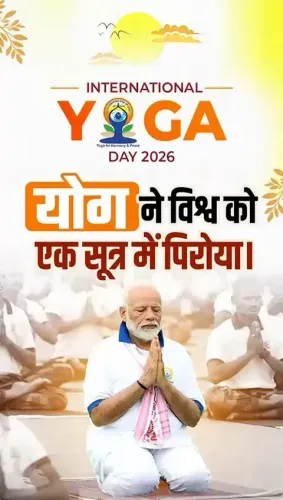
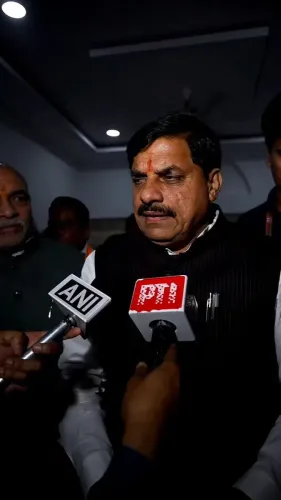
Bhupender Yadav Greets Nation on International Yoga Day 2026

Synopsis
Union Environment Minister Bhupender Yadav marked International Yoga Day on 21 June 2026 by calling yoga a journey from self to collective and the foundation of healthy living, echoing India's decade-long push to position the UN-recognised observance as a pillar of public health and cultural diplomacy.
Key Takeaways
Bhupender Yadav , Union Environment Minister and senior BJP leader, extended greetings to the nation on International Yoga Day, 21 June 2026 .
He described yoga as 'swa se samashti ki yatra' — a journey from the individual self to the collective — and as the foundation of healthy living.
The International Day of Yoga was established by UN General Assembly Resolution 69/131 in December 2014 following a proposal by Prime Minister Narendra Modi .
The first global observance was held on 21 June 2015 , coordinated in India by the Ministry of AYUSH .
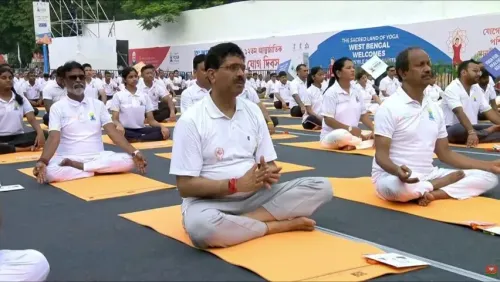
Government-led yoga events at major public venues have continued annually since 2015 as part of India's cultural diplomacy and public-health outreach.
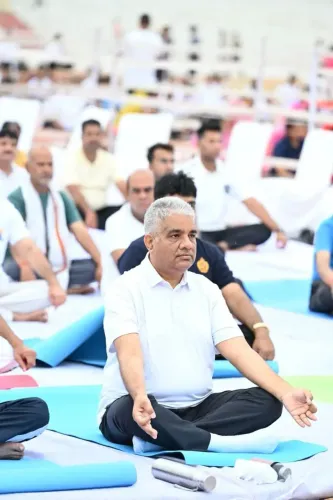
Union Environment Minister Bhupender Yadav extended greetings to the nation on International Day of Yoga on Sunday, 21 June 2026, describing yoga as the foundation of healthy living and a journey from the self to the collective.
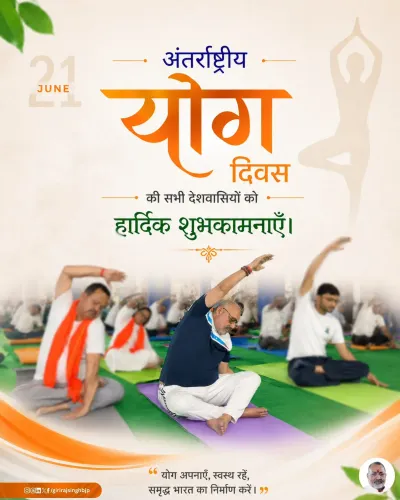
Posting on X in Hindi, the senior BJP leader wrote, 'Yog swa se samashti ki yatra hai. Yog swasth jeevan ka aadhar hai' — 'Yoga is a journey from the self to the collective. Yoga is the foundation of a healthy life.' He concluded by wishing all citizens a meaningful International Yoga Day.
Context
Every year on 21 June, India and countries across the world observe the International Day of Yoga, a UN-recognised occasion that has been marked annually since 2015. The date holds cultural and astronomical significance as the summer solstice, the longest day of the year in the Northern Hemisphere. Ministers, public figures, and ordinary citizens alike use the occasion to reaffirm yoga's place in daily wellness routines.
Yadav's message reflects a pattern common among senior government functionaries on this date — using the occasion to publicly endorse traditional Indian wellness practices while connecting them to broader ideas of collective well-being.
Policy Backdrop
The observance traces its origins to September 2014, when Prime Minister Narendra Modi proposed an International Day of Yoga during his address to the United Nations General Assembly. The UN responded swiftly: in December 2014, the General Assembly unanimously adopted Resolution 69/131, designating 21 June as the International Day of Yoga.
The first global celebration took place on 21 June 2015, with mass events coordinated across India by the Ministry of AYUSH — the nodal body for Ayurveda, Yoga, Naturopathy, Unani, Siddha, and Homoeopathy. Since then, government-led yoga sessions at prominent public venues have become a fixture of the annual calendar, reinforcing yoga's role within India's cultural diplomacy and public-health messaging.
The AYUSH framework has consistently positioned yoga not merely as physical exercise but as a holistic wellness system — a framing echoed in Yadav's characterisation of yoga as a journey from individual self (swa) to the wider community (samashti).
Stakeholders and Impact
The primary beneficiaries of sustained government promotion of yoga are the general public, yoga practitioners, and the broader AYUSH wellness sector, which encompasses training institutions, practitioners, and an expanding wellness economy. Internationally, the annual observance serves as a platform for Indian soft power, with Indian missions abroad typically organising events in partnership with local communities.
Within India, the occasion has grown into a vehicle for public-health outreach, with calls for yoga to be integrated into school curricula and workplace wellness programmes gaining traction in policy circles. Yadav's message, though brief and ceremonial, aligns with this larger institutional push to normalise yoga as preventive healthcare.
What's Next
Attention will now turn to the scale of official participation in this year's central government events and any new guidelines from the Ministry of AYUSH linking yoga to school or workplace health programmes. As the International Day of Yoga matures into its second decade, observers will watch whether the observance translates into concrete policy mandates beyond ceremonial messaging — particularly in preventive public health and wellness infrastructure.
Point of View
Such messaging from ministers across portfolios — not just AYUSH — reflects a whole-of-government approach to cultural branding. The real policy test, however, remains whether ceremonial endorsement translates into measurable integration of yoga into public health infrastructure.
NationPress
19 Sept 2026
Frequently Asked Questions
When is International Yoga Day celebrated?
International Yoga Day is celebrated every year on 21 June , the summer solstice, following a UN General Assembly resolution adopted in December 2014.
Who proposed International Day of Yoga at the United Nations?
Prime Minister Narendra Modi proposed the International Day of Yoga during his address to the UN General Assembly in September 2014 ; the resolution was adopted unanimously in December 2014.
What did Bhupender Yadav say on International Yoga Day 2026?
Bhupender Yadav said yoga is 'a journey from the self to the collective' and 'the foundation of a healthy life,' extending greetings to all citizens on 21 June 2026 .
Which ministry promotes yoga in India?
The Ministry of AYUSH is the nodal central ministry responsible for promoting yoga and other traditional Indian wellness systems, and it coordinates the official International Day of Yoga events each year.
What is the theme of International Yoga Day 2026?
The specific theme for International Yoga Day 2026 has not been confirmed in available information; the Ministry of AYUSH typically announces the annual theme ahead of 21 June.