Bhupender Yadav Greets Weavers on National Handloom Day
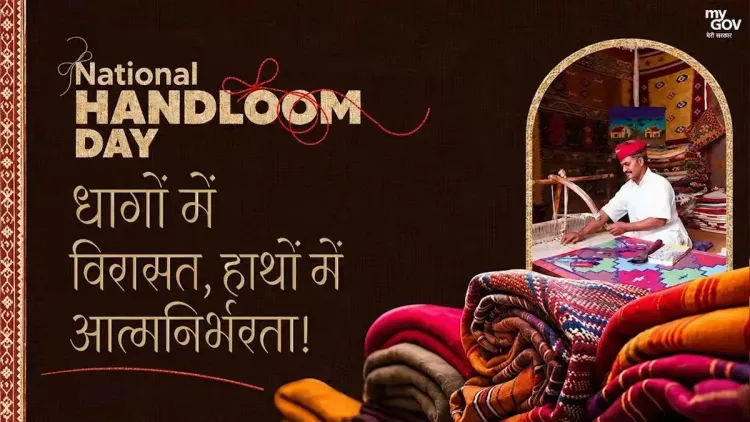
Synopsis
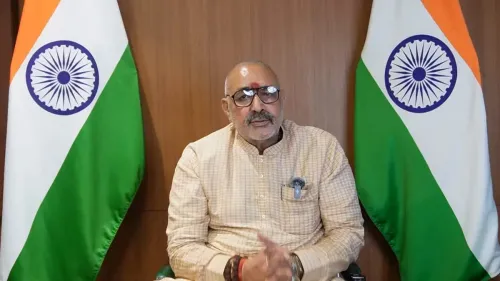
On National Handloom Day 2026, Union Minister Bhupender Yadav honoured India's weavers as custodians of culture and livelihood, crediting PM Modi's leadership for giving the sector a global platform and urging citizens to embrace Indian handloom products.
Key Takeaways
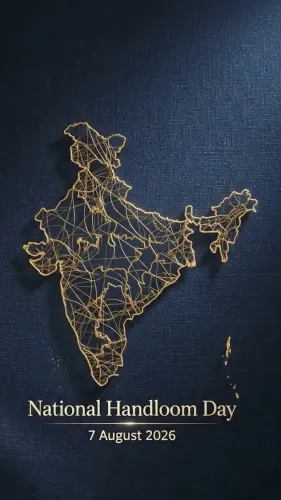
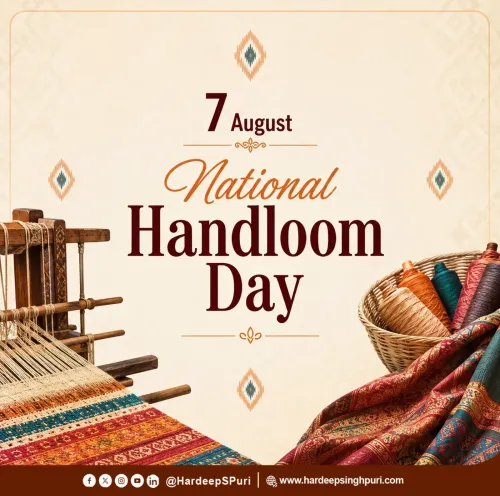
National Handloom Day is observed on 7 August every year, instituted in 2015 to mark the centenary of the Swadeshi Movement of 1905 .
Union Minister Bhupender Yadav greeted handloom weavers on 7 August 2026 , calling them symbols of India's cultural heritage and self-reliance.
Yadav credited PM Narendra Modi with giving the handloom sector 'a new identity, new opportunities, and a global platform.' The post explicitly links handloom promotion to the government's 'Vocal for Local' and 'Atmanirbhar Bharat' campaigns.
The handloom sector is administered by the Ministry of Textiles and is one of India's largest sources of rural artisan employment.
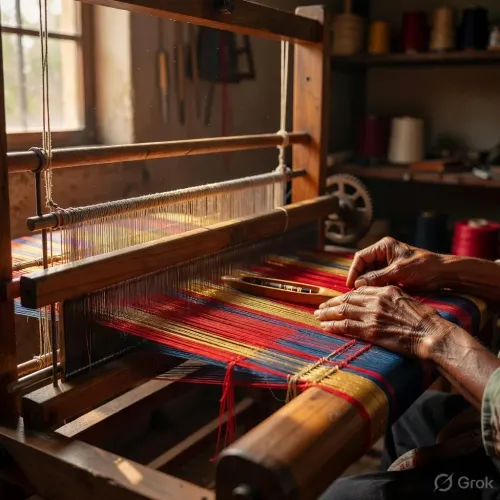
Every thread tells a story — and on National Handloom Day, 7 August 2026, Union Environment Minister Bhupender Yadav called India's handloom weavers the living symbols of the nation's cultural heritage, self-reliance, and indigenous pride.
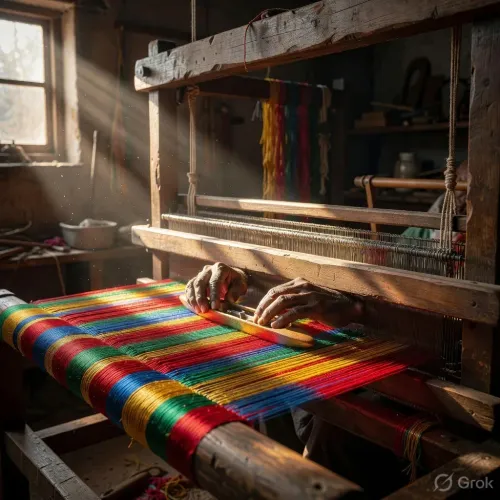
Posting in Hindi, Yadav wrote: 'हमारे बुनकरों के कुशल हाथ केवल वस्त्र नहीं बुनते, बल्कि भारत की परंपरा, कला, संस्कृति और असंख्य परिवारों की आजीविका को भी सशक्त बनाते हैं' — 'Our weavers' skilled hands do not merely weave cloth; they also strengthen India's tradition, art, culture, and the livelihoods of countless families.' He urged citizens to pledge to adopt Indian handloom products and encourage their weavers on this occasion.
A Day Rooted in the Swadeshi Spirit of 1905
National Handloom Day falls on 7 August each year — not by coincidence. The date marks the centenary of the Swadeshi Movement, launched on 7 August 1905 in response to the British partition of Bengal, when Indians publicly burned foreign cloth and pledged to wear only home-spun fabric. The government institutionalised the observance in 2015, consciously drawing a line from that act of economic defiance to the present push for self-reliant manufacturing.
That historical thread runs directly through the slogans Yadav invoked: 'Vocal for Local' and 'Atmanirbhar Bharat' — both central to the Modi government's economic messaging. In his post, Yadav credited Prime Minister Narendra Modi's leadership with giving the handloom sector 'a new identity, new opportunities, and a global platform.'
Weavers as Economic Backbone, Not Just Cultural Symbol
The handloom sector is one of India's largest rural employment generators, sitting under the Ministry of Textiles. For decades, successive governments have channelled support through cluster development programmes, marketing assistance, and skill-upgradation schemes — recognising that the loom in a village home is simultaneously a cultural artefact and an income source for artisan families.
The current government's framing goes a step further, positioning traditional handloom products as export earners and soft-power assets on a global stage — a narrative that transforms the weaver from a heritage keeper into an economic actor in a competitive world market.
The call to action is simple but pointed: buy Indian handloom, back the weaver. In a country where millions of families depend on the craft, that consumer choice is policy in practice.
Point of View
But the ideological framing matters: invoking the Swadeshi Movement of 1905 alongside 'Vocal for Local' is a deliberate attempt to give contemporary economic nationalism a century-old moral pedigree. By crediting PM Modi personally for the sector's global reach, Yadav also reinforces the BJP's broader narrative that cultural heritage and economic self-reliance are inseparable policy goals. The call for citizen-level consumer action — buy handloom — is a soft but consistent pressure tactic that shifts responsibility from state schemes to individual purchasing choices, a hallmark of the Atmanirbhar Bharat communication strategy.
NationPress
21 Sept 2026
Frequently Asked Questions
Why is National Handloom Day celebrated on 7 August?
7 August marks the anniversary of the Swadeshi Movement launched in 1905 in response to the British partition of Bengal, when Indians pledged to use only domestically made goods. The government instituted National Handloom Day in 2015 to honour that legacy.
What did Bhupender Yadav say on National Handloom Day 2026?
Union Minister Bhupender Yadav greeted handloom weavers, calling them symbols of India's cultural heritage and self-reliance. He credited PM Modi with giving the sector a global platform and urged citizens to adopt Indian handloom products.
What is the connection between handloom promotion and Atmanirbhar Bharat?
The Modi government frames handloom weaving as both a cultural asset and an economic contributor, linking it to the 'Atmanirbhar Bharat' (Self-Reliant India) and 'Vocal for Local' campaigns that encourage Indians to prefer domestically made goods.
Which ministry oversees the handloom sector in India?
The Ministry of Textiles administers the handloom sector, running schemes for cluster development, marketing support, and skill upgradation for weaver communities across India.
When was National Handloom Day first celebrated in India?
The first National Handloom Day was observed in 2015 , instituted by the central government to mark the 110th anniversary of the Swadeshi Movement of 1905.