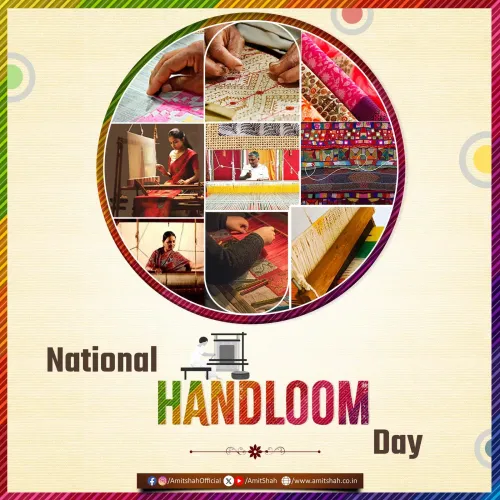
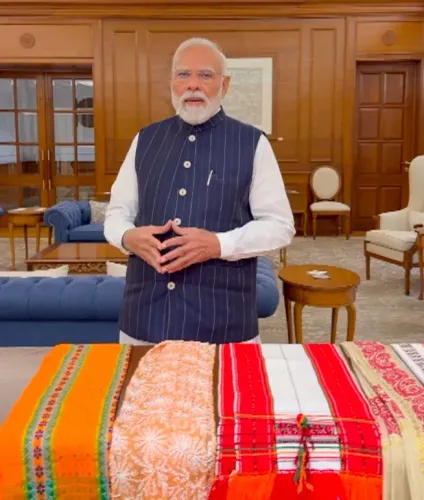
PM Modi salutes India's weavers on National Handloom Day
Synopsis
On National Handloom Day, 7 August 2026, Prime Minister Narendra Modi saluted India's weavers and artisans, pledging continued support. The day marks the 1905 Swadeshi Movement launch and has been observed annually since 2015 to honour the country's handloom heritage and the millions of craftspeople who sustain it.
Key Takeaways
National Handloom Day is observed on 7 August every year, anchored to the launch of the Swadeshi Movement on 7 August 1905 .
The annual observance was instituted in 2015 to mark the Swadeshi centenary and promote India's handloom sector.
Prime Minister Narendra Modi saluted weavers and artisans for preserving India's textile traditions across generations.
The Handlooms (Reservation of Articles for Production) Act, 1985 legally protects certain products for exclusive handloom manufacture.
The Ministry of Textiles oversees handloom policy, welfare schemes, and market-linkage programmes for the sector.
Recent policy focus has included digital sales platforms and geographical indication registrations for heritage handloom products.
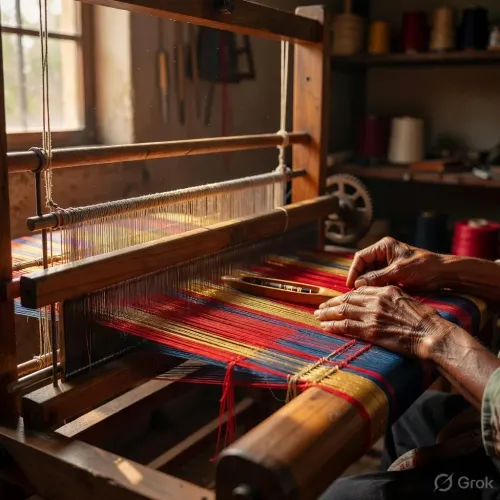
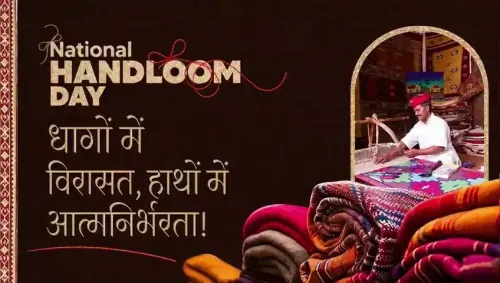
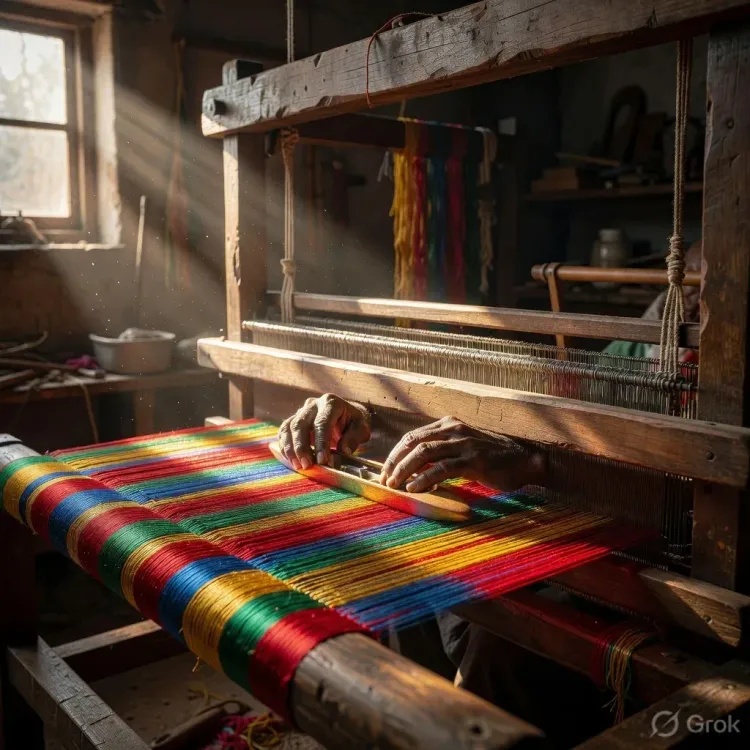
Every thread in an Indian handloom carries a story older than the republic itself — and on National Handloom Day, 7 August 2026, Prime Minister Narendra Modi used the occasion to honour the weavers and artisans who have kept that story alive across generations.
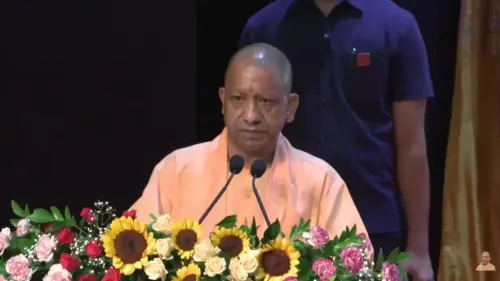
In his post, the Prime Minister wrote: 'Today, on National Handloom Day, we celebrate India's rich and vibrant handloom heritage. We also salute the skill, creativity and dedication of our weavers and artisans. For generations, they have preserved and enriched our traditions.' He added that the government would continue its support for the sector, though the full text of the commitment was not published.
A day rooted in the Swadeshi spirit of 1905
National Handloom Day is observed every year on 7 August — a date chosen deliberately to echo the Swadeshi Movement, which was formally launched on 7 August 1905 in Calcutta as a call to embrace indigenous production and boycott British goods. Handlooms were central to that resistance, and the centenary of that movement in 2015 prompted the government to institute the annual observance.
The date therefore carries a dual resonance: it is both a celebration of craft and a quiet nod to the self-reliance argument that runs through Indian economic nationalism from the freedom struggle to the present day.
The policy architecture behind the salute
The Ministry of Textiles is the nodal body overseeing handloom policy, welfare programmes, and market development for weavers. The sector enjoys legislative protection under the Handlooms (Reservation of Articles for Production) Act, 1985, which reserves certain products for exclusive handloom manufacture — a safeguard against power-loom substitution.
In recent years, the policy conversation has expanded beyond protection to promotion: digital sales platforms, geographical indication registrations for heritage weaves, and direct market-linkage programmes have all featured in the government's stated agenda for the sector. Watchers of the handloom economy will look to annual Ministry of Textiles budget allocations and any scheme announcements in the weeks around August for concrete signals of fresh support.
India's handloom sector is one of the largest in the world, providing livelihoods to millions of weavers concentrated in states such as Assam, Andhra Pradesh, Uttar Pradesh, West Bengal, and Tamil Nadu. The craft is not merely cultural — it is economic infrastructure for rural and semi-urban households across the country.
On a day that began with a colonial-era act of defiance and is now marked as a celebration of indigenous skill, the Prime Minister's message lands as a reminder that the loom is still political — in the best sense of the word.
Point of View
The government frames handloom support not merely as welfare but as civilisational continuity — a framing that has proven durable across administrations. The incomplete post leaves the specific policy commitment unstated, which means the real signal will come from budget allocations and scheme announcements rather than the message itself. Analysts will watch whether the rhetoric is matched by fresh Ministry of Textiles outlays in the months ahead.
NationPress
21 Sept 2026
Frequently Asked Questions
Why is National Handloom Day celebrated on 7 August?
National Handloom Day is observed on 7 August to commemorate the launch of the Swadeshi Movement on 7 August 1905 , when Indian leaders called for the promotion of indigenous goods, including handloom textiles, as part of the freedom struggle.
When did India first celebrate National Handloom Day?
India observed National Handloom Day for the first time in 2015 , marking the centenary of the Swadeshi Movement and aiming to raise awareness about the handloom sector and the livelihoods of weavers.
What does the government do to support handloom weavers in India?
The Ministry of Textiles runs welfare and development programmes for weavers, and the Handlooms (Reservation of Articles for Production) Act, 1985 protects certain products for exclusive handloom manufacture. Recent efforts have also focused on digital sales platforms and geographical indication registrations.
What is the Swadeshi Movement and its connection to handlooms?
The Swadeshi Movement , launched on 7 August 1905 , encouraged Indians to use domestically produced goods and reject British imports. Handloom textiles were central to this movement, making the craft a symbol of self-reliance and national identity.
Which states in India are major handloom hubs?
India's handloom sector is concentrated in states including Assam , Andhra Pradesh , Uttar Pradesh , West Bengal , and Tamil Nadu , where millions of weavers depend on the craft for their livelihoods.