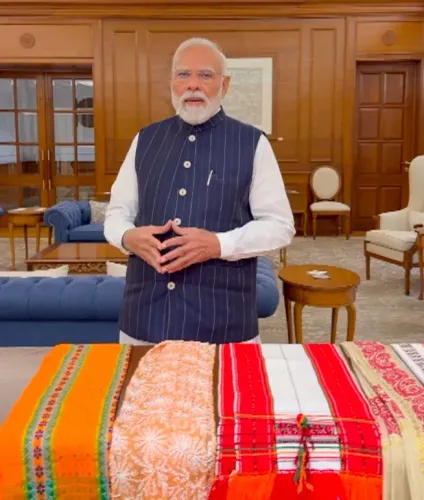
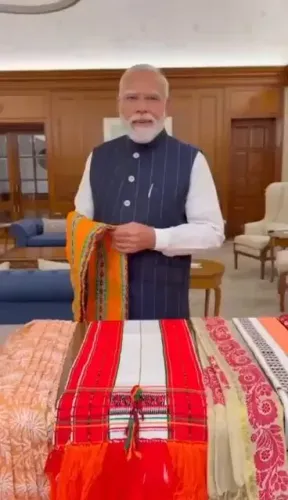
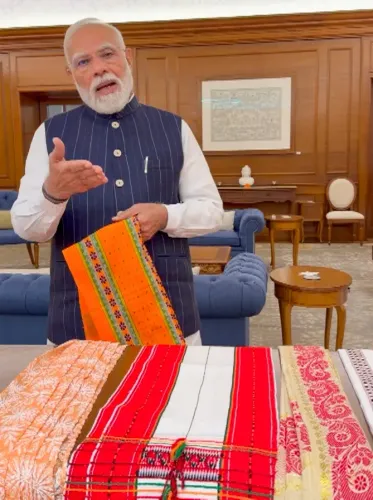
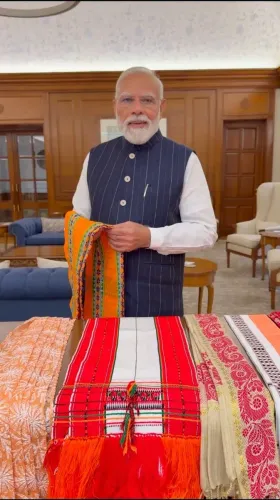
Goyal calls for handloom buys on National Handloom Day
Synopsis
On the eve of National Handloom Day, Commerce Minister Piyush Goyal called on Indians to buy handloom products and share videos with #NationalHandloomDay, echoing PM Modi's appeal to promote weavers' art and carry India's textile heritage to global markets.
Key Takeaways
Union Commerce and Industry Minister Piyush Goyal posted a handloom buy-and-share appeal on 6 August 2026 .
National Handloom Day is observed annually on 7 August , first instituted in 2015 to mark the centenary of the 1905 Swadeshi movement .
The campaign asks citizens to buy a handloom product and post a video with the hashtag #NationalHandloomDay .
Goyal frames handloom as both cultural heritage and a contributor to India's global export presence.
The initiative aligns with PM Modi's standing 'vocal for local' push and government efforts to secure GI tags for Indian weaving clusters.
India's handloom sector employs millions of artisans, many of them women in rural areas.
India's looms carry a civilisation's memory — and on National Handloom Day, Union Commerce and Industry Minister Piyush Goyal is asking every Indian to make that memory visible to the world. On 6 August 2026, Goyal posted a call to action on X, urging citizens to buy their favourite handloom product and share a video under the #NationalHandloomDay hashtag, amplifying the sector's reach on the global stage.
A day rooted in Swadeshi, renewed every August
National Handloom Day falls on 7 August each year — a date chosen deliberately to honour the centenary of the Swadeshi movement of 1905, when Indians first pledged to champion homegrown goods over colonial imports. The observance was formally instituted on 7 August 2015, and has since become an annual platform to spotlight India's weaving communities and their contribution to the country's textile tradition.
Goyal's post invokes Prime Minister Narendra Modi's standing call to promote handloom products, framing citizen participation as a direct extension of that appeal. In his words: 'Aiye, rashtriya hathkargha diwas ke uplakshya mein Pradhan Mantri Modi ji ke aahvan par apne bunakaaron ki kala aur parampara ki is amulya dharohar ko, duniya tak pahunchane ke liye hum apna pasandeeda handloom utpad khareedein' — 'Let us, on the occasion of National Handloom Day, in response to Prime Minister Modi's appeal, buy our favourite handloom product to carry this priceless heritage of our weavers' art and tradition to the world.'
Heritage on the shop floor — and in the export ledger
The minister's framing is deliberate: handloom is positioned not merely as cultural sentiment but as economic muscle. The government has consistently linked promotion of traditional crafts to rural employment, the 'vocal for local' push, and efforts to expand India's footprint in global textile markets. Geographical Indication tags for clusters — from Banarasi silk to Pochampally ikat — are part of the same architecture.
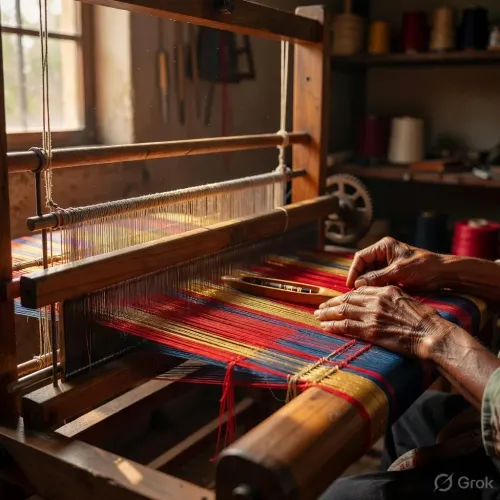
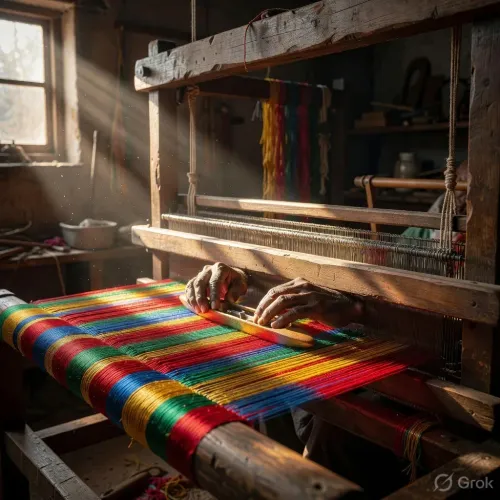
For India's weavers, the stakes are concrete. The handloom sector employs millions of artisans, many of them women in rural households, who sustain techniques passed down across generations. A surge in domestic demand — even one nudged by a social-media campaign — can translate directly into livelihoods.
The social-media loom: turning buyers into brand ambassadors
The campaign mechanic is simple and scalable: buy, film, post with #NationalHandloomDay. It mirrors the 'vocal for local' playbook that gained traction after 2020, turning consumers into voluntary brand ambassadors for Indian artisans. Whether the hashtag generates meaningful commercial momentum will depend on how widely ministers, influencers, and ordinary buyers participate — something to watch as 7 August 2026 unfolds.
For now, the signal from South Block is clear: India's handloom story is not a museum exhibit. It is a live export opportunity, and the government wants citizens to pick up the shuttle.
Point of View
It projects unity of purpose within the government while making citizen participation feel like patriotic duty rather than a marketing exercise. The handloom sector sits at the intersection of rural employment, export policy, and cultural diplomacy, giving the message unusual cross-portfolio resonance. Sustained traction, however, will require more than an annual hashtag — it will depend on whether scheme support, GI enforcement, and market-linkage infrastructure keep pace with the rhetoric.
NationPress
21 Sept 2026
Frequently Asked Questions
When is National Handloom Day celebrated in India?
National Handloom Day is celebrated every year on 7 August . The date commemorates the launch of the Swadeshi movement on 7 August 1905, and the observance was formally instituted on 7 August 2015.
Why did Piyush Goyal post about handloom on 6 August 2026?
Goyal posted on the eve of National Handloom Day to urge citizens to buy handloom products and share videos with the #NationalHandloomDay hashtag, echoing PM Modi's appeal to promote India's weaving heritage globally.
What is the #NationalHandloomDay campaign asking people to do?
The campaign asks Indians to purchase their favourite handloom product and record a video promoting it, then share that video on social media with the hashtag #NationalHandloomDay to amplify awareness of Indian weavers.
Why was National Handloom Day started in India?
It was instituted in 2015 to honour handloom weavers, highlight the sector's economic and cultural importance, and mark the centenary of the Swadeshi movement of 1905 in which Indians championed homegrown goods.
How does the government link handloom to India's export goals?
The government frames handloom as both living cultural heritage and an export earner, pursuing Geographical Indication tags for weaving clusters and promoting domestic demand through campaigns like 'vocal for local' to strengthen the sector's global market presence.