Bhupender Yadav Hails Modi as Longest Serving PM

Synopsis
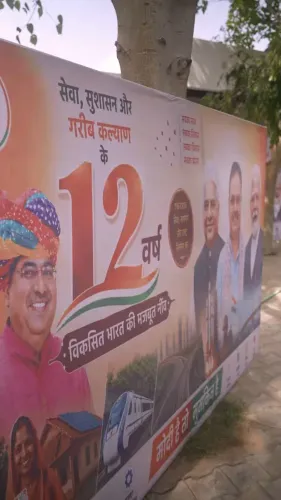
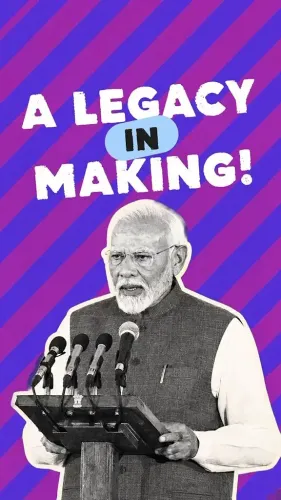
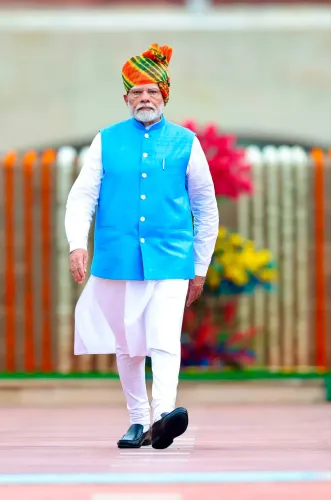
Union Environment Minister Bhupender Yadav on 10 June 2026 hailed PM Narendra Modi as India's continuously longest serving Prime Minister, marking 12 years in office and crediting his tenure with bold reforms and a focus on farmers, women, the poor, and youth.
Key Takeaways
Bhupender Yadav , Union Environment Minister and senior BJP leader, posted a tribute to PM Narendra Modi on 10 June 2026 .
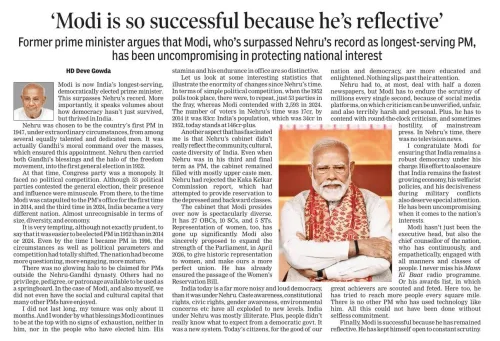
The post marks 12 continuous years of Modi as Prime Minister, calling him the longest serving elected PM in India's history.
Modi was first sworn in on 26 May 2014 and re-elected for a second term on 30 May 2019 , followed by a third term.
Yadav credited Modi's tenure with 'bold decisions, far-reaching reforms, and a vision for inclusive growth.' The tribute specifically highlights empowerment of farmers, women, the poor, and young people as central to Modi's governance record.
The post is part of a broader BJP pattern of marking tenure milestones with coordinated messaging from senior ministers.
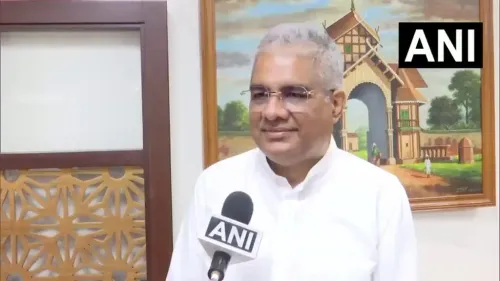
Union Environment Minister Bhupender Yadav on Wednesday, 10 June 2026, congratulated Prime Minister Narendra Modi on becoming the continuously longest serving Prime Minister of India, marking a milestone of 12 years in office. Yadav posted the tribute on X, highlighting Modi's record tenure and its significance for India's governance trajectory.
Context
Narendra Modi was first sworn in as Prime Minister on 26 May 2014 following the BJP's landmark victory in the 2014 Lok Sabha elections, ending a decade of Congress-led coalition government. He was re-elected and sworn in for a second consecutive term on 30 May 2019, and subsequently secured a third term, making his continuous run in the top office a subject of political note. Yadav's post, carrying the hashtag #LongestServingElectedPMModi, reflects a coordinated messaging effort from senior BJP leaders around the tenure milestone.
Policy Backdrop
Yadav's tribute specifically credits Modi's tenure with 'bold decisions, far-reaching reforms, and a vision for inclusive growth' — a framing consistent with the BJP government's own characterisation of its record since 2014. The post points to Modi's arc from Chief Minister of Gujarat to national and international leadership as emblematic of a sustained development agenda. Over these 12 years, the government has rolled out flagship programmes targeting infrastructure, rural welfare, financial inclusion, and digital connectivity.
The tribute's emphasis on 'empowering citizens, particularly the poor, farmers, women, and young people' echoes the language of schemes such as direct-benefit transfers, agricultural support programmes, and youth employment initiatives that have defined the government's public communication. Senior ministers routinely mark tenure anniversaries by reinforcing this citizen-centric narrative, situating individual milestones within a broader arc of national transformation.
Stakeholders and Impact
The constituencies singled out in Yadav's post — farmers, women, the poor, and young people — represent the core voter blocs the BJP has sought to consolidate through welfare delivery and direct outreach over successive terms. For these groups, the political significance of a record tenure lies partly in policy continuity: long-running schemes avoid the disruption of mid-course changes that often accompany a change in government. Internationally, the reference to Modi's 'global standing' signals that the government views his extended tenure as an asset in multilateral diplomacy and trade negotiations.
Opposition parties have historically contested the 'transformation' framing, arguing that key welfare and employment indicators remain mixed. However, Yadav's post, as a ministerial tribute rather than a policy announcement, does not make specific statistical claims that require rebuttal in this context.
What's Next
With the 12-year milestone now publicly marked by senior cabinet members, attention will likely turn to upcoming parliamentary sessions and cabinet decisions where the government is expected to showcase continuity on flagship schemes for farmers, women, and youth. The milestone also sets a rhetorical baseline ahead of the next general election cycle, with the BJP likely to deploy the 'longest serving' designation as a stability argument. How the Opposition frames its counter-narrative on governance outcomes will shape the political conversation in the months ahead.
Point of View
Reinforcing the BJP's core electoral narrative of stability and citizen-centric delivery. By invoking farmers, women, the poor, and youth in a single breath, the post maps the party's welfare coalition onto a record-tenure story — a formulation designed to resonate across multiple voter segments simultaneously. The 'longest serving' designation, if it holds against historical scrutiny, hands the BJP a durable rhetorical asset ahead of future electoral cycles. It also signals that senior ministers are aligned on positioning continuity itself as a governance virtue, a message likely to intensify as the next general election approaches.
NationPress
26 Oct 2026
Frequently Asked Questions
Who is the longest serving Prime Minister of India?
As of June 2026, Narendra Modi is being recognised by BJP leaders as India's continuously longest serving Prime Minister, having completed 12 years in office since his first swearing-in on 26 May 2014 .
Why did Bhupender Yadav post about PM Modi on 10 June 2026?
Bhupender Yadav posted on 10 June 2026 to congratulate PM Modi on crossing the milestone of 12 continuous years as Prime Minister, marking him as the longest serving elected PM in India's history.
When did Narendra Modi first become Prime Minister?
Narendra Modi was first sworn in as Prime Minister on 26 May 2014 after the BJP won a decisive majority in the 2014 Lok Sabha elections, ending a decade of Congress-led government.
Who is Bhupender Yadav?
Bhupender Yadav is the Union Minister of Environment, Forest and Climate Change and a senior leader of the BJP . He is known for his role in India's climate and forest policy and is an active voice for the party on social media.
What reforms is PM Modi credited with during his 12-year tenure?
BJP leaders credit PM Modi's 12-year tenure with 'bold decisions, far-reaching reforms, and inclusive growth,' with particular emphasis on programmes targeting farmers, women, the poor, and young people , alongside infrastructure development and India's rising global profile.