Bhupender Yadav Highlights India's Economic Growth, Infrastructure Expansion
Synopsis
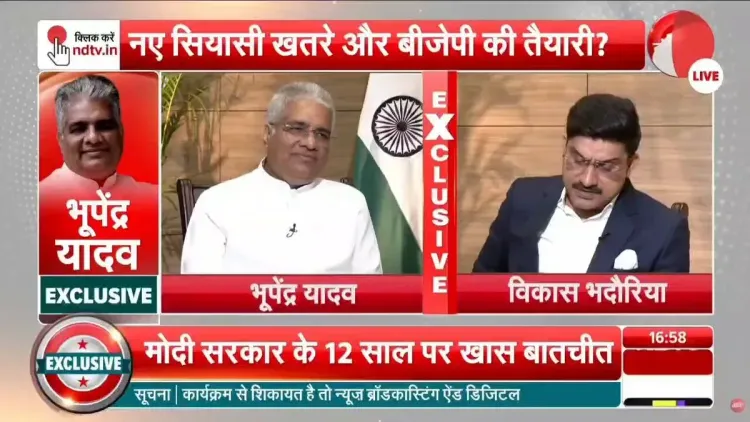
Union Environment Minister Bhupender Yadav on June 17, 2026 posted on X asserting India is progressing well, its economy is growing, and infrastructure across the country is expanding — echoing the central government's capital-expenditure-led development narrative.
Key Takeaways
Union Environment Minister Bhupender Yadav posted on X on June 17, 2026 highlighting India's economic and infrastructure progress.
He stated that India is progressing well, its economy is growing in size , and basic infrastructure is expanding across the country.
India is currently the fifth-largest economy globally , having crossed the $3.5-trillion GDP mark.
The National Infrastructure Pipeline (2019) set a target of Rs 111 lakh crore in infrastructure investment over five years.
The remarks reflect a broader BJP government strategy of cross-ministerial messaging on economic development ahead of elections.
The next MoSPI quarterly GDP release and Union Budget capital-expenditure discussions will be critical to watch.
Union Environment Minister Bhupender Yadav on Wednesday, June 17, 2026 took to X to underline India's economic momentum, asserting that the country is progressing well, its economy is growing in size, and basic infrastructure across the nation is expanding.
In his post, Yadav wrote — 'Desh toh kaafi accha aage badh raha hai. Bharat ki arthvyavastha ka aakaar bhi badh raha hai. Desh mein aadharabhoot suvidhaon ka bhi vistar ho raha hai' — translated: 'The country is progressing quite well. The size of India's economy is also growing. Basic facilities and infrastructure in the country are also expanding.'
Context
The remarks from a senior BJP cabinet minister reflect the central government's sustained effort to highlight India's macroeconomic trajectory. India is currently the fifth-largest economy in the world, having crossed the $3.5-trillion mark in GDP, with the Ministry of Statistics reporting consistent growth in successive quarters since the post-pandemic recovery.
Ministers from non-economic portfolios, including environment and climate, have increasingly amplified this growth narrative — signalling coordinated messaging on policy continuity as the government heads into an active electoral calendar at the state level.
Policy Backdrop
The infrastructure expansion Yadav references has deep policy roots. The National Infrastructure Pipeline (NIP), announced in 2019, outlined an investment target of Rs 111 lakh crore over five years to build out roads, railways, ports, and digital connectivity across the country.
Successive Union Budgets have steadily raised capital expenditure allocations, making public infrastructure spending a central pillar of the government's economic strategy. This approach is widely credited with sustaining growth momentum even as global headwinds — including elevated interest rates and geopolitical uncertainty — have weighed on peer economies.
Stakeholders and Impact
The beneficiaries of this growth narrative span a wide base: citizens who gain from improved physical connectivity and public services, and investors — domestic and foreign — who track India's macroeconomic signals when making capital allocation decisions.
For ordinary Indians, infrastructure expansion translates into faster road and rail links, improved port logistics, and broader digital access. For the investment community, a minister's public confidence in the economy can reinforce India's positioning as a preferred emerging-market destination amid global uncertainty.
What's Next
Attention will now turn to the next quarterly GDP release by the Ministry of Statistics and Programme Implementation (MoSPI), which will either validate or test the optimism expressed by ministers like Yadav. Parliamentary discussions on capital-expenditure allocations in the forthcoming Union Budget will be another key indicator of whether the infrastructure push continues at its current pace.
If growth figures remain strong, the government's cross-ministerial messaging on the economy is likely to intensify — particularly as the ruling party seeks to consolidate its economic record ahead of future electoral contests.
Point of View
Consistent messaging from senior ministers helps build a cumulative public perception of momentum. The reference to infrastructure expansion is particularly pointed, as the National Infrastructure Pipeline remains one of the government's most visible policy legacies. Analysts will watch whether such statements are followed by fresh data releases or budget signals that give the narrative harder, verifiable edges.
NationPress
19 Sept 2026
Frequently Asked Questions
What did Bhupender Yadav say about India's economy?
Bhupender Yadav said on June 17, 2026 that India is progressing quite well, its economy is growing in size, and basic infrastructure across the country is expanding.
What is India's current GDP size?
India is the fifth-largest economy in the world and has crossed the $3.5-trillion mark in GDP, according to figures from the Ministry of Statistics.
What is the National Infrastructure Pipeline?
The National Infrastructure Pipeline, announced in 2019, is a government programme targeting Rs 111 lakh crore in investment over five years to expand roads, railways, ports, and digital connectivity across India.
Why is an environment minister commenting on the economy?
Senior BJP ministers across portfolios frequently amplify the government's economic narrative to project policy continuity — especially ahead of state and national elections.
What should we watch next on India's economic progress?
The next quarterly GDP release by MoSPI and parliamentary debates on capital-expenditure allocations in the upcoming Union Budget will be key indicators of India's economic trajectory.