Yadav: 25 Crore Indians Lifted from Poverty in 12 Years

Synopsis
Union Environment Minister Bhupender Yadav posted on X that India's story today is one of social transformation as much as economic progress, citing 25 crore people exiting poverty over 12 years. The claim builds on NITI Aayog's Multidimensional Poverty Index data and the government's flagship welfare delivery programmes.
Key Takeaways
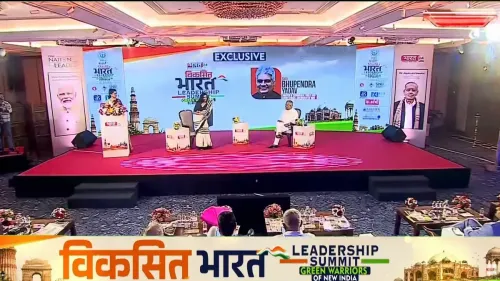
Bhupender Yadav , Union Environment Minister and senior BJP leader, posted on 18 June 2026 that India's progress is both economic and social.
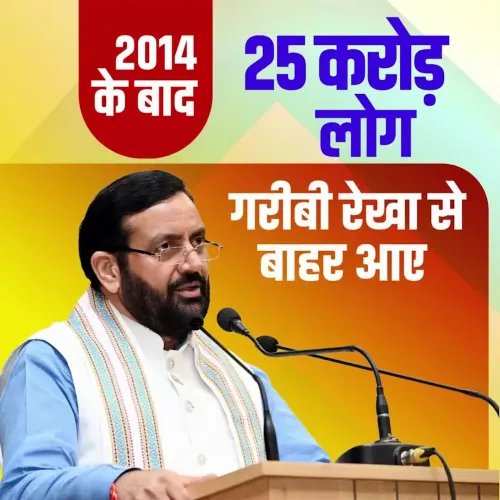
He claimed 25 crore people have exited poverty over the last 12 years under the current government.
NITI Aayog's MPI report (July 2023) had estimated 13.5 crore people exited multidimensional poverty between 2015-16 and 2019-21 .
Key welfare schemes credited include Pradhan Mantri Awas Yojana , Swachh Bharat Mission , Ujjwala Yojana , and direct benefit transfers.
States such as Bihar , Uttar Pradesh , and Madhya Pradesh recorded the steepest MPI declines in available data.
The next NITI Aayog MPI update will follow the new NFHS round and could validate or revise the government's broader poverty-reduction claims.
Union Environment Minister Bhupender Yadav on Thursday, 18 June 2026, highlighted India's social transformation alongside its economic growth, asserting that 25 crore people have exited poverty over the last 12 years under the current government's tenure.
Posting on X, Yadav wrote: 'आज भारत की कहानी सिर्फ Economic Progress की कहानी नहीं है। ये Social Transformation की भी कहानी है।' ('Today, India's story is not just a story of economic progress. It is also a story of social transformation.') He added that over the past 12 years, 25 crore people in the country have come out of poverty.
Context
The post reflects a consistent strand in BJP government communication: pairing macroeconomic growth narratives with large-scale poverty-reduction claims. Yadav, a senior party leader who holds the environment portfolio, frequently amplifies broader governance achievements beyond his ministerial brief. The statement comes amid an ongoing political conversation about whether India's growth dividends are reaching its most marginalised citizens.
Policy Backdrop
NITI Aayog, the government's premier policy think-tank, adopted the Multidimensional Poverty Index (MPI) in 2021 to measure simultaneous deprivations across ten indicators spanning health, education, and living standards. Its updated MPI report, released in July 2023, estimated that 13.5 crore people exited multidimensional poverty between 2015-16 and 2019-21, using data from the National Family Health Survey rounds.
The broader 25-crore figure cited by Yadav draws on a wider window — roughly 2014 to 2026 — and encompasses gains attributed to flagship schemes including rural housing under Pradhan Mantri Awas Yojana, sanitation coverage under Swachh Bharat Mission, LPG connections under Ujjwala Yojana, and direct benefit transfers across multiple programmes. These schemes collectively form the government's 'saturation' approach to welfare delivery.
Stakeholders and Impact
The primary beneficiaries of the claimed poverty reduction are rural households and communities historically excluded from formal welfare systems. Government data suggests women-headed households, Scheduled Caste and Scheduled Tribe communities, and residents of states such as Bihar, Uttar Pradesh, Madhya Pradesh, and Rajasthan recorded the steepest MPI declines in the 2023 report. Opposition parties and independent economists have at times questioned the methodology and baseline used for such aggregate claims, calling for updated household consumption survey data to corroborate them.
What's Next
The next NITI Aayog MPI update is expected following the completion of the new National Family Health Survey round, which will provide fresh household-level data to either validate or revise current estimates. Any parliamentary discussion on poverty lines during the monsoon session of 2026 could bring renewed scrutiny to these figures. The government's ability to sustain and deepen welfare reach — particularly amid global economic headwinds — will remain a key metric by which voters and analysts assess the social transformation narrative ahead of upcoming state elections.
Point of View
The statement encompasses the full span of the Modi government, framing welfare delivery as a structural achievement rather than a cyclical one. The figure of 25 crore — larger than the 13.5 crore documented in the last verified NITI Aayog MPI report — suggests the government is projecting forward from updated or broader consumption-based estimates not yet fully in the public domain. With monsoon-session parliament approaching and state elections on the horizon, such messaging signals that poverty alleviation will remain a central pillar of the ruling party's political narrative.
NationPress
22 Sept 2026
Frequently Asked Questions
How many people has India lifted out of poverty in 12 years?
Union Minister Bhupender Yadav claimed on 18 June 2026 that 25 crore people have exited poverty in India over the last 12 years. The most recent verified government estimate, from NITI Aayog's July 2023 MPI report, put the figure at 13.5 crore between 2015-16 and 2019-21.
What is India's Multidimensional Poverty Index?
The Multidimensional Poverty Index (MPI) was adopted by NITI Aayog in 2021 to measure poverty across ten indicators in health, education, and living standards simultaneously, going beyond income alone to capture the depth of deprivation.
Which government schemes are credited with reducing poverty in India?
The government points to schemes such as Pradhan Mantri Awas Yojana (rural housing), Swachh Bharat Mission (sanitation), Ujjwala Yojana (LPG connections), and direct benefit transfers as the primary drivers of poverty reduction among rural and marginalised households.
Why is Bhupender Yadav commenting on poverty if he is the Environment Minister?
Bhupender Yadav is not only the Union Environment Minister but also a senior BJP leader. Senior party ministers routinely amplify broader government achievements on social media beyond their specific portfolio, particularly on issues the party considers key electoral narratives.
When will the next NITI Aayog poverty report be released?
The next NITI Aayog MPI update is expected after the completion of the new round of the National Family Health Survey (NFHS) . No official release date has been announced as of mid-2026.