CM Yogi Cites World Bank Report: 46 Crore Lifted From Poverty
Synopsis
UP Chief Minister Yogi Adityanath cited a World Bank report on November 1, 2026, claiming 46 crore Indians were lifted out of poverty under PM Narendra Modi's 12-year leadership — a figure that is consequential but awaits full methodological verification.
Key Takeaways
CM Yogi Adityanath posted on November 1, 2026 citing a World Bank report on poverty reduction in India.
The post claims 46 crore (460 million) people were lifted above the poverty line over 12 years under PM Narendra Modi .
The exact World Bank report title, date, and methodology cited in the post could not be independently confirmed at the time of publication.
NITI Aayog's MPI reports have separately documented significant multidimensional poverty decline between 2013-14 and later survey years.
Uttar Pradesh , India's most populous state, has historically been central to national poverty-reduction metrics.
Updated World Bank and NITI Aayog assessments will be key to verifying the claimed figure's methodology.
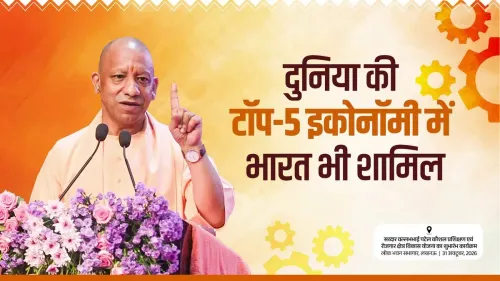
A striking number — 46 crore people pulled out of poverty in 12 years — is at the centre of a fresh assertion by Uttar Pradesh Chief Minister Yogi Adityanath, who on Sunday, November 1, 2026, invoked a World Bank report to argue that Prime Minister Narendra Modi's tenure has produced one of the largest poverty-reduction movements in modern history.
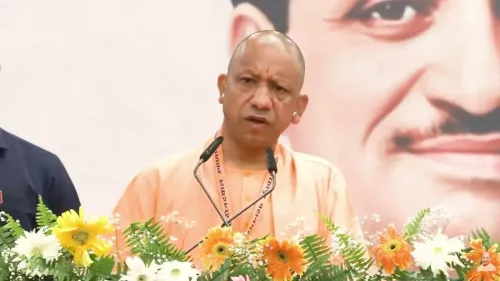
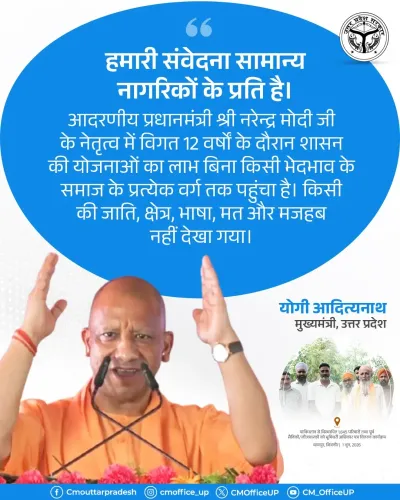
Posting through the Chief Minister's Office of Uttar Pradesh on X, CM Yogi said: 'Aapne Vishwa Bank ki report padhi hogi' — 'You must have read the World Bank report.' He attributed the claimed achievement directly to PM Modi's leadership since 2014, stating that 46 crore poor citizens had been lifted above the poverty line and given the opportunity to lead a normal life.
The 46-Crore Claim and Its Context
The figure of 46 crore — roughly 460 million people — is extraordinary in scale. For perspective, that is a population larger than the entire United States and United Kingdom combined. India's successive governments have tracked poverty reduction through multiple lenses: the World Bank's international poverty line (currently pegged at $2.15 per day in 2017 purchasing-power-parity terms) and the domestic Multidimensional Poverty Index (MPI) published by NITI Aayog.
NITI Aayog's MPI reports have documented a sharp decline in multidimensional poverty between 2013-14 and subsequent survey years, citing improvements across health, education, and living-standard indicators. The World Bank, separately, has periodically updated its own assessments of extreme poverty in India. CM Yogi's post draws on this data tradition to frame the post-2014 period as a watershed. It is worth noting, however, that the exact title, date, and methodology of the specific World Bank report referenced in the post could not be independently confirmed, and the 46 crore figure requires verification against the cited source.
Yogi Adityanath's Role as Amplifier of Central Welfare Messaging
CM Yogi Adityanath has consistently used the UP Chief Minister's Office platform to highlight central government welfare achievements — from PM Awas Yojana housing targets to Ujjwala Yojana cooking-gas connections. Today's post fits that well-established pattern: a state chief minister lending political and rhetorical weight to a national-level metric ahead of what are likely to be busy policy-communication cycles.
Uttar Pradesh, as India's most populous state with a historically high poverty headcount, has particular stakes in these numbers. Any national poverty-reduction headline carries outsized significance for a state where welfare delivery — ration cards, housing, sanitation, employment — has been central to BJP's political strategy since 2017.
What India's Poverty-Measurement Landscape Actually Shows
Measuring poverty reduction in India is methodologically contested. The country went without a large-sample household consumption expenditure survey for over a decade before the Household Consumption Expenditure Survey 2022-23 was released. Updated World Bank assessments and NITI Aayog MPI reports both pointed to significant declines, crediting direct-benefit transfers, infrastructure buildout, and financial inclusion drives.
What is broadly accepted across assessments: the period from 2014 to the mid-2020s saw a meaningful reduction in both extreme and multidimensional poverty in India. The precise quantum — and how much is attributable to policy versus pre-existing trajectories — remains a live academic and political debate. The release of any updated NITI Aayog MPI report or formal World Bank country assessment will sharpen this picture considerably.
A billion-dollar question wrapped in a single statistic — and as India approaches its next major electoral and budget cycles, expect this number to travel far beyond a single post on X.
Point of View
The unverified specifics of the cited report leave the claim open to methodological challenge, and any rebuttal from academic or opposition quarters will likely target that gap.
NationPress
1 Nov 2026
Frequently Asked Questions
What does the World Bank report on India's poverty reduction say?
The post by UP CM Yogi Adityanath references a World Bank report claiming 46 crore Indians were lifted out of poverty over 12 years under PM Modi, though the exact report title and methodology have not been independently confirmed at the time of publication.
How many people has India lifted out of poverty since 2014?
According to the claim cited by CM Yogi Adityanath on November 1, 2026, approximately 46 crore (460 million) people have been lifted above the poverty line since PM Modi took office in 2014, based on a World Bank report referenced in the post.
What is India's Multidimensional Poverty Index?
India's Multidimensional Poverty Index (MPI) is published by NITI Aayog and measures poverty across health, education, and living-standard indicators. It has shown significant reductions in multidimensional poverty between 2013-14 and later survey years.
Why does Yogi Adityanath highlight central government welfare schemes?
As Chief Minister of Uttar Pradesh — India's most populous state with a historically high poverty rate — CM Yogi Adityanath regularly amplifies central government welfare achievements to reinforce the BJP's developmental narrative and the impact of schemes like PM Awas Yojana and Ujjwala Yojana.
Is the 46 crore poverty reduction figure verified?
The 46 crore figure has been cited by CM Yogi Adityanath with reference to a World Bank report, but the specific report's title, date, and methodology require independent verification. Broader trends in Indian poverty reduction have been documented by both NITI Aayog and the World Bank separately.