CM Yogi Backs 12 Years of Non-Discriminatory Welfare Under Modi
Synopsis
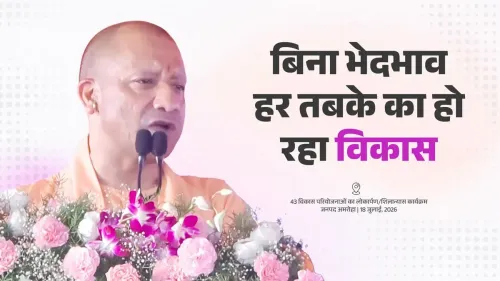
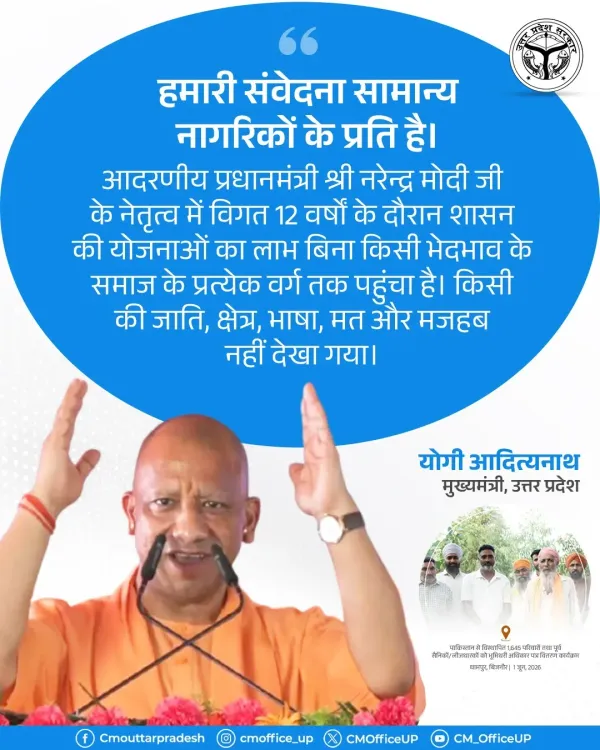
Chief Minister Yogi Adityanath, through the UP CMO's official X account, credited PM Modi's 12-year leadership with delivering welfare schemes to every section of society without discrimination on grounds of caste, region, language, or religion.
Key Takeaways
The Chief Minister's Office of Uttar Pradesh posted a statement attributed to CM Yogi Adityanath on June 1, 2026 .
The statement asserts that welfare schemes under PM Narendra Modi over 12 years have reached all citizens without caste, regional, linguistic, or religious discrimination.
Uttar Pradesh , India's most populous state, has been a key implementation site for central welfare programmes since 2017 .
The messaging directly counters political narratives alleging selective welfare targeting along caste or communal lines.
With UP Assembly Elections due in 2027 , welfare delivery is emerging as a central campaign theme for the ruling BJP.
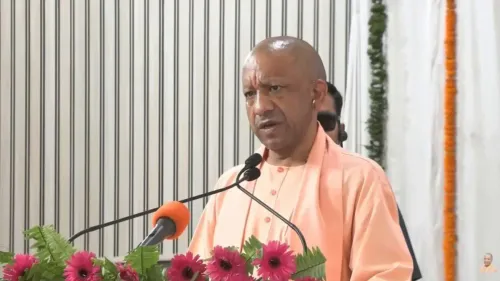
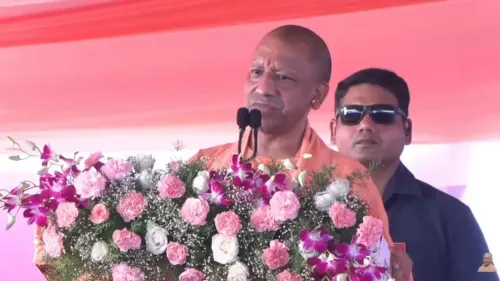
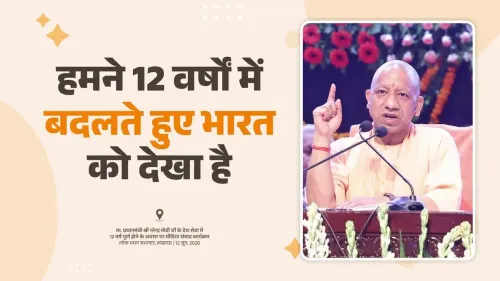
The Chief Minister's Office of Uttar Pradesh, citing Chief Minister Yogi Adityanath, on Monday, June 1, 2026, asserted that governance schemes under Prime Minister Narendra Modi's leadership over the past 12 years have reached every section of society without discrimination based on caste, region, language, opinion, or religion.
Context
The post, shared from the official CMOfficeUP account, carries a direct statement attributed to Chief Minister Yogi Adityanath. Translated from Hindi, it reads: 'Hamari sanvedna samanya nagirkon ke prati hai' ('Our sympathy is with the common citizens'). It goes on to state that under Prime Minister Modi's leadership over the past 12 years, 'the benefits of government schemes have reached every section of society without any discrimination — without looking at anyone's caste, region, language, opinion, or religion.'
The statement frames welfare delivery as a non-partisan, universal commitment — a recurring theme in BJP-led governments at both the Centre and in Uttar Pradesh.
Policy Backdrop
Since the NDA government assumed office in 2014, the Centre has expanded welfare architecture through direct benefit transfers, Aadhaar-linked subsidies, and flagship programmes covering housing, sanitation, cooking fuel, and financial inclusion. Uttar Pradesh, as India's most populous state, has been among the largest implementation sites for these schemes.
Yogi Adityanath became Chief Minister of Uttar Pradesh in 2017 and was re-elected in 2022, with scheme delivery and law-and-order forming the twin pillars of his administration's public messaging. The state government has consistently emphasised that central and state benefits are distributed on the basis of eligibility alone, not identity.
Stakeholders and Impact
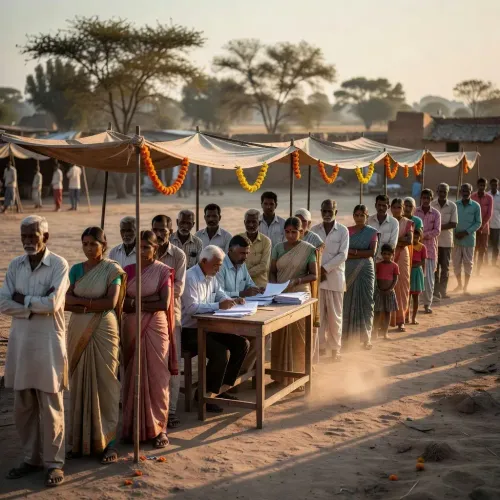
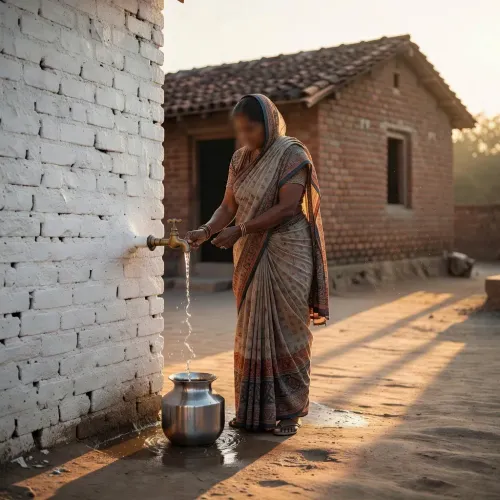
The statement is addressed to the residents of Uttar Pradesh — a state of over 20 crore people representing a cross-section of India's caste, religious, and linguistic diversity. Welfare beneficiaries across categories including PM Awas Yojana (housing), Ujjwala Yojana (cooking gas), and Jan Dhan Yojana (financial inclusion) are the implicit audience.
The messaging also carries political weight: it directly counters opposition narratives that allege selective or discriminatory targeting of welfare benefits along caste or communal lines. The phrase 'kisi ki jati, kshetra, bhasha, mat aur mazhab nahin dekha gaya' ('no one's caste, region, language, opinion, or religion was looked at') is a pointed rebuttal of such claims.
What's Next
With the Uttar Pradesh Assembly Elections scheduled for 2027, welfare delivery and its perceived fairness are expected to be central electoral themes. The state budget for 2026-27 and any new scheme guidelines will be closely watched as indicators of the government's priorities in the run-up to the polls.
The BJP's sustained emphasis on non-discriminatory welfare delivery suggests that this narrative will be amplified further as election season approaches, positioning scheme reach as both a governance achievement and a political differentiator.
Point of View
Religion, and region as filters for welfare delivery is a direct response to opposition attacks on the BJP's social equity record. Coming roughly a year before the 2027 UP assembly elections, it signals that the ruling party intends to anchor its campaign on the universality of scheme delivery rather than identity-based appeals. The invocation of '12 years' under PM Modi broadens the frame beyond state governance to a national BJP legacy narrative, tying Yogi Adityanath's record to Modi's. This alignment of state and central messaging is a recurring BJP strategy to project unified, non-discriminatory governance ahead of high-stakes electoral cycles.
NationPress
15 Oct 2026
Frequently Asked Questions
What did CM Yogi Adityanath say about welfare schemes under PM Modi?
CM Yogi Adityanath stated that over the past 12 years under PM Modi's leadership, government welfare schemes have reached every section of society without discrimination based on caste, region, language, opinion, or religion.
Which welfare schemes has the UP government implemented for all citizens?
Uttar Pradesh has been a major implementation site for central schemes including PM Awas Yojana for housing, Ujjwala Yojana for cooking gas, and Jan Dhan Yojana for financial inclusion, all delivered through Aadhaar-linked direct benefit transfers.
Why is the UP CMO emphasising non-discriminatory welfare delivery in 2026?
With Uttar Pradesh assembly elections due in 2027, the ruling BJP is positioning its welfare delivery record as universal and non-partisan, countering opposition claims of selective targeting along caste or communal lines.
How long has Yogi Adityanath been Chief Minister of Uttar Pradesh?
Yogi Adityanath has been Chief Minister of Uttar Pradesh since 2017. He was re-elected in 2022 and continues to serve as the state's chief minister as of 2026.
What does the UP government mean by welfare without discrimination?
The UP government's statement means that eligibility for central and state welfare schemes is determined solely by prescribed criteria, and not by a beneficiary's caste, religious identity, regional origin, or political affiliation.