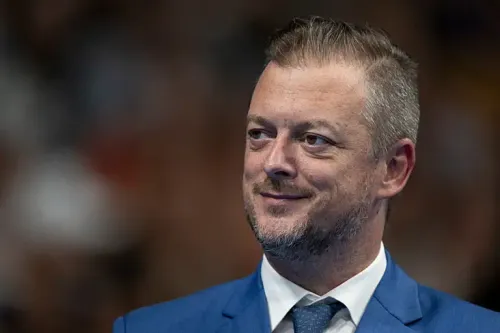
IPC marks Tokyo 2020 Paralympics' fifth anniversary with legacy tour
Synopsis
Five years after Tokyo 2020 reshaped what a host city could achieve for disability inclusion, IPC President Andrew Parsons returned to Tokyo to tour the living legacy — barrier-free transport, Para sport infrastructure, and an urban design philosophy that outlasted the closing ceremony. Tokyo's model is now being watched as a blueprint for Los Angeles 2028.
Key Takeaways
IPC President Andrew Parsons led a delegation to Tokyo from 28 to 30 August 2025 to mark five years since the Tokyo 2020 Paralympic Games .
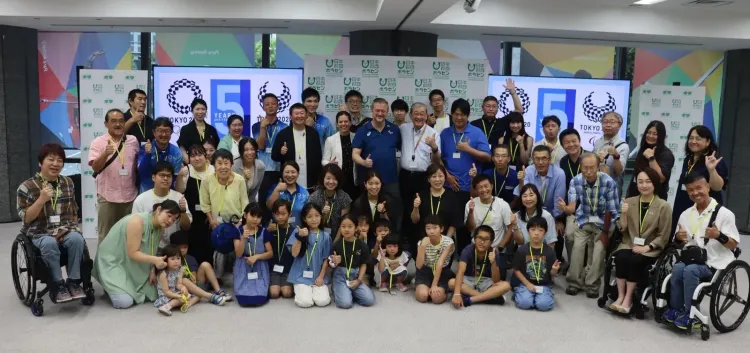
The delegation toured Ariake Arena , schools, and transport facilities to assess barrier-free and inclusive-society progress.
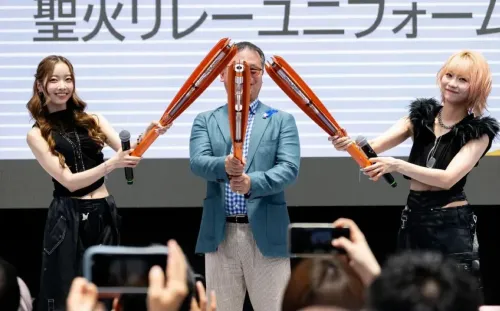
Parsons met Tokyo Governor Yuriko Koike and appeared at the Tokyo 2020 Paralympics 5th Anniversary Special Stage at the Tokyo International Forum .
The Tokyo 2020 Paralympic Games were held from 24 August to 5 September 2021 , featuring 4,393 athletes from 162 countries .
Host nation Japan finished the Games with a record 51 medals .
Tokyo's legacy model — covering Para sport, universal design, and accessibility — is being cited as a framework for future Paralympic host cities.
The International Paralympic Committee (IPC), led by President Andrew Parsons, visited Tokyo, Japan from 28 to 30 August 2025 to mark five years since the Tokyo 2020 Paralympic Games, touring legacy sites that have reshaped the city's approach to accessibility and inclusion. The three-day visit underscored how the Games' impact continues to ripple through urban infrastructure, Para sport culture, and public policy across Japan.
Legacy Sites and Barrier-Free Progress
Accompanied by Tokyo Metropolitan Government (TMG) Para Sport and Barrier-free Ambassadors, the IPC delegation toured venues including the Ariake Arena, a local school, and public transportation facilities. The visits were designed to assess the real-world progress of barrier-free initiatives — accessible design, Para sport infrastructure, and universal public access — that the Tokyo Games helped catalyse.
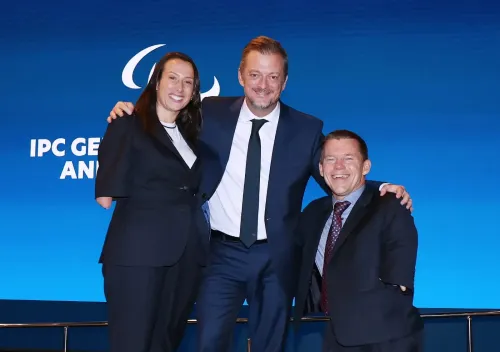
Colleen Wrenn, Executive Director of Paralympic Games, joined Parsons throughout the visit. The IPC noted in a statement that the legacies of the Tokyo 2020 Paralympic Games — including the popularisation of Para sports and the adoption of universal design principles — are now embedded in multiple aspects of city life.
High-Level Meetings and Anniversary Event
Parsons met with Tokyo Governor Yuriko Koike and appeared on stage at the Tokyo 2020 Paralympics 5th Anniversary Special Stage, held at the Tokyo International Forum — the venue that hosted Para powerlifting during the original Games. The event brought together IPC Special Ambassadors for Tokyo 2020 Goro Inagaki, Tsuyoshi Kusanagi, and Shingo Katori, as well as Paralympians Mami Tani (Para triathlon) and Daisuke Ikezaki (wheelchair rugby), and TMG Para Sport and Barrier-free Ambassador Shinji Negi, who also served as Associate Mayor of the Tokyo 2020 Paralympic Village.
What the Leaders Said
IPC President Parsons described Tokyo's transformation as a model for future host cities. 'The legacy of Tokyo 2020 is a blueprint for future host cities. It demonstrates what is possible when an Organising Committee and public authorities work together with purpose to create lasting impact,' he said. He added that the Games had 'reinforced my belief that the Paralympic Games are the world's most transformational sporting event.'
Governor Koike said the performances of athletes 'showed us how people can shine by embracing their differences,' and pledged that the Tokyo Metropolitan Government would continue building on the Games' legacy. Kazuyuki Mori, President of the Japanese Paralympic Committee, called the legacy 'not merely a chapter in history' but one that 'continues to dynamically evolve,' driven by digital technology and the younger generation.
About the Tokyo 2020 Paralympic Games
Postponed by one year due to the COVID-19 pandemic, the Tokyo 2020 Paralympic Games were held from 24 August to 5 September 2021. The Games featured 4,393 athletes from 162 countries. Host nation Japan finished with a record haul of 51 medals. Five years on, the event is widely cited as a turning point for disability inclusion in Japanese public life.
What Comes Next
The IPC's visit signals continued institutional focus on Paralympic legacy measurement ahead of future Games. With Los Angeles 2028 on the horizon, Tokyo's model of embedding accessibility into urban planning is being studied as a replicable framework. The emphasis on legacy accountability — rather than one-time spectacle — marks a broader shift in how the Paralympic movement evaluates its own impact.
Point of View
The Paralympic movement is under pressure to prove that Games legacies are measurable and durable — not just ceremonial talking points. Tokyo's barrier-free infrastructure offers a credible case study, but the harder question is whether cities without Japan's institutional discipline and public investment appetite can replicate it. The anniversary visit is a reminder that Paralympic legacy requires sustained political will long after the flame goes out.
NationPress
15 Oct 2026
Frequently Asked Questions
Why did the IPC visit Tokyo in August 2025?
The IPC visited Tokyo from 28 to 30 August 2025 to mark five years since the Tokyo 2020 Paralympic Games, touring legacy sites to assess progress on barrier-free initiatives and inclusive urban design. The visit included meetings with Tokyo Governor Yuriko Koike and a public anniversary event at the Tokyo International Forum.
When were the Tokyo 2020 Paralympic Games actually held?
The Tokyo 2020 Paralympic Games were held from 24 August to 5 September 2021, delayed by one year due to the COVID-19 pandemic. The event featured 4,393 athletes from 162 countries.
What legacy has the Tokyo 2020 Paralympic Games left behind?
According to the IPC, the Games accelerated barrier-free urban infrastructure, the popularisation of Para sports, and the adoption of universal design principles across Tokyo. These changes are now visible in public transportation, schools, and sports venues across the city.
How did Japan perform at the Tokyo 2020 Paralympic Games?
Japan finished the Tokyo 2020 Paralympic Games with a record haul of 51 medals, its best-ever performance at a home or away Paralympic edition.
Who attended the Tokyo 2020 Paralympics 5th Anniversary Special Stage?
The event featured IPC President Andrew Parsons, Tokyo Governor Yuriko Koike, IPC Special Ambassadors Goro Inagaki, Tsuyoshi Kusanagi, and Shingo Katori, as well as Paralympians Mami Tani and Daisuke Ikezaki, and TMG Ambassador Shinji Negi.