CM Yogi Asks UP DGP to Assign Villages to Sportspersons
Synopsis
CM Yogi Adityanath has publicly asked UP's Director General of Police to assign at least one village to each sportsperson in the force, linking police athletes to grassroots rural community development across the state.
Key Takeaways
CM Yogi Adityanath made the appeal directly and publicly to the Uttar Pradesh Director General of Police on 8 October 2026 .
He called for every UP Police sportsperson to be assigned at least one village to adopt.
The 'village adoption' model has precedent in Indian governance frameworks for elected representatives and senior officials.
UP Police employs a large pool of athletes recruited on sports quota , making them natural candidates for community-facing roles.
No formal government order or timeline was announced; the directive was issued as a public social-media appeal.
Implementation across 75 districts of Uttar Pradesh will depend on follow-up departmental action.
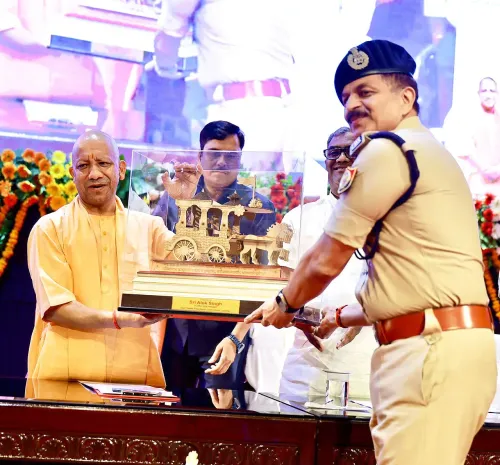
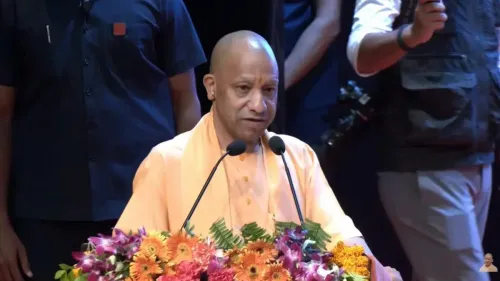
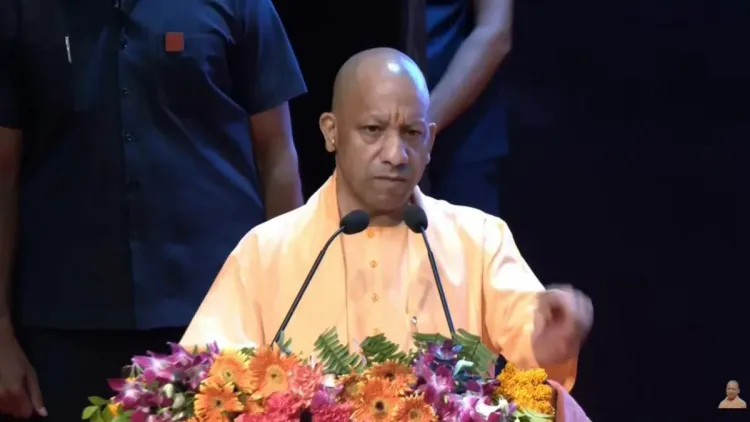
A single directive from the top — and it could reshape how Uttar Pradesh connects its athletes to grassroots development. Uttar Pradesh Chief Minister Yogi Adityanath on Thursday, 8 October 2026, publicly called on the state's Director General of Police to ensure that every sportsperson is assigned at least one village to adopt.
Posting on X, CM Yogi said: 'मैं उत्तर प्रदेश के पुलिस महानिदेशक से कहना चाहूंगा- खिलाड़ियों को कोई न कोई एक गांव जरूर गोद दे दीजिए...' — ('I would like to tell the Director General of Police of Uttar Pradesh — please do make sure that sportspersons are assigned at least one village each to adopt...')
What village adoption by athletes would mean
The 'village adoption' model is not new to Indian public policy — it has previously been used as a framework for elected representatives and officials to channel development attention toward neglected rural areas. Extending it to UP Police sportspersons would place athletes in a dual role: competitive performers and community anchors.
The idea carries a pointed logic. Police departments in large states like Uttar Pradesh routinely recruit athletes on sports quota, meaning the force already hosts a significant pool of active competitors. Directing those individuals to adopt villages could leverage their local visibility and public trust to drive rural outreach — health camps, youth coaching, infrastructure awareness — without creating a new bureaucratic layer.
The DGP directive and its weight
By framing this as a direct appeal to the Director General of Police in a public post, CM Yogi gave the instruction maximum visibility and political weight. In the UP government's communication style, a Chief Minister's public statement addressed to a senior official functions effectively as a policy nudge — one the bureaucracy is expected to act on swiftly.
No timeline or formal order number was cited in the post. Whether the initiative is codified into a government order or implemented through departmental instruction will determine how systematically it rolls out across the state's 75 districts.
For a state that has been pushing both sports infrastructure and rural development as twin priorities, linking its athlete-officials directly to village communities is an elegant — if still nascent — policy signal. The real test will be execution.
Point of View
CM Yogi is using visibility as enforcement — making it politically costly for the DGP to ignore the nudge. The move aligns neatly with the BJP's broader 'sports as soft power' narrative, marrying athlete recognition with rural welfare optics. If formalised, it could become a replicable model for other state departments with large sports-quota workforces. The absence of a specific order, however, leaves open the question of accountability — good intent without a tracking mechanism rarely survives the bureaucratic inbox.
NationPress
8 Oct 2026
Frequently Asked Questions
What did CM Yogi Adityanath say about UP Police athletes and villages?
CM Yogi publicly asked the Uttar Pradesh Director General of Police to assign at least one village to each sportsperson in the police force so they can actively contribute to rural community development.
What is the village adoption model in India?
Village adoption is a governance framework where officials, elected representatives, or public figures take responsibility for the development of a specific village — driving local infrastructure, health, and education initiatives in that area.
Why does UP Police have so many athletes?
Like most large Indian state police forces, Uttar Pradesh Police recruits athletes through a sports quota, maintaining a significant pool of competitive sportspersons within the department.
Has the UP government issued a formal order on this?
As of 8 October 2026, no formal government order or official notification has been cited. The directive came in the form of a public appeal by CM Yogi on X, addressed to the DGP.
How many districts does Uttar Pradesh have?
Uttar Pradesh has 75 districts, and any formal rollout of the village-adoption scheme for police athletes would need to be implemented across this entire administrative network.