Yogi blasts Rahul Gandhi over Manusmriti remark: 'Why destroy India's heritage?'
Synopsis
Yogi Adityanath chose Rae Bareli — the Gandhi family's political heartland — to deliver his sharpest rebuke yet of Rahul Gandhi, using the Manusmriti remark as a springboard to question Gandhi's constitutional fitness as Leader of Opposition. The location was no accident; the message was as much electoral as ideological.
Key Takeaways
Yogi Adityanath attacked Rahul Gandhi at a Bhav Samarpan programme in Rae Bareli on 24 August .
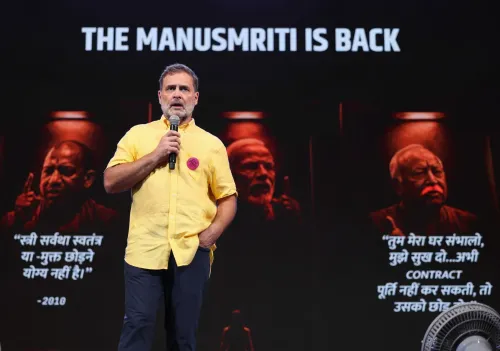
The trigger was Gandhi's remark urging women to break free from the 'shackles of Manusmriti '.
Adityanath questioned whether Gandhi, as Leader of Opposition , was honouring his constitutional oath.
He alleged Gandhi criticised UP and India abroad, demanded proof from soldiers, and encouraged 'anti-national elements'.
Adityanath also targeted UP Congress President Ajay Rai over a reported fish feast in Ayodhya , alleging double standards.
Congress was additionally criticised for describing the 1925 Kakori train action as 'loot'.
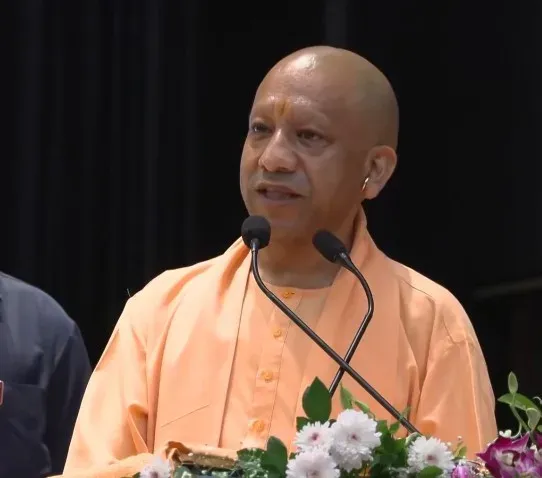
Uttar Pradesh Chief Minister Yogi Adityanath on Sunday, 24 August launched a sharp political attack on Leader of Opposition Rahul Gandhi in Rae Bareli, accusing him of undermining India's traditions, heritage, and constitutional responsibilities — triggered by Gandhi's recent remark urging women to break free from what he called the 'shackles of Manusmriti'.
What Yogi Said
Speaking at a Bhav Samarpan programme held to mark the birth anniversary of freedom fighter Rana Beni Madhav Baksh Singh, Adityanath accused unnamed forces of deliberately attempting to disconnect Indians from their cultural roots. He then cited Gandhi's Manusmriti comment directly.
'A society that forgets its ancestors has no future. Unfortunately, some people have taken it upon themselves to conspire against India by making people forget India's traditions, values and ideals and creating confusion among them,' Adityanath said. 'Recently, I was also reading a statement by Rahul Gandhi, saying that women should break free from the shackles of Manusmriti and come out.'
The Chief Minister questioned whether Gandhi, as Leader of Opposition, was fulfilling his constitutional oath. 'As Rahul Gandhi, the country does not have many expectations from you. But as the Leader of Opposition in the Parliament of India, the country expects you to be accountable to democracy. You have taken an oath on the Constitution of India. Do you consider it your birthright to criticise India's traditions and heritage?' he asked.
A Broader Charge Sheet Against Gandhi
Adityanath expanded his attack beyond the Manusmriti remark, alleging a pattern of conduct he described as anti-national. He claimed Gandhi criticised Uttar Pradesh when outside the state and spoke against India when abroad. He also alleged that Gandhi had demanded proof from soldiers during military operations and had 'directly and indirectly' encouraged what he termed anti-national elements.
'When you go outside UP, you insult the state. When you go outside India, you insult India. When the Indian Army fights enemies on the borders, Rahul Gandhi demands proof from the soldiers,' Adityanath said. He also alleged that the Indian National Congress (INC) had at one point questioned the existence of Lord Ram in Ayodhya.
Adityanath further said that if Gandhi genuinely wished to understand the concept of 'Manu', he should study ancient Indian texts — including the Atharvaveda, Shatapatha Brahmana, and Matsya Purana — rather than offer what he characterised as a reductive interpretation.
Urban Naxals and the LoP's Role
The Chief Minister accused Gandhi of allowing what he described as 'urban Naxals' to influence India's younger generation and alleged that the Congress leader had abandoned the responsibilities of his constitutional position. 'Why do you want to let urban Naxals spoil the future of India's present generation? Why do you want to destroy India's heritage?' Adityanath said, adding that Amethi and Rae Bareli had long borne the burden of the Gandhi family's political legacy.
He also argued that derogatory remarks against the Prime Minister should be seen not merely as personal criticism but as an attack on the office itself. 'When you make insulting remarks and use abusive language against the Prime Minister of India, you are actually insulting India, insulting India's heritage, and creating an identity crisis for the present generation,' he said.
Congress Under Fire on Multiple Fronts
Adityanath also took aim at the Congress over its description of the 1925 Kakori train action as 'loot', arguing that the freedom movement's revolutionary figures deserved greater respect. He alleged that the Gandhi family had consistently failed to honour India's freedom fighters adequately.
He additionally criticised Uttar Pradesh Congress President Ajay Rai over a reported fish feast organised in Ayodhya, alleging double standards. 'They went to Hanumangarhi for darshan and then went outside and enjoyed a fish feast. They keep chanting Ram Ram; there is a limit to shamelessness,' Adityanath said, calling it emblematic of what he described as Congress's contradictory conduct on religious sensitivities.
Political Context
The exchange marks the latest flashpoint in an ongoing war of words between the Bharatiya Janata Party (BJP) and Congress ahead of upcoming electoral cycles. Gandhi's Manusmriti remark — made in a different context — has become a recurring reference point for BJP leaders seeking to frame the opposition as culturally hostile. Adityanath's Rae Bareli appearance, in a constituency long associated with the Gandhi family, carries unmistakable political symbolism. How Congress responds to the escalating rhetoric will be closely watched.
Point of View
Not just a speech. The Manusmriti framing allows the BJP to conflate a specific opposition statement with a broader cultural-nationalist narrative, sidestepping a direct policy debate. What is missing from this exchange is any substantive engagement with what Gandhi actually said or why: the Manusmriti's contested status in Indian constitutional history is a legitimate area of democratic discourse. Reducing it to 'destroying heritage' forecloses that conversation. For its part, Congress has yet to mount a coherent counter-narrative that separates critique of a text from critique of tradition — a gap the BJP is adept at exploiting.
NationPress
8 Oct 2026
Frequently Asked Questions
What did Rahul Gandhi say about Manusmriti that triggered Yogi Adityanath's attack?
Rahul Gandhi had reportedly urged women to break free from the 'shackles of Manusmriti'. Yogi Adityanath cited this statement directly during his speech in Rae Bareli on 24 August, calling it an attack on India's traditions and heritage.
Why did Yogi Adityanath speak in Rae Bareli?
Adityanath attended a Bhav Samarpan programme in Rae Bareli organised to mark the birth anniversary of freedom fighter Rana Beni Madhav Baksh Singh. Rae Bareli is a constituency long associated with the Gandhi family, making the venue politically significant.
What did Yogi Adityanath say about Rahul Gandhi's role as Leader of Opposition?
Adityanath argued that while public expectations of Gandhi may be limited, his constitutional oath as Leader of Opposition in Parliament demands accountability to democracy. He accused Gandhi of abandoning those responsibilities entirely.
What other allegations did Yogi Adityanath make against Rahul Gandhi and Congress?
Beyond the Manusmriti remark, Adityanath alleged that Gandhi criticised UP and India when abroad, demanded proof from soldiers during military operations, and encouraged 'urban Naxal' influence on youth. He also criticised Congress for describing the 1925 Kakori train action as 'loot' and targeted UP Congress President Ajay Rai over a fish feast in Ayodhya.
What did Yogi Adityanath say about the Manusmriti and ancient Indian texts?
Adityanath said that if Gandhi genuinely wanted to understand the concept of 'Manu', he should study ancient Indian texts including the Atharvaveda, Shatapatha Brahmana, and Matsya Purana, rather than offer what he characterised as a reductive interpretation of the Manusmriti.